Learn From The Past

Bring your own reusable bag

I know people get tired of my harping on plastic, but plastic is a serious world problem. According to the Plastic Pollution Coalition the average shopper uses 500 plastic bags a year, and that is just bags, not all the other plastic products.  This is not sustainable!

I love thinking of how my grandparents lived, and how it is different from today. I loved this post from One Green Planet about what we can learn from the past and from our grandparents. Read it here.

Below is a quote from One Green Planet which show how serious this plastic issue is!

“In the past 30 years alone, the amount of plastic produced worldwide has increased by 620 percent! On average, that equates to 300 million tons of plastic a year. Of this 300 million tons, about 8.8 million tons find their way into the world’s oceans where they are left to slowly photodegrade into smaller pieces – and by slowly, we mean over the course of 100 to 1,000 years. When you consider the huge volume that is added to the oceans every year and the fact that plastics never really “go away,” we find our oceans crowded with a massive soupy mixture of harmful plastic products. This sadly has a massive impact on the marine animals who call our oceans home. Around 700 marine species are in danger of extinction due to entanglement, ingestion or general pollution caused by our plastic trash.”

Our grandparents didn’t have the choices and variety we do.  They cooked and ate hearty food on real dishes, but most important they conserved, reused, and didn’t throw everything away like we do today! I would stay with my grand parents for a week and we didn’t need to run to the store to buy buy buy. We used what we had.

What do you remember about how your grandparents did things?

Even remote islands are collecting our plastic trash

http://www.refillrevolution.com/

https://health4earth.com/2017/02/19/the-horrifying-impact-of-plastic-pollution/
Dear Gov. Dayton

This is a message to Minnesota Governor Dayton asking him to veto the legislation that takes away Minneapolis’s plastic bag ban.

Below is my letter to the Minneapolis http://www.startribune.com/ It was published a few months ago. It is ridiculous the Minnesota legislature is trying to take away Minneapolis’ right to ban plastic bags. Why should the plastic industry have the right to say which rules the city of Minneapolis should enact???
To the editor,
Today as I drove north out of Minneapolis on 35W, I was sad to see waste plastic bags hanging from fences and decorating plants and trees. I thought of the op-ed by the manufacturer of plastic bags telling us how wonderful his bags were. (Facts Don’t Support Columns Call for Ban on Plastic Retail Bags)
We all observe many bags with purchases leaving our stores, but only .06 percent are recycled. Plastic poses a serious threat to our wildlife that eat and become tangled in this trash. Plastic takes many years to decompose and releases toxins into our soil and water during this long process.
The Minnesota Legislature is trying to ban Minneapolis’s hope to reduce plastic bag use which goes into effect later this year. Governor Dayton should veto this silly legislation, and all Minnesotans should take personal responsibility to recycle clean plastic bags at grocery stores, and reduce their use of this harmful litter.

Health4earth

Call Governor Mark Dayton (651-201-3400) and tell him cities should have the right to ban plastic bags. VETO SF 1456!

The Arctic and Whales Collecting Our Plastic

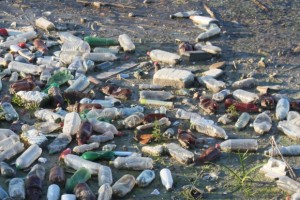
Do we want waterways that look like this?

This shouldn’t surprise me, but I am upset to read about the plastic trash in the Arctic Ocean.   Plastic trash is now so ubiquitous that researchers have found hundreds of tons of it floating in the Arctic Ocean.  Read the whole story here.

Why shouldn’t I be surprised by this?  The “local control” advocates, in the Minnesota legislature are trying to derail Minneapolis’ plastic bag ban from happening later this year. I have just returned from a road trip to Washington, D.C. and I found only a few places to recycle along the way, most on college campuses. I could go on and on about what I see throughout the world in regards to plastic trash. A sad story about a whale collecting all this plastic . Our earth has a massive problem!

Plastic breaks into tiny pieces and wildlife eats it!

Where are the companies that manufacture and make a profit on this plastic and Styrofoam when it comes to clean-up?

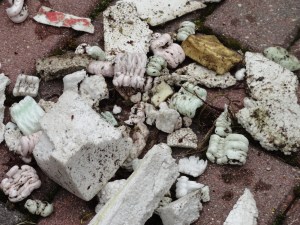
Styrofoam I pulled from Lake Harriet in Minneapolis. It is breaking into small pieces and could last forever!

The oceans belong to all of us.  No one has the right to pollute and trash the ocean or the rivers or lakes.

What can you do? Have plastic-free shopping trips by bringing your own containers, and never purchase products on Styrofoam trays.  2. Encourage your community to put up and maintain recycling containers.  3. Pick up trash on your walks. 4. Recycle everything you can. 5. Always bring your reusable bags shopping.

Last, a remote Pacific island has become a reservoir for the waste of the world as it piles onto this pristine island.

Bring you own bag


Give Your Yard a Dose of Happy

Deep-rooted plants absorb more water than turf grass. Cone flowers, bee balm, and black-eyed Susan

Just making a few adjustments to your yard can make big difference for our climate. If everyone does a little bit, it adds up to a lot! Some amazing statistics on our lawns from “greener lawn” below:

*Grass covers more land in the US than any other crop.

*It’s estimated that there’s up to three times more acres of lawns than corn, according to NASA

Fritillary butterfly on bee balm.

*Homeowners use up to 10 times more chemical pesticides per acre on their yards compared to what farmers use on their crops, according to the U.S. Fish and Wildlife Service.

Some other ideas to slow climate change and help pollinators:

**plant a rain garden

** Add diversity

** Love pollinators

** More on bees an butterflies

Minnesota Public Radio on a “greener” lawn:

Grass isn’t greener

Adding new pollinator plants is not easy if you are a hosta gardener or a new gardener.

I would start small by adding a few of these: purple cone flowers, black-eyed Susan, bee balm, a few asters, and columbine.  I suggest these because many garden stores sell them, they are easy to grow, add diversity, and are loved by pollinators.

Storm Lake Wins a Pulitzer

Our polluted lakes and rivers!

We love an underdog, and when a small town Iowa newspaper takes on the industry that dominates its state you pay attention! The Storm Lake Times has just won a Pulitzer Prize for editorials on Iowa’s water problems caused by agriculture. To me this is a story about justice and fairness.  Why should an industry be allowed to pollute, and harm the health of surrounding communities? Why has it become such an expensive struggle in farm country for communities to provide clean water for their residents? Because I live in Minnesota where agriculture has poisoned many of our lakes that are near Iowa, I have followed this story of Des Moines Water Works suing the surrounding Iowa counties.  The Storm Lake Times and Art Cullen receive all my praise and congratulations for their year of editorials on this challenging issue.

Below is one of Art Cullen’s editorials:

“The public would appear to have made up its mind about the Des Moines Water Works lawsuit against Buena Vista, Calhoun and Sac counties over nitrate pollution of the Raccoon River. The Des Moines Register’s Iowa Poll reported Sunday that 60% of those surveyed believe the water works was right to sue drainage districts in the three counties for discharging polluted water into the river.

It is virtually the same result the poll found a year ago.

Urban residents, small towners and even rural dwellers all show majority support for the water works position. This after a barrage of advertising in the Des Moines TV market sponsored by Farm Bureau, and a host of radio ads aiming to fire up rural residents against encroaching government.

Anyone can see how filthy Storm Lake is, how the Des Moines River near Humboldt is a mud flow, how shallow lakes in Northwest Iowa have eroded into duck marshes.

Anyone with eyes and a nose knows in his gut that Iowa has the dirtiest surface water in America. It is choking the waterworks and the Gulf of Mexico. It is causing oxygen deprivation in Northwest Iowa glacial lakes. It has caused us to spend millions upon millions trying to clean up Storm Lake, the victim of more than a century of explosive soil erosion.

Everyone knows it’s not the city sewer plant causing the problem. And most of us recognize that this is not just nature at work busily releasing nitrates into the water. Ninety-two percent of surface water pollution comes from row crop production — an incontroverted fact from the court case.” The entire editorial

And an excerpt from another Art Cullen editorial: “Which goes to show that nobody really knows what to do. The initial reaction to the lawsuit was to condemn the water works for interrupting our way of doing business. The second intuitive reaction was to throw a ton of money at the issue. The agri-industrial community has tried to convince us it will take $6 billion or $10 billion or $15 billion to protect Iowa’s surface water from nitrate pollution. It scares the bejeebers out of taxpayers, especially in defendant counties.” The entire essay

Read more about this story here.

The farming community should never have been exempt from the Clean Water Act. Agri-business has become too powerful and now there is no controlling them.  The reasons why regulations are so important for the health of us all!

Our Urban Rivers

We all live on lakeshore. If you have a storm drain on your street it probably drains to a lake or river. The crap we are inadvertently putting in our rivers is cause for concern, and we must become more aware of the harm we are doing to our waterways and drinking water.  A new study just done by the University of Minnesota looking at water quality finds the state of our urban rivers grim. Read about it here.

The water we have on earth is the only water we will ever have.  We aren’t getting any more water, and must take care of what we have.  In this above study, homeowners that use chemicals and owned dogs were the worst offenders for polluting our water run-off. This run-off goes directly down the storm drain into lakes or streams. Once we know the source of

Growing yards without chemicals!

the pollution we get at the beginning stage to solve the problem: Don’t use chemicals on your yards, always pick up after your pets and keep your sidewalks driveways and street clean! It is more complicated, but this gives you a based-line to work from!

Urban pollution is not anywhere on the magnitude of agricultural run-off polluting the Mississippi River, but urban dwellers should take it seriously.


Pure Michigan

Lake Superior

A few years ago when I drove into Michigan and saw “Pure Michigan” signs everywhere.  I thought it was a refreshing slogan.  Michigan is surrounded by the Great Lakes of Lake Superior, Lake Huron, and Lake Michigan. But then tainted lead pipes in Flint Michigan were found after cost-cutting by all-levels of government, and Pure Michigan became a slogan of hypocrisy for me.

Finally, a settlement has been reached to give help to the residents of Flint Michigan.

From The National Resource Defense Council (NRDC)

“The settlement requires the State of Michigan to provide Flint — a hard-hit, largely low-income community of 100,000 people near Detroit — nearly $100 million to replace the city’s lead and galvanized steel pipes within three years.

It also mandates extensive testing of Flint’s water for lead contamination and ensures that residents have properly installed tap water faucet filters while pipes are removed throughout the city.”

Celebrate World Water Day!

Happy World Water Day!

Lake Superior in winter

International World Water Day is held annually on March 22 as a means of focusing attention on the importance of freshwater and advocating for the sustainable management of freshwater resources.  http://www.worldwaterday.org/

The water on our planet is the only water we will ever have.  There is no getting

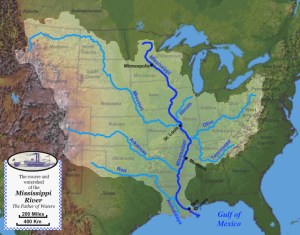
The Mississippi Watershed by Jon Platek

more of it!  We need to appreciate our waterways and take are of them.

On this World Water Day what sustainable practices protect our waterways?

My simple suggestions are: 1. Appreciate our water 2. Go chemical-free 3. Re-use the water that runs off your

Rain gardens and rain barrels collect run-off

house/garage/property /

Buffer strips along lakes and streams  protects water quality.

4. If you have water property, plant a buffer-strip of plants/trees to collect run-off from your yard/agricultural land.

And a video of migrating sand hill cranes on the Platte River


Stories to give you Positive Energy

To make the world a better and safer place we must generate positive energy. This is another round of amazing news stories that tell us in what direction the future is moving. I congratulate these countries and communities for their sustainable goals and effort. This is my occasional series on great news stories.  Renewable energy, managing trash and gender equality are some of the positive energy stories of the past week!

1. In September Kenya is going to ban plastic bags. Read about Kenya here.  

2. Georgetown, Texas, a conservative town in oil country is fueled by wind. Wind power saves them money over oil energy.  Read about it at Georgetown

3 Iceland will be the first country in the world to make employers prove they offer equal pay regardless of gender, ethnicity, sexuality or nationality, the Nordic nation’s government said on International Women’s Day. Read about it at Iceland

4. The United States installed a record-smashing 14,762 Megawatts (MW) of solar power in 2016 — a 97 percent jump over 2015, according to data just released. For the first time ever, solar was the number one source of new generating capacity, beating out wind and gas. Read about it at solar power.

5. A water wheel is cleaning up Baltimore’s harbor picking up plastic and other trash. Read at Baltimore

6. Sweden is on target to be powered entirely by renewable energy by 2040. An amazing goal for this dark northern country. Read about at Sweden.

What sustainable exciting things are happening in your community?