“If everyone does a little bit, it adds up to a whole lot!” health4earth
What can you do?
We all need to take some personal responsibility to make ourselves and our planet healthier. Below are some of the things I work for everyday, and I hope you will add a few of them to your 2016 agenda. Please respond with your clean climate ideas.
My series #31daysoflesswaste continues:
1. Buy less stuff, reuse, reuse and reuse the things you have.
2. Stop idling your car, bundle your car trips together to drive less, and carpool more! Or take the bus!
3. How can Iuse less electricity?
4. How can I prepare for drought and inundation? Save water run-off by planning and building a rain garden with native plants. http://bluethumb.org/raingardens/
6. Recycle and donate your unwanted stuff “More and more people understand that there is no “away” in the finite system that is planet Earth and that we can’t keep using our precious air, water and land to dump the stuff we no longer want. If something can’t be reused, repaired, refurbished or otherwise repurposed, the next best thing is to recycle it.” David Suzuki www.earth911.com or donate to your local donation non-profit
7. How can I reduce single-use consumption of plastic bottles/containers, and reduce my consumption of plastic bags?
What do you do for our planet and yourself to be healthier?
2015 has been a good year for some environmental initiatives. While there is still a long way to go. I have four stories from 2015 that create hope for the future of our planet.
Lentil Stew for Meatless Monday (lentils from Montana, carrots and onions grown in Minnesota)
My series on reducing waste continues, #31daysoflesswaste
What is a Climatarian?
A Climatarian diet involves choosing what you eat based on the carbon footprint of the food, and using your power as a consumer to drive down the production of beef and lamb which have the biggest impact on our climate. A climatarian is about eating local food to reduce transportation and reducing food waste.
Lake Superior in winter, Is ice a thing of the past?
Lake Superior a Climate Change Antenna
Over 90% of global warming is in the oceans. A decades long research on 235 lakes shows that, “Lake Superior is one of the more rapidly warming lakes” The big lake is warming even faster than the oceans! My unscientific observation is that it seems like the days the wind off the lake are fewer. But that happens when warmer winds from the west and south dominate! Also part of our warming climate.
So why is it important?
1. Toxic clouds of algae can bloom. And run-off from the land makes this worse!
2. Fish populations are altered, which has been going on for a while!
3. The worst: Invasive species can find a new home!
This is Day 5, of a series of blogs on #31daysofreducingwaste. Today I am posting ideas from the New York Times on ways to reduce carbon waste.
To me these ideas seem easy, and I hope you can find something new you can do to reduce carbon waste and pollution.
Below is from the New York Times
What You Can Do About Climate Change
By JOSH KATZ and JENNIFER DANIEL DEC. 2, 2015
Simple Guidelines for Thinking About Carbon Emissions
Global climate: it’s complicated. Any long-term solution will require profound changes in how we generate energy. At the same time, there are everyday things that you can do to reduce your personal contribution to a warming planet. Here are some simple guidelines on how your choices today affect the climate tomorrow, and reduce carbon waste
1.You’re better off eating vegetables from Argentina than red meat from a local farm.
Eating local is lovely, but most carbon emissions involving food don’t come from transportation — they come from production, and the production of red meat and dairy is incredibly carbon-intensive.
Emissions from red-meat production come from methane, a potent greenhouse gas. Experts disagree about how methane emissions should be counted in the planet’s emissions tally, but nearly everyone agrees that raising cattle and sheep causes warming that is an order of magnitude more than that from raising alternate protein sources like fish and chicken (the latter of which have the added benefit of creating eggs).
According to researchers at Carnegie Mellon, a typical household that replaces 30 percent of its calories from red meat and dairy with a combination of chicken, fish and eggs will save more carbon than a household that ate entirely local food for a full year.
Yes, eating nothing but locally grown fruits and vegetables would reduce your carbon footprint the most. But for people not ready to make that leap, reducing how much meat you eat matters more than going local.
2.Take the bus.
To give ourselves a good shot at avoiding severe effects such as widespread flooding of coastal cities or collapse of the food supply, scientists have determined there’s only so much carbon dioxide we can safely emit. Divvying up this global carbon fund among the world’s population (and making some assumptions about future emissions) gives you the average amount each person can burn per year over a lifetime — an annual “carbon budget.”
The current per capita emissions for Americans is about 10 times this limit, and given the relative affluence of this country, our emissions will not get down to the average anytime soon. But they can still fall from where they are. Consider this: If you drive to work alone every day, your commuting alone eats up more than your entire carbon budget for the year. Taking the bus — or biking! — would sharply reduce your output.
3.Eat everything in your refrigerator.
Scientists have estimated that up to 40 percent of American food is wasted — which amounts to almost 1,400 calories per person every day. Food waste occupies a significant chunk of our landfills, adding methane to the atmosphere as it decomposes. Even more important, wasted food adds to the amount of food that needs to be produced, which is already a big part of our carbon load.
How can you waste less? For food shopping, plan out meals ahead of time, use a shopping list and avoid impulse buys. At home, freeze food before it spoils. If you find yourself routinely throwing prepared food away, reduce portion sizes.
4.Flying is bad, but driving can be worse.
Remember that annual carbon budget we talked about? One round-trip flight between New York and Los Angeles, and it’s all gone. Fliers can reduce their footprint somewhat by traveling in economy class. First-class seats take up more room, which means more flights for the same number of people. On average, a first-class seat is two and a half times more detrimental to the environment than coach.
But as bad as flying can be, driving can be even worse. A cross-country road trip creates more carbon emissions than a plane seat. And while a hybrid or electric car will save on gas mileage, most electricity in the United States still comes from fossil fuels.
If you really want to mind your carbon emissions, taking a train or a bus is best, especially for shorter trips. Or try that Internet thing: A Skype call or Google Hangout produces very little carbon dioxide.
5.Replace your gas guzzler if you want, but don’t buy a second car.
Before you even start driving that new car to add to your first one, you’ve already burned up three and a half times your annual carbon budget. How? By encouraging the manufacturing of all of those raw materials and metals.
Yet there’s a break-even point at which the carbon savings from driving a new, more efficient car exceeds the carbon cost required to produce it. For example, on average, trading in a 15-mile-per-gallon S.U.V. for a 35-m.p.g. sedan offsets the extra manufacturing costs within two years.
Anything you do to improve mileage will reduce your carbon output. Keeping to the speed limit and driving defensively can improve your mileage by more than 30 percent, according to the Department of Energy. Even something as simple as keeping your tires inflated and having your engine tuned up can give you up to a 7 percent bump in m.p.g. — and an average carbon savings of about what you’d save from eating only local foods all year.
6.Buy less stuff, waste less stuff.
It’s not just car manufacturing that adds to carbon emissions. Other consumer goods can have a huge impact: Making that new MacBook Pro burns the same amount of carbon as driving 1,300 miles from Denver to Cupertino, Calif., to pick it up in person.
At the other end of the product life cycle, reducing waste helps. Each thing you recycle is one fewer thing that has to be produced, and reduces the amount of material that ends up in landfills. But the recycling process consumes energy as well, so — depending on the material — it may not be as helpful as you might think. Recycling a magazine every day for an entire year saves less carbon than is emitted from four days of running your refrigerator.
It’s better not to consume the raw materials in the first place, so you may want to think carefully about whether you’re really going to use something before you buy it.
How many people have to die before responsible gun owners are convinced that our right to life outweighs their right to own a gun?
This is Day 4 of #31daysoflesswaste
I never thought I would post the following for my 31 day series.
Is there a more enormous waste than children, college students or anyone being killed in the prime of their lives? The United States has lost all good sense when it comes to violence. We aren’t safe in our schools, churches, holiday parties, public buildings or on the street. It seems hopeless, but there are things you can you do???
1. Lock up: If you have gun in your home make sure it is locked up.
2. Don’t reinforce violence by watching violent TV shows, movies or video games.
3. Vote! Vote only for candidates that support background checks on all gun sales, support an assault weapon ban, and support purchase of only one gun a month.
4. Speak out: Contact your elected officials and tell them how you feel. Write letters to the editor.
“We Must Create a ‘World That is Worthy of Our Children”President Obama
“What can you do?
The long-awaited Paris climate talks have begun today. What can we all do in solidarity with countries trying to hammer out a sustainable way to move forward for our earth? As I continue my series “31 days of less waste” I challenge you to NOT let your car idle this winter or ever. Idling your car or truck is such a waste of energy and terrible for air quality!
From Thanksgiving to New Year’s Day, household waste increases by more than 25%. Added food waste, shopping bags, packaging, wrapping paper, bows and ribbons all adds up to an additional 1 million tons a week to our landfills. (Source: EPA)
We can all do something about this tremendous influx of trash and I will be posting ideas for 31 days on how to reduce trash and waste:
I have a refrigerator full of leftovers, and I am determined to creatively use everything in the next few days. I have made enchiladas, burritos, and soup today. Luckily, I have drop off compost available near my house where I can bring bones and food that can’t be back yard composted. Below is from the Minnesota Pollution Control:
Wasted food represents wasted demand for water, land, and fuel. A more concrete way of thinking about this, however, is money: A family of four can save more than $30 a week by making changes in how they shop, prepare, and store food.
What would you do with $30 a week?
Whatever your answer, here is the how-to, with extra tips for holiday parties and meal planning. Most importantly, make a commitment–right now–to try one of these techniques in the kitchen this year. Which one will it be?
2. Get help with portion planning. The fear of not providing enough to eat often causes hosts to cook too much. A handy tool for party planning is the “Perfect portions” planner from Love Food Hate Waste, a U.K. nonprofit that focuses on sharing convenient food reduction and reuse tips.
3. Keep fruits and vegetables fresh by prepping ingredients for the week as soon as you get back from the store. Use both this fridge-friendly smart storage guide and A-Z storage guide from Eureka Recycling to extend the life of produce.
During the meal
4.Use small plates and utensils. Simple tricks of using smaller serving utensils or plates can encourage smaller portions, reducing the amount left on plates. It is much easier and more hygienic to use leftovers from serving platters than from individuals’ plates.
5. Allow guests to serve themselves, choosing what and how much they would like to eat. This also reduces the amount of unwanted food left on plates.
After the meal
6. Refrigerate leftovers promptly. The U.S. Department of Agriculture recommends that hot foods be refrigerated within two hours after cooking. Store leftovers in smaller, individually sized containers, making them more convenient to grab for a quick meal.
7. Designate foods to eat first. Download and print this Eat First sign so that everyone knows and remembers.
8.Create new meals. Check out Love Food Hate Waste’s creative recipes for using your food scraps to create new meals. Boil vegetable scraps and turkey carcasses for stock and soups, and use bread crusts and ends to make tasty homemade croutons.
9.Compost food scraps. If you have access to a yard, you can start composting in your backyard (even in the winter!). Apartment and condo residents can consider composting indoors using red worms. Better yet, some Minnesota communities offer curbside pick up or drop sites for food waste–see the list of communities here. If you see your area listed, contact your city, county or garbage hauler to see what’s available.
10. Donate extras. Food banks and shelters welcome donations of canned and dried foods, especially during the holiday season and colder months.
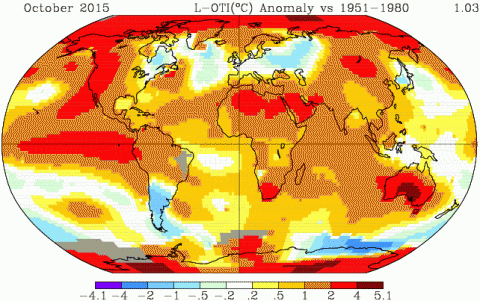
It was Earth’s warmest October ever recorded and it wasn’t even close. The record-shattering month was right in step with most of the preceding months in 2015 — which is positioned to easily rank as the warmest year on record.
New data from the Japan Meteorological Agency and NASA show that the planet obliterated October records established just last year. October 2015 out-baked October 2014 by 0.34 degrees (0.19 Celsius) and 0.32 degrees (0.18 Celsius) in JMA and NASA’s analyses, respectively
“A strategy needs to be something that can be sustained!” President Obama on fighting ISIS
How are we as a society failing our twenty-some year old young men? The shooters in San Bernardino were living the life the men I talk about below wanted. Where can we find a life of hope and purpose for these young men? How can they be encouraged to connect to the world around them?
This is a blog I wrote after the Paris terror attack:
Today I am writing about the young men I met on a recent trip, and I am calling on the wealthy, big corporations, the United Nations, and the World Bank to help them by creating jobs.
The Macedonian flag
My husband and I have just returned from Albania, Kosovo, and Macedonia. In the past few years we have also travelled independently to Serbia, Bosnia, Romania and other Eastern European countries. These countries are democracies, but are still struggling after Soviet domination for many years. The message we hear from the frustrated twenty-some men is, “We have NO hope!” These English-speaking locals approach us as we wait for buses, ride ferries, trains, or are looking at a map on the street. Unemployment is very high and most we talk to are unemployed or a few are in a low wage jobs. They have no confidence in their governments, and feel hopeless about their futures They say they have to pay bribes to get jobs, and to get into the military. Some of these young men are Muslims, and some are Orthodox Christians. They think the only solution is to move to Western Europe, Canada or the United States. What is upsetting is the place and time and people change in these discussions, but their message stays the same! I need to leave to find a better life!
Their frustrations are so enormous that it frightens me they will take any avenue to escape their situation. Clearly, the answer is not with their governments. Kosovo can’t account for all the funds NATO has given them to rebuild from their recent war.
The solution needs to exist inside their own countries. If companies are looking to expand, don’t forget Eastern Europe. Large corporations expanding and creating jobs in these countries could make a big difference! The men we speak to appear to be educated and have good communication skills, and say they are willing to work hard.
It is such a waste of human energy to have energetic minds struggling for a future! The roots of terrorism are very complicated and my ideas are simplistic, but how can these individuals feel they are important, that their lives matter, and that they can contribute worthwhile things to society? What are some sustainable jobs and industries NGOs or private business can start or create in Eastern Europe?
After a soccer win, Albanians adorned with excitement and their flag.
Much needs to be done, but as I ride buses through the countryside these are the things that could be win-win for Europe and the entire world:
Solar is a natural for this area. Wealthier areas have solar water heaters.
Recycling is lacking and plastic litter is an enormous problem. How could these plastic bottles and bags be made valuable?
ECO Tourism. Albania is on the Adriatic Sea and the ancient and historic sites make for some fabulous tourist attractions.
You ask me, “Where are the girls and women?” I can’t answer that question. Sometimes on the street you see a hundred men to one woman. Some women do have jobs, and girls are going to school, but overall this is a place where the men seem to dominate.









 Of all the stuff we throw away in Minnesota almost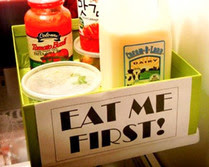



 Health4earth