Plastic Recycling is Deceptive.

Not only is plastic almost imp0ssible to recycle, it becomes more toxic if it is recycled. https://www.ecowatch.com/recycled-plastics-toxic-chemicals-health-risks.html

.

Plastic recycling is very challenging. There is very little regulation of plastic in the United States. Plastic producers claim recycling is the answer to their products, but they don’t want any responsibility to pay for recycling or disposal of their products. They often they say their plastic is recyclable, when in fact it might be just one per cent recyclable or not at all.

Why is plastic recycling so hard? First there are those recycle 1-7 numbers. For something to be recycled it first needs to be collected, and then sorted into those  numbers. Next, it needs a market, or someone to buy it. All this makes plastic recycling expensive for communities (tax payers) and it is labor intensive.

 I am fortunate to live in a county (Hennepin) that makes this a priority, and I can’t express my gratitude to them enough!

Both Maine and Oregon have passed legislation to hold producers responsible for recycling and disposing of their products. This is a beginning and it is hopeful that more regulation of plastic could happen. As consumers we also have responsibility, when we purchase plastic we reinforce the idea that this is OK, and more of it is produced. The plastic chemical companies are gearing up to produce more plastic for the future, lets work to hold them accountable! Talk to your elected officials about how plastic producers should be held responsible for what happens to long lived plastics after disposal. Manufacturers also need more integrity in labeling what is in their plastic products.

On America Recycles Day recycle more of your paper/cardboard, glass and tin cans, and recycle plastic bottles and containers, but also begin to REDUCE your PLASTIC consumption.  Always bring your reusable cups/bottles, and bags for a start.

Big new goals on America Recycles Day https://thehill.com/policy/energy-environment/581578-epa-issues-national-recyling-plan-with-goal-of-50-percent-recycling

Make it a plastic-free day!

buy in bulk

Buying in bulk and refilling your bottles is the next step in reducing plastic.

Reading and watching list:

Maine Will Make Companies Pay for Recycling. Here’s How It Works. – The New York Times (nytimes.com) 

John Oliver Takes on the Plastics Industry – EcoWatch

California Just Passed 5 Mega Laws to Fight the Plastic Crisis – EcoWatch 

Plastics recycling is 90 percent garbage, John Oliver says, but that’s not your fault and there is a fix (yahoo.com) 

Watch Story of the Bottle! – Greenpeace

Virginia Governor Takes Action on Single-Use Plastics – EcoWatchBreak Free From Plastic Pollution Act Receives National Support – Center for Biological Diversity

New November

Climate Month

Thousands of years ago the Celtics celebrated November 1, as the New Year. This year in November the world climate summit is happening in Glascow. As New November converges with the climate summit lets create new positive goals to reduce our use of fossil fuels. Let’s all work together to make a difference for the earth.

Have fun reducing your carbon footprint.

The Actions For Happiness calendar below is about doing something new, perfect for setting new goals. You know what works for you and your household. Maybe you can reduce food waste or reduce the plastic that comes into your home. Maybe try back yard or drop-off composting or bring reusable bags shopping. Each one of us knows something positive we can do to make a impact. Good Luck.

This November we don’t know what will happen in Glascow, Scotland, but each one of us can make a difference. Every action counts. Lets focus our energy on making a healthy world for everyone! If everyone does a little, it adds up to a lot! What are some New November ideas you are excited to try?

Happy New November!


The Cost of Bottled Water

We are at the end of World Clean Up Month. As we pick up trash and works to keep our Earth clean, I always wonder, “What can we all do to keep the Earth cleaner and healthier?”

Bring your reusable water container.

reusable containers

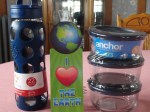
My reuseable lunch containers

Today I walked by a car that had it’s back seat full of bottled water, and too often I see people with grocery carts full of bottled water. Why not purchase a large reusable container and fill that at a store? You could save hundreds of plastic bottles from ending in the landfill and live a more sustainable life.

I have confidence in our public water supply. I know where I live it is safe!

What are the costs of bottles water to our environment? A study done in Spain answers this question. Recycling and water in every community is different so we can’t make big generalizations, but in the United States recycling of plastic is only 9 tp 11% which makes bottled water awful for the environment. Also, the production of plastic uses fossil fuels and pollutes our air.

The study found that the environmental toll of bottled water was 1,400 to 3,500 times higher than that of tap water.

Another problem with bottled water is that companies like Nestle take free public water from aquifers to bottle and sell to the public. This is happening on Lake Superior right now (Lake Superior is not for sale). What a racket! Maine has passed a law to make companies responsible for recycling their products instead of the taxpayers. Read about it here Maine Will Make Companies Pay for Recycling. Here’s How It Works. – The New York Times (nytimes.com) 

Read the Spain study here:

What Is the Environmental Cost of Bottled Water? – EcoWatch  

https://www.lakesuperiornotforsale.com/home

https://www.plasticpollutioncoalition.org/blog/2021/9/10/watch-story-of-plastic Watch the excellent documentary, The Story of Plastic.

Make it Plastic Free

The best time to start Plastic Free July was on July 1, but the second best time is today. Become aware of the plastic you use everyday all year! Plastic Free July is a world wide movement to become aware of the amount of plastic we use in our lives. It is about finding alternatives to the tons of plastic the world uses everyday. We are filling our bodies, our oceans, rivers and land with plastic. Plastic that will survive hundreds of years. Reducing our single-use consumption can make a big difference.

Reuse and Refuse plastic!

So what are single use plastics? Single-use plastics are items meant to be trashed after use. Single-use plastics are used for packaging and items such as bottles, wrappers, straws, and bags.

Survey your garbage, what plastic does it contain? Can you recycle any of it? What does it tell you about your choices and purchases? What plastic items do you think you could do without? Is there someway you can have less plastic garbage?

Don’t try to go plastic free to start, it’s close to impossible in the world we are living, but awareness and one item at a time is success!

July is plastic-free month

“Please, No straw!”

What is one plastic item you can give up? Baggies? Produce bags? Bottled water? Plastic straws? Plastic utensils? Styrofoam? For the next two weeks, don’t purchase or use that item. Hopefully, you can live without that product, and then choose another plastic item you can also end using. Keep it simple, don’t try to do too much. Simple steps will lead to more success and less frustration. There is nothing easy reducing plastic in our plastic world. Good luck as you begin a new journey of more sustainable and healthy living.

reuse

Reusable cloth produce bags

Ask me if you need help, I have been on this plastic free journey for years, and constantly learn new ways to reduce plastic. It is rewarding to know you have lightened your plastic footprint. Good luck!

Model a new way forward: “When we use disposable items, we send a message: this is what we want, keep it up, make more of this. When we refuse, and choose reusable, we model another way forward. Our choices can make a difference. Let’s make them count!” PlasticfreeTuesday 

Many ideas to reduce plastic use:

How to Get Rid of Throwaway Culture – YES! Magazine (yesmagazine.org)

Getting started – Plastic Free JulyGetting started – Plastic Free July 

Plastic Free July – Be Part of the Solution   

New Zealand to Ban Most Single-Use Plastics by 2025 – EcoWatch

Here’s What Happens When You Eat From Plastic Containers – EcoWatch 

How Plant-Based Packaging Can Solve the Plastic Crisis – Business and Tech (futureofbusinessandtech.com)  


The Story of Plastic (animated short) – Story of Stuff

Pandemic pollution: Disposable masks, gloves are saving lives but ruining the environment | PBS NewsHour

Seven ways to go plastic free for Plastic Free July – Greenpeace Aotearoa

Norwex Movement  10 ways to be plastic-free

It’s Earth Month

Welcome to spring and the marvelous month of April. Earth Day is on April 22, and Arbor Day is on April 30. What can we all do to make April special? Small actions by many can make a big difference. So how can we all make a daily difference? Whether you have meatless days, pick up litter, leave your car at home, plant for butterflies or go plastic-free, make everyday Earth special.

earth day

Everyday Is Earth Day

By Kelly Roper

Every day is earth day,
Or at least it should be.
We should take steps every day
to save our planet, don’t you agree?

Try walking when it’s practical,
And skip driving a car.
It will help cut down emissions
And raise air quality by far.

Reuse, renew, recycle,
Think of how much you throw away.
Our earth can only hold so much trash,
One day there’ll be the devil to pay.

And when it comes to littering,
It’s not enough to clean up after yourself.
Leave places better than you find them,
And pick up litter left by someone else.

Don’t spray your garden with pesticides,
Protect the birds and the bees.
Choose natural ways of deterring pests,
That won’t carry poisons in the breeze.

These are easy things we all can do,
To protect the earth for future generations.
If we continue to ignore all the warning signs,
We’ll face sad and irreversible ramifications.

milkweed
A monarch butterfly on common milkweed


Reading List:

Facts about trees 

Climate Activist Spends More Than Year Picking Up Trash – EcoWatch     

U.S. lawmakers target plastic pollution, producers in new legislation | Reuters

Butterfly: A Life | National Geographic – Bing video

How to Attract Butterflies (joyfulbutterfly.com)

Butterfly Plants: 16 Plants To Turn Your Backyard Into A Butterfly Paradise (bloomingbackyard.com) 

Water: How to Stop Undervaluing a Precious Resource and Be Ready for the Future – EcoWatch


March Motivation

mindful march
Spread kindness and touch the earth

May March sunshine on your shoulders make you happy!

Happy March! Be kind to the Earth, be kind to yourself, and be kind to others! The Actions for Happiness calendar ( below) has many good suggestions to be more mindful and spread kindness.

March brings me joy. The longer days and the hope of spring are motivators to get outside and notice the changes, even if it is just melting snow. Everyday the outdoor world is waiting to be explored, your own neighborhood is perfect. Even 5 minutes of mindful observation will lighten your mood. Breathe, smell the earth, let the sun, rain and snow tickle your face, touch the wind, talk to the trees, hear the sunrise/night fall, smile and be kind.

This March pay attention to how you can reduce your carbon footprint: Can you reduce idling your car or drive less? Can you eat less meat and waste less food? How can you reduce the waste and plastic you generate? Can you buy less things and be a smarter consumer? Just doing a little bit can make a positive difference. Thank you and good luck!

Reading List:

Embrace Winter challenge: Go bird-watching or stargazing – StarTribune.com 

Making ourselves worthy of our vaccine – StarTribune.com 

UN Releases Scientific Blueprint to Address Climate Emergencies – EcoWatch

Sounds of Silence: The Extinction Crisis Is Taking Away the Earth’s Music – EcoWatch 

Enjoy many good suggestions below to have a Mindful March:

be mindful
Be mindful of your footprint on Earth

The Challenge of Plastic

Do the best you can until you know better, then do better” Maya Angelou


Covid-19 has been a plastic disaster. As we climb out of this abyss we must take single-use plastic seriously. We also need to hold companies accountable for bad packaging.

Why as taxpayers and citizens are we paying the price of this environmental disaster of plastic while the creators of this packaging have no responsibility? The landfills in the county where I live are full, and plastic trash can last for hundreds of years, maybe forever!  What are the manufacturers of this plastic thinking other than profit? As consumers we are also at fault. If we keep buying this plastic packaging they will keep making it!

July is plastic-free month
Work to reduce your plastic footprint

How can we all reduce our landfill trash? Surveying my garbage I find I have way too much plastic that cannot be recycled, and most of it is # 7 plastic that cannot be recycled.   Why would companies use plastic that can’t be recycled? I decided to ask them. I sent an emails or telephoned Wyman’s Blueberries, Bob’s Red Mill, Morning Star and Gardein.  A few companies admitted they wished their  packaging was better, but it was a freshness and a cost issue to stay competitive. What about the costs to the environment and our health? 

#7 plastic is a mixture of different plastics and it is designed to make it hard to know what it contains. It can contain harmful chemicals like BPA. Don’t purchase it, and don’t purchase any plastic that can’t be recycled!

Model a new way forward: “When we use disposable items, we send a message: this is what we want, keep it up, make more of this. When we refuse, and choose reusable, we model another way forward. Our choices can make a difference. Let’s make them count!” PlasticfreeTuesday 

Also choose reusable masks and gloves!

Bob’s Red Mill was the most disappointing of the companies I contacted. They sell lots of products, many that are hard to find, and have a monopoly on some products. Bob’s has a trusted reputation of being  healthy and sustainable. I am sad they use awful  # 7 packaging, and at our house we won’t purchase their products or any #7 plastic until their packaging improves.

Please recycle plastic bags at grocery stores!

The good news is that by being a smarter shopper it is possible to find items that are packaged in recyclable #4 plastic. These #4 bags need to be dropped off at grocery stores for store recycling. They should not be placed with your normal plastic recycling because they disable the sorting machines.

health4earth
Bring your own reusable bags.

Lets hold plastic producers accountable and avoid harmful plastic. It is always best to reuse bags and containers when possible, but sadly that often is not an option. However, with new awareness we can do better, one plastic item at a time.

Reading list:

Tips & tricks for grocery shopping with less waste (plasticfreetuesday.com)

Solving Packaging

Virginia moves closer to ban plastic foam containers | Environment | rappnews.com 

Action item: Can you join me and take action demanding President Biden act on plastics? Click here: https://actionnetwork.org/petitions/president-biden-be-a-plasticfreepresident?source=email&


Resolve to be a Better Consumer

Consumption is a big challenge for us as humans–we need, we want lots of things…The vast majority of products end up in landfills, and over 60 % of fabric fibers are synthetics derived from fossils fuels so they don’t decay.” Designer  Christian Siriano

SO, How can we become better consumers?  We have incredible power with our consumer dollars.  How can we use that power wisely? Why would you reinforce corporate greed with your purchases? Everyone wants to save money, but you are not saving money when you purchase lots of cheap things that will end up in the land fill next year!  

Lots of environmental repair is needed, and I hope you will join me to help in 2021 and resolve to be a better consumer. Look at your habits and just make one change. See reading list below.

One of the most important forms of power we have is our ability to decide where and how we spend our money. When you pump LESS gas, and purchase less meat you’re saying something. When you contact businesses about their extreme plastic packaging, you’re doing something. When you shop local, support local farms and climate-smart brands, you’re making a difference by revealing a growing market for whom business as usual will not cut it. At our house we only make purchases at places that pay a minimum wage. If we can use our dollars to shop for quality, support local, green, and homegrown businesses. We can keep dollars in our own communities and make a statement. Buying less makes a statement too.

The thought of having plastic microfibers in the food I consume stirs me to reduce my plastic consumption and motivates me to become aware of my plastic and other unsustainable purchases.

glass
Reuse containers
Where can you start? First work to stop purchasing single-use plastic. Shop with your reusable bags, use a reusable water bottle, refuse straws/plastic utensils, and find an alternative to baggies. Maybe stop using sauce packets. Become aware of all the  packaging that can’t be recycled.

Start working on one thing and go from there. You will not be perfect, but you can make a difference! Maybe you can start with an alternative to dryer sheets and hand wipes. I just discovered somethings I purchased during the pandemic are in #7 plastic(not recyclable). I’m contacting these companies, and ending my #7 plastic purchases! Education and awareness make such a difference. I hope the reading list below will heighten your awareness also!

Reading list:

Say no to fast fashion and purchase items that will last a long time

Toxic chemicals in single-use plastics are harming human health | U.S. PIRG   

Do You Want to Buy Less Stuff? Three People Tell Us How – The New York Times (nytimes.com)

https://bigthink.com/personal-growth/buy-less-stuff

Beginner’s Guide to Minimalism – Going Zero Waste

Six Eco-Friendly Pledges for 2021​ – EcoWatch 

New Year’s Resolutions for the Planet – The New York Times (nytimes.com)

9 New Years’ Climate Resolutions To Keep For 2021, According To Experts (forbes.com)

In Focus: We know the real cost of fast fashion, so why do we buy it? | Metro News

Lake Michigan plastic pollution poses ecological and social threats (https_dailynorthwestern.com)  

Substitutes For Dryer Sheets | Cleancult

My ten tips for Health4earth holiday shopping: 


Purchase clothing made from natural fibers – synthetic fibers like polyester are made from plastic. Opt for alternatives to dryer sheets for your laundry.

A Plastic-free President, sign petition

Please sign the petition below asking President Biden to help stop the plastic crisis facing the world.

Plastic will soon outweigh all the fish in the sea, and it’s in our drinking water and on our plates. Yet industry plans to increase plastic production by 40% over the next decade.

President Biden can, and must, act on plastic pollution. We must stop producing more plastic and transform our throwaway economy to a regenerative one.

We demand President Biden take bold actions on plastic pollution and be a #PlasticFreePresident.

550+ organizations recently launched a plan outlining eight actions President Biden can take without Congress to fight the plastic pollution crisis. President Biden must take all eight actions.

Can you join me and take action demanding President Biden act on plastics? Click here: https://actionnetwork.org/petitions/president-biden-be-a-plasticfreepresident?source=email&

Thanks!

We all must do everything we can to reduce plastic pollution.

Below are the eight important actions that need to be immediately taken:

  1. Use the purchasing power of the Federal government to eliminate single-use plastics and replace them with reusable products.
  2. Deny permits for new or expanded plastic production facilities associated with infrastructure projects.
  3. Make corporate polluters pay and reject false solutions.
  4. Advance environmental justice in petrochemical corridors.
  5. Update existing federal regulations to curtail pollution from plastics facilities by using the best available science and technology.
  6. Stop subsidizing plastic producers.
  7. Join international efforts to address the global plastic pollution crisis through new and strengthened multilateral agreements.
  8. Reduce and mitigate the impacts of discarded and lost fishing gear.