I was surprised to hear about No Buy July. Surprised, but also pleased. As a zero-waste person, I worry about the harm consumerism does to our planet. Our air and water suffer from production, transportation and the disposal of so many purchases that are not necessary. We are passing a way of life of consumerism on to our children when we already have a planet that can’t support our American lifestyles.
We all need clean air and water. Less consumerism and less trash make a difference in protecting our planet.
Michelle Singletary has good suggestions to participate in No Buy July
Shopping shouldn’t be thought of as entertainment.
Don’t define yourself as a consumer.
Stop spemding to save
Start saving by having a plan and a purpose for how you spend your money. Read her column here:
In honor of Plastic-free July, buy yourself a wooden cutting board.
Plastic cutting boards (made from chemicals sourced from fossil fuels) are a staple in many of our kitchens. But did you know that they have actually been found to be a significant source of microplastics in our food? This study estimated that a person, on average, consumes between 7.4g-50.7g of microplastics from a polyethylene cutting board each year, and 49.5g from a polypropylene one. These microplastics have many potential health risks such as increased risk of disease, artery blockage and inflammation.
In this NBC News article, Victoria Fulfer, a postdoctoral fellow at the University of Rhode Island, gives a demonstration to show how easily microplastics can end up in food and water. After cutting two slices of a white onion and rinsing the slices, she filtered the water used in the rinse. When the filter was placed under a microscope it revealed small pieces of plastic that had transferred from the cutting board to the onion.
All cutting boards, including plastic ones, should be replaced when there is evidence of excessive wear and tear, such as deep grooves in the surface. These grooves can make it harder to properly clean the board, and it makes it easier for microplastics to transfer from plastic cutting boards. This article talks about how damage to the surface of plastics further increases the release of microplastics, and goes more in depth on possible health risks associated with them.
Maybe replacing your plastic cutting boards with wooden or bamboo ones could be your first step to reducing plastic use in your daily life, or maybe you have already started the process and this is another step in your journey. Above is from The Carbon Almanac
For the health of your family, switch to a wooden cutting board
What a crazy start to summer. First a scary high windstorm came through, knocking out power and downing lots of trees. The winds shifted from the north to the south and it became extremely hot and humid. There were warnings to stay inside it was so hot. Even worse the United States bombed Iran.
A cold wind coming across the big lake
The power is back on, the birds are back singing and the butterflies seem to have survived the storm, and we will never know the harm the United States did to the people of Iran.
I hope your summer is special, that you are able to spend time outside, and enjoy the long days. Everyday work for peace and justice and speak out!
Minnesota lost an incredible leader by horrific violence on June 14. She cared deeply for the people of Minnesota and was always respectful and thoughtful.
Sign made by my niece.
Here’s an excerpt from a statement from Sophie and Colin Hortman, the children of Melissa and Mark Hortman:
“If you would like to honor the memory of Mark and Melissa, please consider the following:
Plant a tree.
Visit a local park and make use of their amenities, especially a bike trail.
Pet a dog. A golden retriever is ideal, but any will do.
Tell your loved ones a cheesy dad joke and laugh about it.
Bake something — bread for Mark or a cake for Melissa, and share it with someone.
Try a new hobby and enjoy learning something.
Stand up for what you believe in, especially if that thing is justice and peace.
…The best way to honor our parents’ memory is to do something, whether big or small, to make our community just a little better for someone else.”
y J. Patrick Coolican | Editor-in-chiefSATURDAY, June 14, 2025
The American nightmare has arrived in Minnesota. Democratic House leader Melissa Hortman was shot and killed . I knew Melissa Hortman well. Michelle and I sat down with her Thursday for a 30-minute off-the-record conversation. I respect a lot of elected officials, but I admire few. I admired Melissa Hortman. Despite her achievements, she was never self-important. She knew that average Minnesotans had no clue who she was, but that didn’t stop her from doing everything she could to make their lives better. She could be wonderfully blunt. Among my first interactions with her when she became minority leader in 2017, she commented on a profile I’d written of a Republican political operative, calling it, “the journalistic equivalent of a,” well, I can’t publish it, but you can imagine. After I wrote a column in 2019 that proclaimed it was time to stop underestimating Melissa Hortman, she told me, “Whew, I needed a cigarette after reading that one.” She had a wonderfully salty mouth and sense of humor. In the political and legislative sphere, she cared about the work and only the work. And when the work was done, she cared about her family and golden retrievers. We lost a good one. J. Partick Coolican
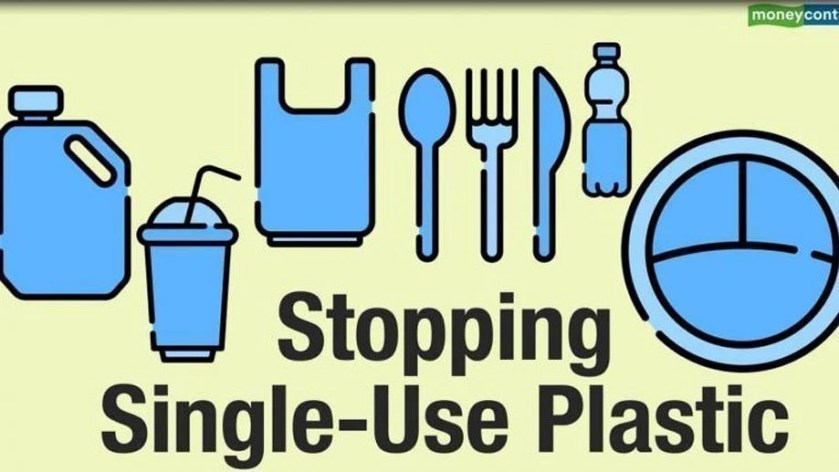
How can you use less plastic? #BeatPlasticPollution
June 5th is World Environment Day Today is World Environment Day, an international observance that began in 1973 and held annually ever since.This year’s theme continues to focus on plastic and the goal is to #BeatPlasticPollution. Did you know that:Less than 10% of plastic is recycled? The rest end up in landfills or waterways.There are more microplastics (plastic less than 5mm in diameter) in our waterways than there are stars in our galaxy?We ingest microplastics from the food we eat and the air we breathe?A global treaty to end plastic pollution is currently being negotiated, with the second round of discussions happening in August. Consider taking a count of the number of single use plastic items you use in a day or a week. And then consider what alternatives exist to help reduce that number or eliminate your single plastic use altogether. We can all take action. Together.
Reducing your use of single-use plastic makes a big difference!
Small acts adding up to more Below is from the Carbon Almanac! “We don’t have to engage in grand, heroic actions to participate in change. Small acts, when multiplied by millions of people, can transform the world.” – Howard Zinn Consider what you buy. Everything we purchase has made an impact on the environment through carbon emissions. Some more than others. Is your item available second-hand?Our actions matter. We can make a difference before it’s too late. Small actions when coordinated with others can lead to systemic change.What are things you can do?Get engaged in your local government. Listen to a meeting, reach out to your representative, sign a petition. Local environmental policies have a direct impact on our lives and our voices can make a difference.Involve your community. Bring people together to enjoy conversations and spark ideas on what actions to take. Consider what your buy. Everything we purchase has made an impact on the environment through carbon emissions. Some more than others. Is your item available second-hand?Our actions matter. We can make a difference before it’s too late.
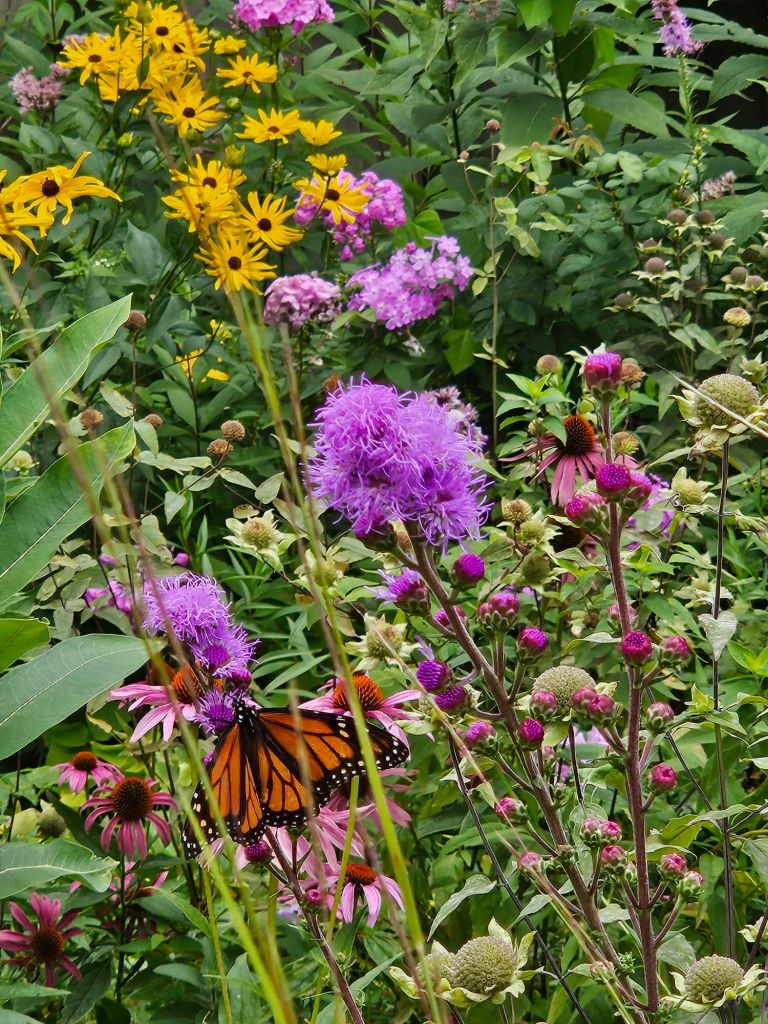
Plant your yard for pollinators, and please DO NOT use chemicals!
From The Carbon Almanac:
As you savor the taste of honey, remember that the production of one pound of honey needs 2,000,000 flowers and on average, a bee visits 50-100 flowers on each flight. The average bee makes just one twelfth of a teaspoon of honey in its lifetime.
Did you know that there are over 20,000 species of bees who, along with other pollinators such as butterflies and hummingbirds, support the production of 75% of our food crops? Not only is their contribution to food security essential, the bees also play an important role in preserving biodiversity.
Bee populations are becoming increasingly at risk due to habitat loss, temperature changes due to climate change, pollution and agricultural practices.
The United Nations has designated today, May 20th, as World Bee Day
What can we do to help protect the bees?
All of us can share information about bees to help raise awareness on their important role. It’s as easy as forwarding this email.
If you have a garden, you can avoid the use of pesticides and herbicides. You can also plant diverse native plants that flower at different times of the year.
The chickadees cardinals and orioles sing at their hopeful best
My beautiful niece is married
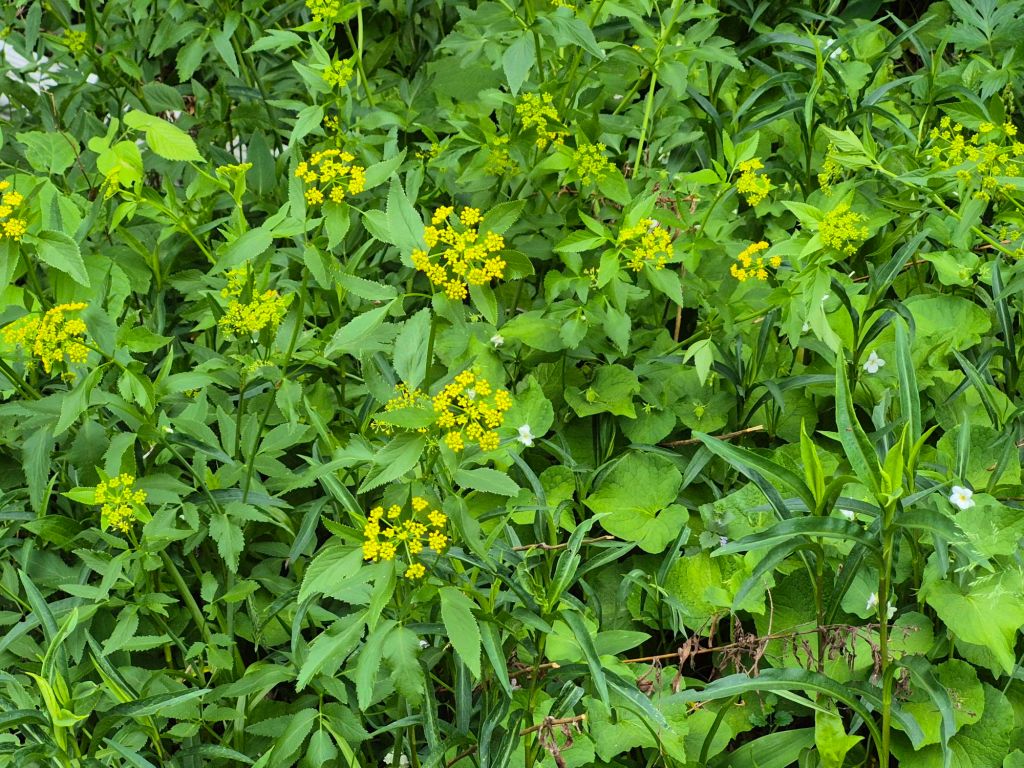
A swallowtail butterfly lays eggs on the blooming golden Alexander.
Golden Alexander is a swallowtail host plant
Every tree shows its own personality,
The first hummingbirds in my yard,
The freedom of biking to events and just for fun.
A season of hope,
Columbine and wild geranium bloom,
The violets are radiant!
Hummingbirds follow the blooming Columbine.
Discussions about what to do with dandelions. And even the first dandelions bring joy!
Be mindful, pay attention, get outside and see our beautiful world!
“Dandelions are one of the earliest flowering plants in spring, dandelions provide food for pollinators such as bees and butterflies, rabbits, birds and deer, just to name a few. The dandelion also helps below the surface by feeding the soil with its deep root structure.” unknown source
“Act as if what you do makes a difference. It does.” — William James
Refuse to consume so much junk. Avoid Target and The Dollar Store.
What is the single best thing I can do for the planet? Maybe the best two things I can do? The New York Times put this question to some experts. It was actually the most click on article on Earth Day.
They have sone good suggestions, but we all have such different lifestyles and ways we are all harmful to the planet in the way we live. We all need to take inventory of the ways we are harmful to clean air and clean water. Everyone can buy less stuff. Do we really need all the Easter eggs and decorations everywhere the past two months? Do you really need that extra shirt or pair of shoes? What can you purchase second hand or reuse?
Cutting meat consumption and driving less are huge, but so is not wasting so much food, and reducing our single-use plastic
The New York Times asked their experts how to be the best planetary citizens?
I think their ideas are thoughtful and interesting. It is worth a read
“The thing
First, it’s important to understand that climate change is a symptom of a larger issue: ecological overshoot, or the fact that humans are consuming resources faster than they can regenerate and producing more waste and pollution than nature can absorb, said William Rees, a human and ecological economist and professor emeritus at the University of British Columbia. The most effective solutions, then, address not just greenhouse gas emissions but overall consumption and pollution.
One of the most effective ways to avoid consumption in the first place, Dr. Rees said, is to have a smaller family. But that might not be a realistic option for many people, for all kinds of personal, cultural and other reasons.
As The New York Times’s ethics columnist has pointed out, it might also be realistic to think that children who are raised with a sense of responsibility could — in personal and collective ways — be part of the solution, ensuring human survival on a livable planet by promoting adaptation, resilience and mitigation.
A less complicated recommendation is to cut back on meat. “On all these different metrics, eating a plant-based diet broadly improves sustainability,” said Seth Wynes, a scientist specializing in climate change mitigation at the University of Waterloo in Ontario.
The choices we make for food are some of the most powerful we make for the planet. Reducing our meat consumption, reducing foot waste, and reducing plastic packaging make a huge impact.
This is such a thoughtful Earth Day post by Dan Buettner. I need to share it! Enjoy.
“On the places where people live the longest, Earth Day isn’t a date on the calendar.
It’s a way of life.
In Ikaria, Greece, families gather around tables that haven’t changed much in generations—bowls of beans, fresh vegetables, wild herbs, and homemade bread. In Okinawa, Japan, elders still tend small garden plots, growing the same nutrient-rich foods they’ve eaten since childhood. In Nicoya, Costa Rica, meals are cooked slowly, with care—and rarely, if ever, wasted.
No compost bins. No food miles calculators. Just deeply rooted habits that naturally care for the Earth. 1. The quiet climate action on your plate Globally, what we eat has a bigger impact on the planet than how we commute or what we recycle. But in blue zone communities, where chronic disease is rare and centenarians are common, food systems look strikingly different from the modern industrial model.
People grow what they can, shop close to home, and cook meals from scratch. It’s not about perfection—it’s about patterns. These aren’t grand gestures or sweeping declarations of sustainability. They’re quiet, everyday acts: soaking beans overnight. Picking greens before lunch. Making soup with what’s left in the fridge.
Over time, those patterns add up—not just to better health, but to a lighter impact on the Earth. 2. Plants, beans, and the power of simplicity At the heart of every long-lived kitchen is a humble foundation: beans. Black beans in Nicoya. Garbanzo beans in Ikaria. Soybeans in Okinawa. They’re eaten nearly every day, often with greens, grains, or root vegetables.
This isn’t just a healthy way to eat—it’s one of the most sustainable. According to environmental researchers, shifting toward a plant-forward diet can significantly reduce greenhouse gas emissions, conserve water, and use less land.
And yet, the secret isn’t just what’s on the plate. It’s the simplicity of it. Meals are built around a few affordable, nourishing ingredients. They’re not flashy, but they’re deeply satisfying—and deeply kind to the planet. 3. Homegrown, seasonal, and slow Long before “farm-to-table” became a restaurant trend, it was simply how people ate. In blue zones, food is closely tied to the rhythms of the land. Tomatoes are eaten in summer. Squash in fall. Greens in spring. Root vegetables in winter.
Backyard gardens are common. So are farmers’ markets and community exchanges, where excess harvests are shared instead of tossed. Eating this way naturally cuts down on packaging, long-haul transportation, and overprocessing.
But more than that, it builds connection—to the Earth, to the seasons, and to each other. In every longevity hotspot, food isn’t just fuel. It’s a daily relationship with the land. 4. Fewer packages, more presence A meal made from scratch doesn’t just nourish your body. It also avoids the packaging, additives, and excess waste that come with processed convenience foods.
In blue zones, people rarely rely on single-use plastics or highly packaged meals. Leftovers are stored in reused jars. Lunches are wrapped in cloth. Bread is baked, not bought. There’s a natural resourcefulness that comes from making do with what you have—and wasting as little as possible.
But the deeper benefit might be this: when meals take time, they also become something to slow down for. Cooking becomes a ritual. Eating becomes a shared experience. And in a world that often feels rushed, that presence is a gift—to both you and the planet. 5. A better way, one bite at a time You don’t need to grow your own food or cut out all packaging to make a difference. Start with what feels doable.
Try cooking one plant-forward meal each day. Choose in-season produce when you can. Make beans in big batches. Learn one simple recipe that becomes your new staple. Keep a cloth tote in your car. Compost your scraps if you’re able.
Small changes, done consistently, can be powerful. And they often ripple out—toward better health, deeper joy, and a gentler impact on the Earth.
This Earth Day, remember: the way we eat is one of the most personal—and powerful—climate choices we make.
And if it also adds years to your life? Even better.” Dan Buettner
In the blue zone of Sardinia, akentannos is a toast often used. It means ‘May you live to be 100 years.’ Akentannos!







 Health4earth