What are the best two thing I can do?

“Act as if what you do makes a difference. It does.” — William James

July is plastic-free month

Refuse to consume so much junk. Avoid Target and The Dollar Store.

What is the single best thing I can do for the planet? Maybe the best two things I can do? The New York Times put this question to some experts. It was actually the most click on article on Earth Day.

They have sone good suggestions, but we all have such different lifestyles and ways we are all harmful to the planet in the way we live. We all need to take inventory of the ways we are harmful to clean air and clean water. Everyone can buy less stuff. Do we really need all the Easter eggs and decorations everywhere the past two months? Do you really need that extra shirt or pair of shoes? What can you purchase second hand or reuse?

Cutting meat consumption and driving less are huge, but so is not wasting so much food, and reducing our single-use plastic

The New York Times asked their experts how to be the best planetary citizens?

I think their ideas are thoughtful and interesting. It is worth a read

First, it’s important to understand that climate change is a symptom of a larger issue: ecological overshoot, or the fact that humans are consuming resources faster than they can regenerate and producing more waste and pollution than nature can absorb, said William Rees, a human and ecological economist and professor emeritus at the University of British Columbia. The most effective solutions, then, address not just greenhouse gas emissions but overall consumption and pollution.

One of the most effective ways to avoid consumption in the first place, Dr. Rees said, is to have a smaller family. But that might not be a realistic option for many people, for all kinds of personal, cultural and other reasons.

As The New York Times’s ethics columnist has pointed out, it might also be realistic to think that children who are raised with a sense of responsibility could — in personal and collective ways — be part of the solution, ensuring human survival on a livable planet by promoting adaptation, resilience and mitigation.

A less complicated recommendation is to cut back on meat. “On all these different metrics, eating a plant-based diet broadly improves sustainability,” said Seth Wynes, a scientist specializing in climate change mitigation at the University of Waterloo in Ontario.

Livestock production accounts for about 14.5 percent of global greenhouse gas emissions. It’s also a major driver of habitat destruction and other environmental harms, including antibiotic resistance, water scarcity, biodiversity loss and pollution.”

Read the entire article below:

Pollinator Week

The rudbeckia is just starting to bloom.

Pollinator Week has been a rainy week where I live in Minnesota. I was going to list all the pollinators coming to my yard, but it’s hard to see much activity when it rains hard every day! The rain doesn’t bother hummingbirds, and they are entertaining us at our hummingbird feeder.

Spiderwort, a native plant beauty!

The purpose of Pollinator Week is to heighten everyone’s awareness of how important pollinators are to us all. Our bees, butterflies and birds are having a hard time with loss of habitat and our overuse of chemicals. We use too many harmful chemicals to kill insects and fertilize our lawns and farm fields.

My message to you this pollinator week is reduce your dependence on harmful chemicals that kill pollinators. This includes butterflies and birds. Since 1970 North America has lost 3 billion birds. We can’t keep killing the insects and caterpillars the birds need to raise their young.

Birds and butterflies add so much to the quality of our lives Bees and other pollinators touch our lives every day in ways we may not realize. Imagine a world without most of the foods you love. Without bees we wouldn’t have the abundance of apples, pumpkins, strawberries, blueberries, or almonds that we enjoy. Pollinators even help milk production: the alfalfa and clover cows graze is replenished by seed pollinated by bees. A world without pollinators would not only leave us with fewer food choices, but would make it substantially harder to find the nutrition we need to survive.

Thoughts on creating a pollinator Garden:

  • Provide a variety of flower colors and shapes to attract different pollinators.
  • Whenever possible, choose native plants.  Native plants will attract more native pollinators and can serve as larval host plants for some species of pollinators.
  • If monarch butterflies live within your area, consider planting milkweed so their caterpillars have food.
  • Plant in clumps, rather than single plants, to better attract pollinators
  • Choose plants that flower at different times of the year to provide nectar and pollen sources throughout the growing season http://www.fws.gov/pollinators/

“Of 30 commonly used lawn pesticides, 19 are linked with cancer or carcinogenicity, 13 are linked with birth defects, 21 with reproductive effects, 26 with liver or kidney damage, 15 with neurotoxicity and 11 with disruption of the endocrine (hormonal) system. Of these same pesticides, 17 are detected in ground water, 23 have the ability to leach into drinking water sources, 24 are toxic to fish and other organisms vital to our ecosystem, 11 are toxic to bees, and 16 are toxic to birds.”

Read more here: https://www.beyondpesticides.org/…/factsheets/30enviro.pdf

https://www.epa.gov/pollinator-protection/protecting-monarch-butterflies-pesticides

May be a graphic of text

All reactions:

4444

Heat Waves

Happy Summer! What are ways we can show our love for our planet?

Below is from the Carbon Almanac :

The ‘official’ start to summer is June 20th in the Northern hemisphere though it seems that the heat of the season has arrived earlier. 

There is a heat dome happening in North America with the mercury reaching temperatures that normally are seen later in the season. In addition, Delhi India recently broke temperature records with a new record of 49.9 degrees Celsius (121.8 degrees Fahrenheit). The previous record was 49.2 degrees Celsius (120.5 degrees Fahrenheit), which happened just two years ago.

High temperatures are particularly problematic for senior citizens as the body doesn’t cool down as easily. By mid century, about 20% of the world’s population will be over 60. If you are 35 years or older now, you are included in that number. Another vulnerable group are the unhoused. 

Human actions are causing climate change which in turn is causing more extreme heat waves. Which can also lead to conditions for forest fires. 

Want to help? Here are some ideas for action.   

Butterflies

It’s always exciting when the Monarchs arrive!

Joy, we had our first Monarch butterfly in our yard today!

I was surprised to read this about the Monarch butterflies. See below from Minnesota Public Radio

Everyday concentrate on clean air and never burn wood or put dirty air into the atmosphere. That includes driving less!

This is from Minnesota Public Radio:

People can help by planting both native nectar and host plants, like milkweed, reducing pesticide use and mowing less grass less often.

Monarch butterflies are beginning to return to Minnesota and should start arriving in droves in the next two weeks. But the population returning from Mexico will likely be much smaller than in years past.

This winter, the number of eastern monarch butterflies wintering in Mexico was the smallest researchers had recorded in a decade.

A years-long drought pattern, winter whiplash and warming temperatures are all hurting the vulnerable species and the plants it relies on to survive, according to University of Minnesota Professor Emilie Snell-Rood, who studies monarchs and other pollinators.

Five Signs the Climate is Changing

Where I live the climate is clearly changing and impossible to deny.  See the video from Climate Reality on five indicators the climate is changing. View    here. 

Five Changes from Climate Reality:

  1. Air temperatures over land are rising.

It’s clear that weather stations on land show average air temperatures are rising, and as a result, the frequency and severity of droughts and heat waves are increasing. Intense droughts can lead to destructive wildfires, failed crops, and low water supplies, many of which are deeply affecting southern areas of the United States and other parts of the world.

  1. Air temperatures over oceans are rising.

Roughly 70 percent of the world is covered by oceans. So you can understand how hotter air over our oceans could make a big difference in the climate system.

It’s simple, as the air near the surface of the oceans gets warmer, more water evaporates. The result?  Potentially stronger tropical storms, more extreme precipitation events, and more flooding.

  1. Glaciers are melting.

The disappearance of glaciers is one of the clearest signs of climate change. People who rely on melting glaciers for water are facing shortages, and in many regions, the situation is only getting worse.

In a world unaffected by climate change, glacier mass stays balanced, meaning the ice that evaporates in the summer is fully replaced by snowfall in the winter. However, when more ice melts than is replaced, the glacier loses mass. And the people who depend on melting ice for water to support their farming and living needs are deeply affected.

>> Related: The Climate Crisis Deserves Our Attention Right Now <<

4. Arctic sea ice is shrinking.

Satellite images from space show that the area covered by sea ice in the Arctic is shrinking, continuing a downward trend for the past 30 years. As with glaciers, Satellite images from space show that the area covered by sea ice in the Arctic is shrinking, continuing a downward trend for the past 30 years. As with glaciers, there’s a seasonal rhythm (or supposed to be) at work. The Arctic ice cap grows each winter when there’s less sunlight, and shrinks each summer when days are longer and warmer, reaching its lowest point of the year in September.

Previously, this cycle of melting and freezing has more or less balanced out. But with temperatures rising, we’re seeing more ice melt in the summer than forms in the winter. The result is that some research suggests that the Arctic could lose almost all of its summer ice cover by later in the century.

5. Sea levels are rising.

Sea levels have been rising for the past century. And the pace has only increased in recent years, as glaciers melt faster and water temperatures increase (causing oceans to expand). You can imagine how this would affect the almost 40 percent of the US population that lives in a highly populated coastal area. Let’s not forget that eight of the 10 largest cities in the world are near a coast.

Consider how many millions of people are at risk as sea levels rise, storms intensify, and more extreme flooding occurs. Additionally, as sea levels rise, salt water begins intruding into freshwater aquifers, many of which support human communities and natural ecosystems.  From Climate Reality

Even in just the past ten years I have observed enormous changes.  First, it is scary that in ten years we have experience more than five hundred year storms. Second, it just doesn’t get really cold at night anymore. Ticks and other invasive bugs(emerald Ash Bore and others) survive the winters.  Third, we are constantly going from drought to inundation. Fourth, the trees and plants are moving north. Fifth, sadly the wildlife is disappearing. We have fewer song birds, the moose and deer are struggling with disease.

What changes do you see as the climate warms?

The Ticking Clock

Is everyone afraid?

Is everyone ashamed?

Smashing Pumpkins, Doomsday song

What would cause the clock to get closer to midnight?

Doomsday Clock Now Two and a Half Minutes to Midnight, Thanks to Trump!


What a strange unprecedented week full of lies, “alternative facts” and being told we should all shut up and just listen for once. A week of show and chaos. Many are engaged, protesting, shaking their heads, and knowing this is not sustainable.

Because of Mr. Trump’s words in denial of climate change and his being close to the nuclear trigger we are now closer to Doomsday that we have been since the 1950’s. Thursday the experts moved the clock 30 minutes closer to midnight. Read about it here.

“The Doomsday Clock is a symbolic clock face that represents a countdown to possible global catastrophe. It has been maintained since 1947 by the members of The Bulletin of the Atomic Scientists Science and Security Board,[1] who are in turn advised by the Governing Board and the Board of Sponsors, including 18 Nobel Laureates. The closer they set the Clock to midnight, the more vulnerable the scientists believe the world is to global disaster” Wikipedia

And finally, an environmental summary of the disaster of Trump’s first week from the NRDC.


Does “climate change” exist in Wisconsin?

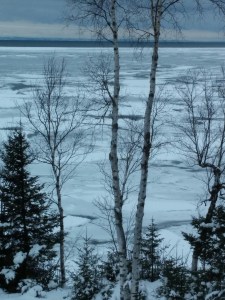
Ice on Lake Superior doesn't last long, and the lake is warming!
Ice on Lake Superior doesn’t last long, and the lake is warming!

As Wisconsin and the world have probably just experienced one of the warmest years on record, Scott Walker, governor of Wisconsin, is deleting climate change from existence, or trying anyway. Sorry governor, climate change is not going away!

I have a cabin in Wisconsin, and can rattle off the climate changes I have seen in just the last few years:  First I have lived through three very dangerous storms.  All three were 100-year events with flooding and loss of many trees. Second, Lake Superior and Lake Michigan, lakes surrounding Wisconsin, are warming at a pace never seen before.  Third, good winter snow is a thing of the past.  Either it doesn’t snow, or after it snows, it rains or warms up making winter sports icy and dangerous.  We experience long droughts, then too much rain at one time.  And finally, the night temperatures are rising; it doesn’t get as cold on winter or summer nights. Where I sit in Wisconsin the climate is changing!

The governor must feel the need for some attention, or maybe he is applying for a position in the Trump administration?  What is the purpose, to waste taxpayer money?

As a taxpayer in Wisconsin I do not appreciate such a waste of time and resources. Can this be good for the Wisconsin economy? I know people who refuse to spend any money in Wisconsin. They drive through refusing to stop or spend a dollar.  Why would businesses want to locate in such a backwards place?

Why should we care about climate change?

What is the future, when we can't accept the reality of the present
What is the future, when we can’t accept the reality of the present?

http://www.ecowatch.com/climate-change-deleted-dnr-website-2166939088.html

Good News! Humans No Longer Caused Climate Change, According to the State of Wisconsin

http://gizmodo.com/good-news-humans-no-longer-caused-climate-change-acco-1790641483

Do You Care About Clean Water, Clean Air?

What can you do?
What can you do?

The environment is where we all meet; where we have a mutual interest; it is the one thing we share.” Lady Bird Johnson

One presidential candidate has promised that he will eliminate the U.S. Environmental Protection Agency (EPA) if he wins, which means we can kiss the best, most important parts of the Clean Air Act and the Clean Water Act goodbye, along with almost every other federal clean air and water safeguard.

And if you want even more evidence that this candidates extremism will mean havoc for our nation and our planet, look no further than his stance on the climate crisis: he has called it a hoax created “by and for the Chinese.” Read the entire article here.

And a voter’s guide to candidates.

wpid-wp-1423799335727.jpeg

International Day of Peace

Hope
Hope

September 21, International Day of Peace

A Day for the Earth to Observe Peace Together!

HOPE       LOVE      PEACE    GRATITUDE

Make Peace A Choicewp-image-737417761jpeg.jpeg

Be Thankful we live where we live, and do something positive for the world today!

Read about the International Day of Peace here.

Make the World A Better Place

A New Beginning
A New Beginning