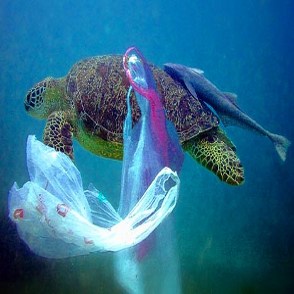
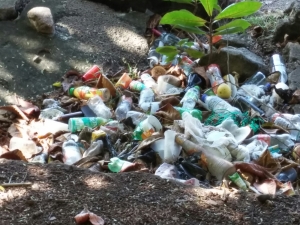
Plastic breaks into tiny pieces, wildlife thinks it’s food, and it might last forever!
Humans have created 9 billion tons of plastic since 1950 and most of this plastic still exists on earth. Only 9 percent has been recycled, and 11 percent incinerated. That leaves 80 percent of the plastic ever produced floating around in our waterways, poisoning fish, or releasing chemicals in landfills. As citizens of this planet we should be doing everything we can to reduce the amount of plastic we use.
There were two sad set-backs for plastic in our environment this past week, and both were pandering to big business and lobbyists, or “filling the swamp”.
First, our national parks had made an effort to begin banning plastic water bottles, but the new deputy secretary of the interior, with ties to the plastic bottle industry, changed the policy. Read about it here.
Second, on what should have been an easy issue, the Minneapolis City Council tabled a five-cent fee to be placed on plastic bags. The lobbyists and the plastic industry wins over our lakes and streams.
Never should plastic have been allowed to be produced without a plan to dispose of it. Sixty-seven years later plastic manufacturers and lobbyists are thriving, and elected officials continue to “fill the swamp” taking campaign money from them. If our parks and cities don’t lead by example our environment lacks places it can turn for leadership!
Please do what you can to reduce your plastic foot-print!
Simple ways to reduce your plastic pollution:
Bring your own bag
Start simple and add one idea at a time
Bring your own shopping bags
Buy bulk and refill your own containers
Don’t purchase bottled water
Say “No” to straws, plastic spoons, forks, and knives
Always choose glass containers over plastic!
Never purchase products packaged in Styrofoam (Be aware of meat and produce trays)
I hear many business leaders, and others use the word sustainable when referring to their businesses and their personal goals. I wonder what they mean, and what they are thinking??? Sustainability is a complex topic and can mean many things. Is it one of those code words that is full of hot air??
I think that sustainability means practices that protect the valuable resources of the planet for now and into the future.
The most quoted definition of sustainability is from the United Nations Economic Committee “Sustainability presumes that resources are finite, and should be used conservatively and wisely with a view to long-term priorities and consequences of the ways in which resources are used.”
To me sustainability is about he future! It is about reusing and thinking ahead! I think being sustainable takes planning ahead and being prepared. Monday is the eclipse. Much of the United States will be outside. How can you be prepared for a Monday eclipse that doesn’t trash our earth? Plan ahead, fill your water bottles, pack lunches and snacks in reusable containers, gather your pin-holes or eye-approved glasses, and have sustainable fun!
What is a climatarian? A climatarian considers the foot-print they are making when they make their purchases. The idea is to buy local and reduce beef and dairy.
My suggestions on being a Climatarian:
* Eliminate beef, and reduce dairy consumption
* Walk or take public transport to purchase groceries.
*Participate in Meatless Monday, and go meatless often.
Use real dishes
*Buy in bulk and refill your own bottles.
*Work to reduce all food waste and compost any food waste you have.
*Choose minimal packaging, and recycle as much as possible.
*Use real dishes!
* I love “clean out” the refrigerator stir fry or soup.
*Shop food co-ops, farmer’s markets and eat locally grown foods, and grow your own food.
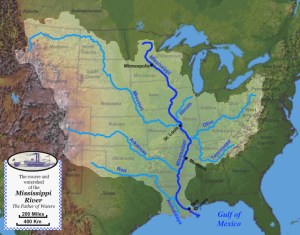
The Mississippi Watershed by Jon Platek This how trash can reach the ocean.
This morning while walking around the lake by my house, I was sad to see plastic bottles bobbing around in the lake. The amazing thing is that those plastic bottles from a lake in land-locked Minnesota could end up in the Gulf of Mexico. 80% of marine litter originates from land. The Minnehaha Creek drains this lake into the Mississippi River, which flows into the Gulf of Mexico. Plastic in a Minneapolis lake, could float the Mississippi River into the Gulf of Mexico, these plastic bottles and bags are a dangerous threat to marine life, and they are unpleasant to water recreation.
I am sure you know most of the ways to avoid plastic, but you might learn something from this list on reducing plastic use. The excellent list below is from the NRDC https://www.nrdc.org/:
“Plastic, of course, is uniquely problematic because it’s nonbiodegradable and therefore sticks around for a lot longer (like up to 1,000 years longer) than other forms of trash. And we’re not just talking about people dumping their garbage overboard. Around 80 percent of marine litter actually originates on land—either swept in from the coastline or carried to rivers from the streets during heavy rain via storm drains and sewer overflows.
So the best thing we can do to protect our waterways is trying to keep as much plastic as possible out of the waste stream in the first place. The good news? There are many small ways you can have a big impact. The NRDC has ten important ways to reduce your plastic footprint:
1. Wean yourself off disposable plastics.
Ninety percent of the plastic items in our daily lives are used once and then chucked: grocery bags, plastic wrap, disposable cutlery, straws, coffee-cup lids. Take note of how often you rely on these products and replace them with reusable versions. It only takes a few times of bringing your own bags to the store, silverware to the office, or travel mug to Starbucks before it becomes habit.
2. Stop buying water.
Each year, close to 20 billion plastic bottles are tossed in the trash. Carry a reusable bottle in your bag, and you’ll never be caught having to resort to a Poland Spring or Evian again. If you’re nervous about the quality of your local tap water, look for a model with a built-in filter.
3. Boycott microbeads.
Those little plastic scrubbers found in so many beauty products—facial scrubs, toothpaste, body washes—might look harmless, but their tiny size allows them to slip through water-treatment plants. Unfortunately, they also look just like food to some marine animals. Opt for products with natural exfoliants, like oatmeal or salt, instead.
4. Cook more.
Not only is it healthier, but making your own meals doesn’t involve takeout containers or doggy bags. For those times when you do order in or eat out, tell the establishment you don’t need any plastic cutlery or, for some serious extra credit, bring your own food-storage containers to restaurants for leftovers.
5. Purchase items secondhand.
New toys and electronic gadgets, especially, come with all kinds of plastic packaging—from those frustrating hard-to-crack shells to twisty ties. Search the shelves of thrift stores, neighborhood garage sales, or online postings for items that are just as good when previously used. You’ll save yourself a few bucks, too.
6. Recycle (duh).
It seems obvious, but we’re not doing a great job of it. For example, less than 14 percent of plastic packaging is recycled. Confused about what can and can’t go in the bin? Check out the number on the bottom of the container. Most beverage and liquid cleaner bottles will be #1 (PET), which is commonly accepted by most curbside recycling companies. Containers marked #2 (HDPE; typically slightly heavier-duty bottles for milk, juice, and laundry detergent) and #5 (PP; plastic cutlery, yogurt and margarine tubs, ketchup bottles) are also recyclable in some areas. For the specifics on your area, check out Earth911.org’s recycling directory.
7. Support a bag tax or ban.
Urge your elected officials to follow the lead of those in San Francisco, Chicago, and close to 150 other cities and counties by introducing or supporting legislation that would make plastic-bag use less desirable.
8. Buy in bulk.
Single-serving yogurts, travel-size toiletries, tiny packages of nuts—consider the product-to-packaging ratio of items you tend to buy often and select the bigger container instead of buying several smaller ones over time.
9. Bring your own garment bag to the dry cleaner.
Invest in a zippered fabric bag and request that your cleaned items be returned in it instead of sheathed in plastic. (And while you’re at it, make sure you’re frequenting a dry cleaner that skips the perc, a toxic chemical found in some cleaning solvents.)
10. Put pressure on manufacturers.
Though we can make a difference through our own habits, corporations obviously have a much bigger footprint. If you believe a company could be smarter about its packaging, make your voice heard. Write a letter, send a tweet, or hit them where it really hurts: Give your money to a more sustainable competitor.” NRDC
I would add one thing to the list. Never use Styrofoam! Some stores package fruits and vegetables on Styrofoam trays! Awful.
Finally, current status of the Mississippi River in the Twin Cities from Friends of the Mississippi.
I know people get tired of my harping on plastic, but plastic is a serious world problem. According to the Plastic Pollution Coalition the average shopper uses 500 plastic bags a year, and that is just bags, not all the other plastic products. This is not sustainable!
I love thinking of how my grandparents lived, and how it is different from today. I loved this post from One Green Planet about what we can learn from the past and from our grandparents. Read it here.
Below is a quote from One Green Planet which show how serious this plastic issue is!
“In the past 30 years alone, the amount of plastic produced worldwide has increased by 620 percent! On average, that equates to 300 million tons of plastic a year. Of this 300 million tons, about 8.8 million tons find their way into the world’s oceans where they are left to slowly photodegrade into smaller pieces – and by slowly, we mean over the course of 100 to 1,000 years. When you consider the huge volume that is added to the oceans every year and the fact that plastics never really “go away,” we find our oceans crowded with a massive soupy mixture of harmful plastic products. This sadly has a massive impact on the marine animals who call our oceans home. Around 700 marine species are in danger of extinction due to entanglement, ingestion or general pollution caused by our plastic trash.”
Our grandparents didn’t have the choices and variety we do. They cooked and ate hearty food on real dishes, but most important they conserved, reused, and didn’t throw everything away like we do today! I would stay with my grand parents for a week and we didn’t need to run to the store to buy buy buy. We used what we had.
What do you remember about how your grandparents did things?
Even remote islands are collecting our plastic trash
This is an excellent blog on reducing plastic from http://www.ecomena.org. It is so simple!
Ecomena’s top ways to reduce plastic are:
1. Bring your own shopping bags
2. Buy bulk and refill your own containers
3. Don’t purchase bottled water
4. Say “No” to straws
Last year I did a series on reducing waste over the holidays. Read it here Maybe just do one thing different this year.
Below is from the Minnesota Pollution Control:
Holiday waste
The presents have been opened and the festivities are over. What’s to be done with all the stuff and waste that’s left? Are there eco-friendly ways to keep it out of the trash?
A lot, and you bet!
The EPA reports that garbage increases 25% between Thanksgiving and New Year’s, and it’s not hard to see why. Drive down any street or alley in late December or early January and you’re likely to see trash bins and bags overflowing with holiday waste. Some of these materials have potential value, which can be lost when they hit the waste stream.
Even if your holidays weren’t the “greenest” on the block, there’s still time afterwards to engage the 5 R’s: Reduce, Reuse, Repurpose, Recycle, and Rethink.
Lake Superior and all lakes are precious, protect them!
Yesterday I was at the public library in Superior, Wisconsin. I was impressed with an educational display by Wisconsin Coastal Management . They had a large display of trash that a student group had picked up from a one day beach trash pick-up from a local Lake Superior beach. Ideas from the trash collected created an educational poster for the public. Plastic breaks into tiny bits, is eaten by our fish, and probably will last hundreds of years, maybe forever!
A Climatarian diet involves choosing what you eat based on the carbon footprint of the food, and using your power as a consumer to drive down the production of beef and lamb which have the biggest impact on our climate. A climatarian is about eating local food to reduce transportation and reducing food waste.
My easy suggestions on being a Climatarian:
Walk or take the bus to purchase groceries.
Participate in Meatless Monday, and go meatless other days, also!
Eliminate beef and reduce cheese consumption.
Work to reduce all food waste and compost any food waste you have.
Choose minimal packaging, and recycle as much as possible.
Use real dishes, and reuse jars and products.
I love “clean out” the refrigerator stir fry and ideas from Tom Colicchio
This is an argument against Jeff Bridges video. Fish, birds, other wildlife, our oceans and all of us are being harmed by plastic. The below argument is very weak: