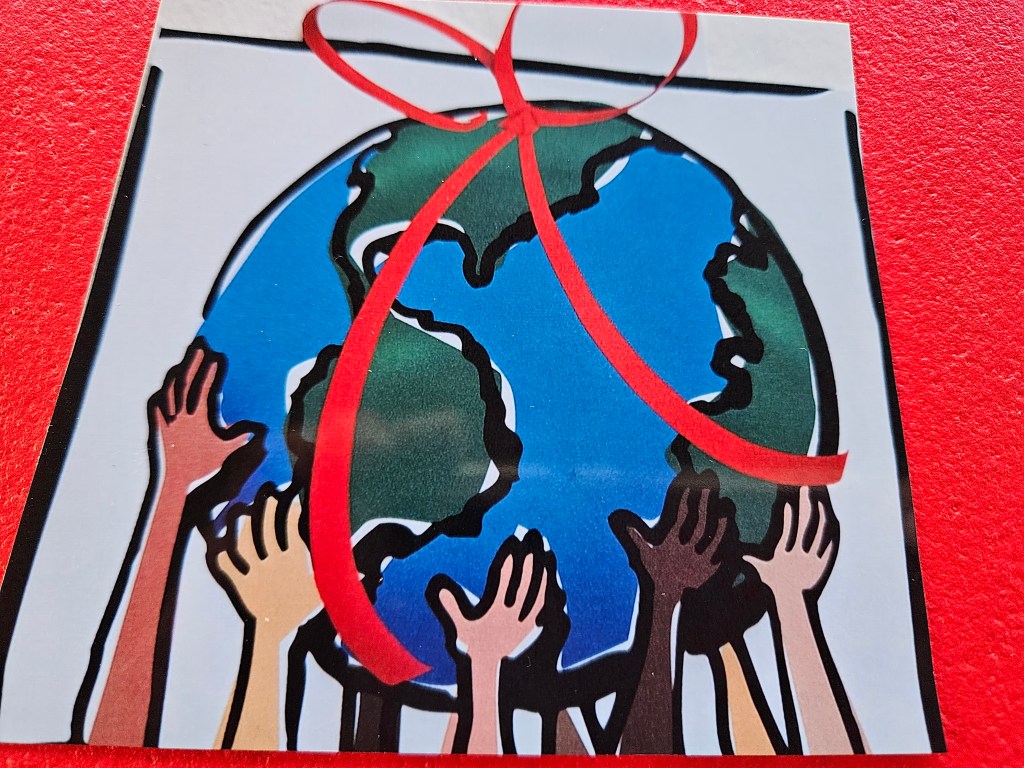
Today we celebrate International Day of the World’s Indigenous Peoples.
Raoni Metuktire is an Indigenous Brazilian leader and environmentalist. Born in 1932, he has seen a lot of change due to climate change.
In The Carbon Almanac, we feature his quote and it serves as a reminder that we are all connected.
We all breathe this one air, we all drink the same water. We all live on this one planet. We need to protect the Earth. If we don’t, the big winds will come and destroy the forest. Then you will feel the fear that we feel.
WE consume too much stuff, use too much plastic, and create too much garbage. Our consumerism fuels Overshoot Day, but also all our driving around and wasting more fossil fuels than what we need.
Consuming less is good for our air and our water, and over consumption contributes to our climate crisis. We all need to be responsible for the trash we create, but the producers of so much packaging also needs to be held responsible.
Consuming and wasting less is the key!
Today is the day after Earth Overshoot Day. But what does that mean for you?
Earth Overshoot Day is the date when humanity depletes all the natural resources that the Earth can regenerate in the year. So as of today August 2, we are living at a deficit. We are consuming more resources than we can replace.
This metric from the Global Footprint Network is a striking reminder of the importance of taking care of the planet and using resources responsibly. However, it can also serve as inspiration to take action. Individual actions can make a difference to help #MoveTheDate!
What YOU can do to help?
Buy less and reuse instead of purchasing something new.
Reduce your food waste.
Have SMALL families.
Reuse, Reuse, Reuse! A good place to start is by trying to reduce unnecessary purchases, opt for sustainable products, and reuse items whenever possible.
We all need to waste less, and work together to lift up our Earth.
Plastic is everywhere. It is hazardous to our health and our environment. Lets work together every day to end the Age of Plastic
These outstanding ideas are from Eureka Recycling!
Practical Tips for Going Plastic-Free
The most powerful zero waste action we can take is not creating waste in the first place. So how do we go about reducing consumption. Here are some helpful tips:
Start with the Basics: Swap out single-use plastic bags for reusable ones. Keep a stash in your car or by the door so they’re always handy.
Choose Reusables & Say NO to Single-Use Plastic: Carry your own refillable stainless-steel water bottle and use glass containers for food storage. Repurposing glass pasta jars for food storage can be a good option
Shop Mindfully: When grocery shopping, opt for products with minimal or recyclable packaging. Choose loose fruits and vegetables over those wrapped in plastic and items in glass or cardboard containers over plastic whenever possible. When shopping for clothes, try to choose used clothes and clothing made of cotton or hemp, which can help reduce microfiber pollution Many clothing, especially synthetic fibers like polyester, nylon, and acrylic, are made from plastic polymers. When these synthetic fabrics are washed, they release tiny plastic fibers known as microfibers into the wastewater. These microfibers are too small to be caught by wastewater treatment plants and ultimately end up in rivers, lakes, and oceans.
Evaluate Necessity vs. Want: Before making a purchase, ask yourself if the item is something you truly need or if it’s just a want. Delaying non-essential purchases can often lead to realizing you don’t need them at all.
Borrow or Share: Borrow or share items that you only need temporarily or infrequently, such as tools, books, or recreational equipment, rather than buying them outright.
Support Plastic-Free Initiatives: Encourage businesses and local governments to adopt plastic reduction initiatives. When possible, support companies that prioritize sustainable packaging and products.
Make Your Voice Heard: As we work to advance zero waste legislation at the state and federal levels, we know we cannot recycle our way out of the plastic production and pollution crisis. Let’s work together to hold petrochemical companies accountable and change systems to better support reduction and reuse.
While Plastic Free July lasts for just one month, the habits we cultivate and policies we advocate for can have a lasting impact. By reducing our plastic consumption, we conserve valuable resources, minimize pollution, and protect wildlife. Moreover, we contribute to a shift in societal norms towards more sustainable living practices.
Join the movement this Plastic-Free July and let’s make every month an opportunity to support a zero waste future.
And some ways to reduce your exposure to microplastics
Let’s get real about plastic. Plastic is made from fossil fuels and toxic to the environment and human health. We cannot recycle our way out of our plastic problem. Watch the video below:
We have a plastic problem. Manufacturing plastic creates air pollution, single-use plastic ends up in the ocean, toxic chemicals, and microplastics find their way into our food and water. Plastic permeates our lives, and we would all be healthier by reducing our plastic use.
Make it fun this month as you try to reduce the plastic you expose your family and yourself to plastic. See below for ideas to reduce your plastic exposure.
We all see plastic litter that is harmful to our waterways and our environment, but we might just be learning that plastic contains harmful chemicals and that it breaks down into microfibers. We can’t see the chemicals or the microfibers that can harm our bodies.
Plastic contains thousands of harmful chemicals that are especially harmful to children. These chemicals leach from plastic containers into our food and bodies. Plastic contains serious hormone disrupters that can cause obesity, diabetes, cancers and birth defects.
Water from plastic bottles has about double the microplastic level of tap water on average, according to a 2018 study published in the journal Frontiers in Chemistry. So unless your tap water is contaminated with unsafe elements, such as lead, it’s probably best to drink tap. Fill up a metal reusable bottle for when you go out. You can always filter your tap water. Depending on the filter, that may further reduce microplastic levels. (Check CR’s ratings of water filters.)
Do: Heat food in or on the stove, or by microwaving in glass. Don’t: Microwave in plastic.
Some heated plastics have long been known to leach chemicals into food. So if you’re warming up food, use a pan in the oven or on the stove, or if you’re microwaving, use a glass container. Also, avoid putting plastics in the dishwasher because of the high heat involved in cleaning.
Do: Buy and store food in glass, silicone, or foil. Don’t: Store food in plastic, especially plastic that may contain harmful chemicals.
The American Academy of Pediatrics has said that plastic food containers with the recycling codes 3, 6, and 7 may contain potentially harmful chemicals, unless they’re labeled “biobased” or “greenware.” Don’t store food in these types of containers. Instead, use containers made of glass or silicone, or wrap your food in aluminum foil. If you’re storing food in or eating food out of plastic containers, know that plastics with recycling codes 1 and 2 are more likely to be recyclable—though they are usually recycled into lower-quality plastics. And there still may be harmful or unknown chemicals in any type of plastic.
Do: Eat fresh food as much as possible. Don’t: Rely on processed food wrapped in plastic.
The more processed or packaged a food is, the higher the risk that it contains worrisome chemicals. Food cans are often lined with bisphenol A (or similar compounds). Buy fresh food from the supermarket, and—as much as possible—try to use refillable containers if your market allows. (Of course, with shopping made difficult by the coronavirus pandemic, prioritize your health and shop however is most feasible and safest.) Certain markets let you fill up cardboard or reusable containers with bulk items and weigh them, or you can use your own mesh bags for produce. Raw meat and fish need to be kept separate for safety reasons, but ask the store fishmonger or butcher to wrap these foods in wax paper instead of plastic. Take cloth—not plastic—reusable bags to the store to take your groceries home.
Do: Vacuum regularly. Don’t: Allow household surfaces to get dusty.
The dust in your house could be loaded with microplastics and chemicals that are found in plastic, such as phthalates. Cleaning up dust may help reduce the amount of plastics you inhale, especially if you are stuck inside for long periods of time during a period of social distancing. CR recommends vacuuming regularly with a HEPA filter, which is best for trapping dust. (Check CR’s ratings of vacuums.)
Do: Work with your community. Don’t: Assume your impact is limited to what you do in your personal life.
Legislation to limit the use of single-use plastics and plastic production may pull the biggest levers, but joining forces with community-level recycling groups can truly make a difference. Look for so-called zero-waste groups, which can offer guidelines for how to recycle or compost all your garbage—and which lobby for local rules that can restrict throwaway items. When possible, shop at markets that source goods locally, so they don’t require as much packaging and shipping. Seek out groups such as Upstream, a nonprofit working to create reusable takeout packaging for restaurants. And when possible, educate yourself about and support any city, county, and state legislation limiting single-use plastics.
My list to reduce plastic:
Always carry a reusable glass or metal water bottle, and reusable shopping bags with you.
Learn to refuse single-use plastics, such as plastic water bottles and coffee cups, straws, plastic bags and plastic utensils.
Purchase fruit and produce in the bulk section, and don’t place items in plastic bags.
Always search out products in glass jars instead of plastic containers.
When you must buy plastic products, choose ones that you can recycle rather than ones you must put in the trash.
Bring your own containers and shop the bulk section of your local food coop.
We need the United States to support a strong plastic’s treaty. Use the link below to demand strong leadership from the USA for this treaty.
We need swift and urgent action. Plastic pollution is a global problem in need of global solutions. Plastic production, use, and disposal threaten Earth’s communities, air, water, biodiversity, and soils. With the UN’s Global Plastics Treaty negotiations now underway, the US government (USG) has the unique opportunity to play a key role in the change we need on a worldwide level: instead of leading the world in generating the plastic pollution crisis, it’s time for the USG to lead by forging ambitious solutions. Read full letter at this link: Letter to U.S. Government Officials involved in UN Global Plastics Treaty negotiations
I disagree with a bill in the Minnesota Legislature about synthetic turf (HF 3705/SF 3869).
Synthetic turf has been framed as a sustainable solution for dealing with the climate crisis, drought and drainage issues. Unfortunately, many want to believe in this easy but expensive solution and believe without evidence that it is a sustainable practice. This is greenwashing and a false solution for helping our climate crisis. Synthetic turf is made of plastic. It has all the terrible side effects of plastic pollution. It breaks down in the sun and breaks down with use. It leaches toxic chemicals into our water and breaks down into microfibers. Synthetic turf is not healthy for children, pets, wildlife or adults to recreate on. It is not a sensible solution for a green lawn.
If plastic were a country, it would be the fifth-largest emitter of greenhouse gases in the world. We shouldn’t be encouraging the use of more plastic. We should be reducing our plastic use, not increasing it.
Synthetic turf is terrible at managing stormwater runoff. Even if it is permeable, the water will run right under it and cause erosion as it finds a muddy path to the nearest waterway. Deep rooted plants are the master of absorbing runoff and holding the soil. They are a proven solution.
The state of Minnesota is putting lots of money into bee lawns. Let’s pivot to them in times of drought. Bee lawns help pollinators, improve water quality and work for the healthy communities the public wants. Bee lawns are real, not fake. They are a low-maintenance and sustainable solution, and bee lawns can be adjusted and planted for everyone’s needs.
Becky Wardell Gaertner, Minneapolis
I like violets in a bee lawn, they are hearty, can be mowed and bees like them.
Water is Life, we must do a better job of protecting our waters.
World Water Day March 22, 2024 is the United Nations observance day dedicated to highlighting the importance of freshwater. It serves as a reminder of the critical role water plays in our lives and ecosystems.
“Water for Peace” is this year’s theme. fostering peace, prosperity, and conflict prevention in the role water plays in the world.
It is shameful the poor job we do to take care of our fresh water. Our fresh waterways are teaming with microplastics, nitrates and forever chemicals. None of these safe for human exposure. In some places invasiive speciaes have been introduced that also change the entire ecosystem of our water ways.
73 percent of Minnesota nitrate pollution comes from cropland, primarily through agricultural drainage systems below cropped fields and by nitrate pollution leaching into groundwater, and then moving underground until it reaches streams. 78% of nitrate pollution to the Mississippi River in our state is fr…See more on fmr.org
At least 70 million Americans get their water from a system where toxic PFAS “forever chemicals” were found at levels that require reporting to the Environmental Protection Agency. That’s according to new data the EPA released in its ongoing 5-year review of water systems across the nation. The number will almost certainly grow as new reports are released every three months. USA Today, March 21.2024
Careless humans have transported invasive plants and animals with their boats and equipment. Invasive species disrupt aquatic ecosystems, endanger native species, and have far-reaching consequences that harm the eco-system of waterways.
What are a few things you can do to protect our waterways?
1. Always clean your boats and equipment before entering lakes.
2. Pick up litter
3. Keep the storm drains near your home free of leaf debris and plastic waste.
4. Reduce the plastic you use, and always make sure your plastic waste is in the correct place, either recycling, landfill waste or hopefully to be reused again.
5. Plant deep rooted plants that absorb water runoff, like native grasses and native plants.
6. Create rain gardens or adjust your drain spouts to drain onto your lawn or gardens.
I hope we can all start the year with hope for peace and joy and a healthier cleaner planet. Every action we take matters Our collective actions, can contribute to positive change and help us to feel we are making a difference, and we are!
If plastic were a country, it would be the fifth largest emitter of green house gases!
Easy ways you can reduce your plastic footprint:
Always carry a reusable glass or metal water bottle, and reusable shopping bags with you.
Learn to refuse single-use plastics, such as plastic water bottles and coffee cups, straws, plastic bags and plastic utensils.
Purchase fruit and produce in the bulk section, and don’t place items in plastic bags.
Always search out products in glass jars instead of plastic containers.
When you must buy plastic products, choose ones that you can recycle rather than ones you must put in the trash.
Bring your own containers and shop the bulk section of your local food coop.
Over 98% of plastics are made from fossil carbons such as oil and gas. Turning these substances into plastics involves the addition of petrochemical additives – quite a lot of them. Over 13,000 chemicals are known to be involved in the production of plastic. More than 2300 of these are “chemicals of concern.” Some are highly toxic, and include carcinogens, neurotoxicants, and endocrine disruptors. These chemicals pose serious risks to human health because they can leach or migrate at every stage of plastics’ life cycle.
Food Packaging: When food or beverage is packaged in plastic, chemical additives can leach into what we eat.
Microplastics: Plastics don’t biodegrade; they break up into smaller and smaller pieces known as micro- and nanoplastics, which are so small that they become caught up in the air we breathe, the water we drink, and the food we eat. These pieces are present almost everywhere researchers have ever looked, including inside the human body. Scientists have detected plastic particles in human lung tissue, intestinal tissue, blood, breast milk, the muscle of the heart, and both sides of the placenta – including inside fetuses and newborn babies.
Cell damage: Plastic particles inside the body can irritate, inflame, and even puncture cells. This is especially concerning in the intestine and lung, where microplastics make direct contact with thin, sensitive tissue.
Chemical leaching: Microplastics never stop leaching their chemical contents. Once they are inside the human body, they can act like tiny trojan horses, spilling out chemical additives for as long as they are present. Over 98% of plastics are made from fossil carbons such as oil and gas. Turning these substances into plastics involves the addition of petrochemical additives – quite a lot of them. Over 13,000 chemicals are known to be involved in the production of plastic. More than 2300 of these are “chemicals of concern.” Some are highly toxic, and include carcinogens, neurotoxicants, and endocrine disruptors. These chemicals pose serious risks to human health because they can leach or migrate at every stage of plastics’ life cycle.
Cancer: Many of the chemical additives in plastics are known to cause cancer. Bisphenol A, phthalates, and polyvinyl chloride, for instance, are welldocumented carcinogens.
Endocrine Disruption: A great number of additives mimic hormones and disrupt signaling throughout the body. They can scramble appetite cues and metabolism, leading to obesity, diabetes, high blood pressure, and heart disease. They can hijack reproductive signals, speeding puberty, lowering sperm counts, and prompting infertility. Endocrine disruptors are also associated with cancer – especially breast, prostate, and testicular cancers. Neurological Effects: Endocrine disruption can disturb brain development, leading to lower IQ, ADHD, and autism-spectrum disorders. Go to http://www.beyondplastics.org and email us at beyondplastics@bennington.edu to learn about the tools we have to reduce our exposure to harmful plastics and petrochemicals. Besides limiting your own personal plastic use, what can be done? Nearly half of all plastics manufactured today are single use items and packaging. Legislation that reduces the production of these items and mandates extended producer responsibility will go a long way toward relieving health risks. It is vital that lawmakers regulate the chemical content and toxicity of plastic. Many of the chemicals used to manufacture plastic are unnecessary and can be banned and substituted with safer alternatives. The brains and bodies of infants, fetuses, and small children undergo exquisitely complicated and carefully timed changes. When these are disrupted, the effects can be permanent – and profound. Infants and fetuses also face risks of prematurity, stillbirth, low birth weight, birth defects of the reproductive organs, impaired lung growth, and childhood cancer.