Albert Einstein described feelings of awe as “the source of all true art and science.” he said, “Look deep into nature and you will understand everything better!”
An amazing live oak tree in Texas
I feel awe for our amazing, beautiful country, and have been on a wonderful winter road trip into the center of the United States. We traveled from Minnesota to Texas and the Gulf of Mexico. We drove through a landscape of snow and wind generators in Iowa, and the flat farming prairies of Nebraska, Kansas and Oklahoma, and then through the hill country of Texas into the flat flood plain of the Gulf of Mexico. Next, heading north into the swampland of Louisianna and Arkansas, the hills of Tennesse and Kentucky into the farmlands of Illinois, and finally back into hilly Wisconsin and lake-covered Minnesota. The landscapes and terrain change, but so do the people, plants, trees, birds and the weather.
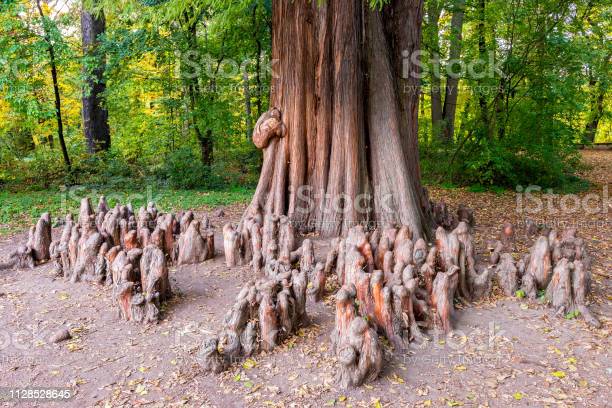
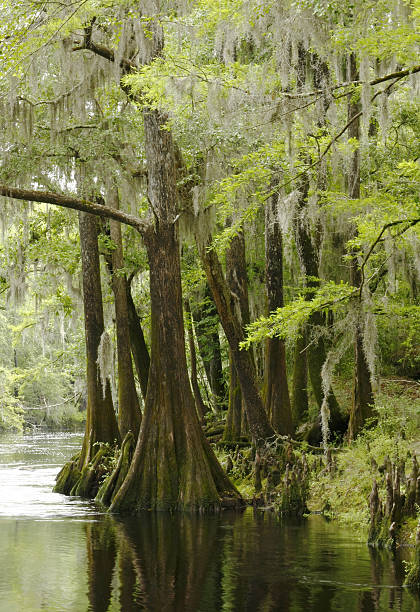
Knees of the bald cypress tree
I am intrigued by the live oaks of Texas and the cypress trees of Louisianna and Arkansas, and also by the incredible diversity of trees in Tennessee. We love the unique birds of the Gulf of Mexico, but also love seeing our Minnesota birds in a different habitat.
As I travel, I cherish meeting people from all over the world, but especially enjoy how pleasant and friendly people are in the Southern part of the United States. Many go out of their way to greet you on the street, “How’re ya doin?” or “Hi honey!” Something I don’t experience in Minnesota, Michigan, Wisconsin or Iowa. In the North we all can be kinder/friendlier and smile more!
Take an Awe Walk in your neighborhood, noticing things as if for the first time.
Describe to a friend or write about a time you once felt awe.
Visit a museum or planetarium.
Get up early to watch the sunrise.
Play amazing music. (Beethoven’s Fifth comes up often. Psychologist Michelle Shiota suggests Alison Krauss’ “Down to the River to Pray” and Carlos Santana’s live “Europa.”)
Pledge to yourself that you will do at least one random act of kindness each day. While these actions might seem small, that doesn’t make them any less important.
You’d be surprised how picking up litter, leaving a review for a favorite local business, or writing a thank you note to a teacher can make a positive impact on yourself and your community.
Take time this week to celebrate Diwali, “Victory of light over darkness, good over evil, and knowledge over ignorance”
Be kind, work for peace, relax and enjoy!
Good over evil, knowledge over ignorance!
Symbolizing the triumph of good over evil and light over darkness, Diwali usually falls in the early autumn, coinciding with the new moon, deemed the darkest night of the Hindu lunar calendar. This is why dates change every year.
Halloween is a great time to be creative. I love the original costumes that parade to my front door. For me the challenge is how to be plastic-free? I don’t like candy packaging that can’t be recycled and will lie in a garbage dump for 5oo years and struggle every year to find a sustainable treat. Beyond Plastic has some terrific decorating, costume and treat suggestions for a plastic-free Halloween:
First, create a reusable bag to carry with you. turn a washable shopping bag inside and decorate your bag. A perfect way to have your original candy collection bag!
Happy beautiful Halloween!
Turn your clean reusable bag inside out and decorate.
Plastic-free ideas from Beyond Plastic:
Pick plastic-free packages. If you need to stick to packaged candies, there are some options that come wrapped in foil or small thin cardboard boxes. Candies like Dots, Milk Duds, and Junior Mints come in small cardboard boxes, Tootsie Rolls and other fruit chews and Dubble Bubble come wrapped in paper, and there are many small Halloween-themed chocolates that come wrapped in foil that, at least in theory, could be collected and recycled
Costumes
Try to avoid buying new costumes in one of those desperate last-minute trips to the seasonal Halloween Stores that pop up like mushrooms in October because they are cheaply made and are almost always made entirely from plastic.
Instead, plan ahead and visit your local thrift store to find they key elements you need to make your own costumes. Most thrift stores also have pre-loved costumes for sale and you may find a great ready-made costume that way if you start looking early enough. You can also try to borrow either a whole costume or the key elements you need to create your own from a friend or family member. I’ve found that social media can be a big help in crowdsourcing costume ideas, entire costumes, or just certain “ingredients” for them.
Likewise, if you have costumes your kids have outgrown or that you’ve grown tired of, snap a few photos of them and invite your friends to use them this year. Hopefully, they’ll return the favor and you can all save some time, money, and material from the landfill this way.
Decorations
If you want to deck out your house, go for it! But do your best to steer clear of single-use and cheap plastic items that are likely to end up in the trash after a single use. Fortunately, nature makes a gorgeous line of non-toxic, fully compostable Halloween decorations in the form of pumpkins and other decorative gourds along with hay bales, reeds, and ornamental corn.
Here are a few ideas to try, all of which are great activities to do with kids:
Carve pumpkins (this one goes without saying!)
Consider inviting some friends to join you outside on a sunny weekend day and serve (reusable) mugs of mulled cider and donuts to make it a party.
After you’ve scooped out the seeds from your pumpkins, assign someone to clean the goop off them and then roast them for a nutritious and tasty fall snack. Scroll down to the end of this post for the simple directions to make roasted pumpkin seeds.
Click here for some great jack-o-lantern ideas. One fun switch can be to cut the bottom of the pumpkin off rather than the top and rest it on a plate with the cut side down. This allows you to retain the stem which you can turn into an interesting hairdo feature. We also love the “puking” pumpkin concept in which you use the “guts” of the pumpkin.
Help younger kids to draw their designs on and make sure to handle any tricky knife-work.
Provide candles or LED lights for each pumpkin and light them up when night falls for all to enjoy.
Make your own scarecrows. Dig through your ragbag to find some old clothes, buy a bale of hay, stuff the clothes with with hay, and top with a pumpkin head or a burlap or paper grocery bag on which you’ve drawn a funny face. When you’re through with the scarecrows, remove the hay, wash the old clothes and either return them to the rag bag or donate them if there’s still life in them, and compost the rest of the materials. If you live near a farm, note that many farm animals love to eat discarded pumpkins.
Choose LEDs. If you want to light your house up at night beyond the jack-o-lanterns, make sure you purchase LED string lights as they use significantly less energy (hence lower carbon emissions) and will also last longer than incandescent bulbs will.
Make “Halloween Trees”. This idea comes from a project that our digital director grew up doing and that she now does with her own kids. Search outside for fallen branches that mimic the look of gnarled spooky old trees. “Plant” the tree branch in a pot of dirt. Then let the fun begin! Make decorations by cutting bats, black cats and witches out of construction paper and hanging them from the branches with string. Search for small rounded or rectangular stones to serve as gravestones that you can write or paint on “RIP So and So”, “Here Lies…”, and half bury them in the dirt. If you feel like getting really creative, bust out the clay and sculpt some pumpkins, a witch or a skeleton to sprinkle around the ground below the tree. This can keep kids entertained for hours and you can save the best decorations for years to come and continue building on your spooky scenes. Beyond Plastic
“Every person on earth bears responsibility for good earth stewardship” Pope Francis
Northern Pearly Eye
How did we ever get sold on the fact that a green monoculture of a turf lawn was a good thing everyone wanted to copy? I love walking in green spaces, but should a green space have more variety than being just like everyone else trying to be like everyone else. Has our climate crisis brough us to a time we question the feasibility of maintaining something that harms instead of adding a positive to our environment?
What is my problem with a turf grass lawn?
First it takes lots of water to keep it green and needs poisonous chemicals. We have been in a drought, and homeowners are watering the sidewalk and the street trying to keep their lawns green. A weed free lawn requires lots of chemicals which run down the street into the storm drains and then into our lakes and streams where they stimulate the growth of algae. See the evidence on ponds and lakes covered with algae muck which can be fatal to dogs and wildlife. Muck covered lakes is not a natural happening!
A monoculture turf grass lawn has no benefit to pollinators. Pollinators love flowers free of chemicals and plants that are native to the area. They also like color and fragrance. The best is native plants have deep roots and can survive without much water.
Deep rooted native plants
You can create a friendly yard by just not mowing it, but I recommend thinking about a happy bee lawn. Bee lawns composed of various low growing plants don’t require chemicals and are not toxic to humans and pets. Also children can run and play on them just like turf grass. The butterflies and bees love diversity, scent and color. Some of my favorites are native violets and barren wild strawberries, both are very easy to grow and can be mowed a few times a summer. See the link below on bee lawns. Some people like non-native clover and creeping Charlie.
Violets are great for bee lawns.
Start with a small section of your yard, mow it short and work in some seeds (violets, strawberry, clover, creeping thyme, heal all) with a rake or hoe, and keep moist until you get some new sprouts. Find seeds at https://www.prairiemoon.com/
We live in an unjust world. Children are shot for being at school, shoppers are shot buying groceries, and whole countries are under siege because leaders are full of lies and visions of power. Poor countries are suffering from climate change created by wealthy countries. We live in an unjust world
Justice and Truth!
We must work for justice and truth. As a civilization we will not survive if we don’t work harder for justice and electing leaders who speak the truth and do not spew hate.
We must do more to keep our children safe, and gun violence should be an issue Americans vote on, only then things will change!
Gun violence in America kills more children than any other cause. This is not a civilized society! All countries have mental health issues, but the United States needs the gun restrictions that other countries have managed to pass. See information from John’s Hopkins below.
Make an effort to spread kindness every day! Kindness creates a ripple for more kindness!
From John’s Hopkins University:
“Ten people shopping for groceries in Buffalo were killed in a racist act of gun violence. The next day, worshippers at a California church were shot in another racist incident. Last week, tragedy struck again, but this time in an elementary school in Uvalde, Texas, where 21 people, including 19 students and 2 teachers were killed in a mass shooting.
All are tragic reminders of why we need lawmakers to implement gun violence prevention policies that can prevent this needless loss of life.
As the new Center for Gun Violence Solutions – formed from the recent merger of the Educational Fund to Stop Gun Violence and the Johns Hopkins Center for Gun Violence Prevention and Policy – we are continuing to fight for evidence-based policies to reduce mass shootings including firearm purchaser licensing, firearm removal laws such as extreme risk protection orders, and bans on large capacity magazines.” John’s Hopkins University
“We have the choice to use the gift of our life to make the world a better place–or not to bother” Jane Goodall
Our actions and daily choices speak to the world we want to create. This holiday, we can choose to make friendly choices for our planet. Instead of buying new decorations use what you have and follow these simple steps to make your decorations, gifts, and gatherings more sustainable: Seven tips for an earth-friendly holiday season (worldwildlife.org)
Look at the materials gifts are made from and keep sustainability in mind. Use paper products made from recycled materials and avoid single-use plastics that can’t be recycled. Buying secondhand items like vintage clothes, furniture, and refurbished technology is another great way to gift more sustainably.
Look for cards and wrapping paper made from recycled materials. Avoid foil-backed cards or those with **glitter—which aren’t recyclable.
Glitter is a microplastic!
** Reasons to avoid glitter:
A few facts about glitter will surprise you!
Glitter is made of a microplastic known as Mylar, which is hurting ocean life
This plastic accounts for 92.4% of the 5.25 trillion pieces of plastic in the ocean
Marine life is mistaking glitter for food, which is damaging their livers
Every tiny sparkly bit takes thousands of years to break down
Happy December! We have many challenges as a society. Community health is important to me. Making our streets safe, clean air and clean water should be top priorities for us all. Covid-19 is not going away, and we need to still wear masks, social distance and get vaccinated. We can’t have healthy communities unless everyone is healthy and everyone works to make it a reality. Kindness is an important aspect of healthy communities, make it a priority for your day.
Every day work for kinder and healthier communities!
Kindness creates a ripple, keep kindness going! Make our communities kindness healthy! Kindness ideas below.
Smile and Be Kind!
Nothing exists by itself alone. We all belong to each other; we cannot cut reality into pieces.
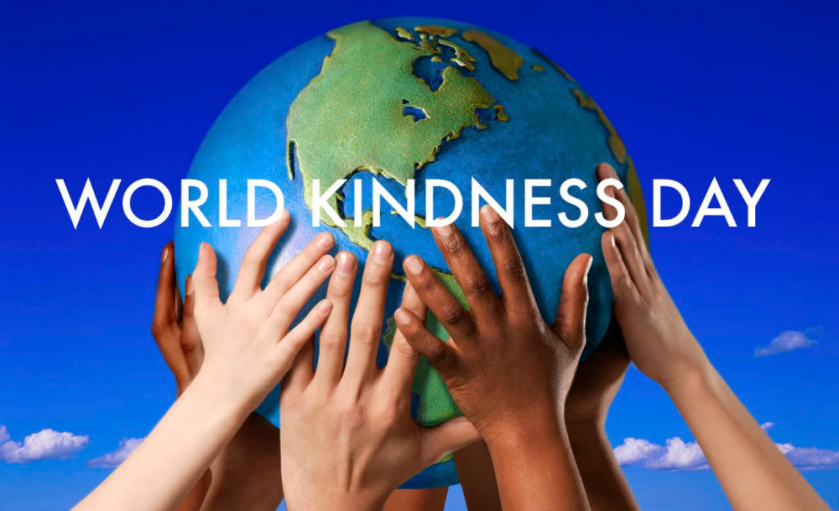
World Kindness Day is a global day that promotes the importance of being kind to each other, to yourself, and to the world. The purpose of this day, celebrated on November 13 of each year, is to help everyone understand that compassion for others is what binds us all together. This understanding has the power to bridge the gap between nations.
Make a special effort to be kind.
We all want to live in kind healthy communities. We want to live where we are respected and can thrive. Each of us can work for kinder environments by limiting the noise we create, picking up litter and after our dogs, sweeping our sidewalks, and listening and smiling more. How hard is that? We can create environments that are pleasant places to live. Kindness doesn’t cost any money! Kindness creates a ripple, it radiates out, and together we create happier and healthier places to live.












 Health4earth