Preserve and cherish the pale blue dot, the only home we have ever known! Carl Sagan
Can’t wait to see the first butterfly. This is the mourning cloak, usually the earliest butterfly
Be kind to our Earth and to all people and all life!
Yay, April, the best month of the year. It is a month of Hope and Joy. It is Earth Month, calling us to action to protect our Earth. It is native plant month and Arbor Day and Earth Day. It is a month to watch for migrating birds, clean up our yard and finally ride our bikes. April is a month to spend outside!
Unfortunately, my country is at war. We need to be concerned and speak out against killing people, wasting money, and harming our earth, but we can’t allow a few silly men to destroy our joy.
Every day I spend time outside; I look for new spring happenings, I look for new buds, new birds, new sounds, and new life. I focus on what is joyful and good and spend time with good people. I work daily on reducing the plastic we use in our home, we drive minimally, clean storm drains, and strive for creating zero waste.
The New York Times has a new, “Look for the Good newsletter sign up to get next week’s sent to your inbox.
Important: The Earth is not merely a resource to be exploited; it is sacred ground, our shared home. What we do to the Earth, we do to ourselves and to all of those who come after us. What exactly do religions teach us about Earth Stewardship? Read more: https://www.plasticpollutioncoalition.org/…/sacred…
Be kind, be safe and enjoy your time outside. PEACE on EARTH
Start the day with hope. Spring will come! Collective positive energy can make things better.
All people matter!
Embrace a new year and each new day with hope!
The road is before us! It is a new day, a new beginning, And it is filled with hope.” Walt Whitman
Start each day with hope!
2025 has been a hard year. Wars are raging, too many die from gun violence, democracy is threatened, ICE is threatening communities, climate change brings storms, fires, drought and flooding. But we must move forward toward a new world. Our mental health is so much better if we start each day with hope and positive energy to make things better.
Below is from the NYT today:
While optimism is the belief that the future will be better, hope is the belief “that we have the power to make it so,” said Chan Hellman, the director of The Hope Research Center at the University of Oklahoma. It is “one of the strongest predictors of well-being,” he said. It helps improve the immune system and aids recovery from illness. More hopeful people may actually grow taller than less hopeful people.
To cultivate hope, people need three things. They first need to be able to envision a better future, either personally or collectively. Second, they need the willpower or motivation to move toward that future. And third, they must be able to chart “a path from where they are to where they want to be,” he added.
How to be more hopeful There are a few ways, experts say.
People can set specific goals and then “begin brainstorming the pathways or road maps” to achieve them, ideally by writing them down, Hellman said. That can start small. “It is much better to set and focus on short-term goals rather than long-term, abstract goals,” he added.
That can often mean speaking more positively about other people. People gossip three times as much about the selfish things others do than about the generous things they do. To address that, an expert suggested “positive observation.” Share one story of something positive that you observed or did that day. The research finds that when you know you’re going to have to share something, you pay a lot more attention to it.
Lift every voice and sing Till earth and Heaven ring Ring with the harmonies of Liberty; Let our rejoicing rise, High as The list’ning skies, let it resound loud as the Rolling sea
Every year the countries of the world produce more plastic, and there is no end in sight. Production. of plastic keeps growing.
The list below is composed by the Plastic Pollution Coalition. Let’s work every day to reduce our consumption of plastic. Never use plastic utensils, plastic bags or straws
Plastic never goes away. It doesn’t break down; it only breaks up into smaller and smaller pieces. These microplastics and nanoplastics are harmful and are everywhere now, including in our bodies.
Plastic pollutes the environment, wildlife, and people.
Plastic is not safe. Plastic leaches toxic chemicals and sheds plastic particles at all stages of its existence.
Plastic especially harms communities living near petrochemical and plastic infrastructure.
The more plastic companies make and we use, the more we contribute to pollution and climate change.
Plastic was not designed to be recycled, and most plastic does not get recycled in the way we’ve been led by industry to believe.
To solve the plastic pollution crisis, industries must stop producing so much plastic. Instead of single-use plastics, we need to use nontoxic reuse and refill systems and regenerative materials.
Taking action on an individual level, using less plastic, and demanding policy action to hold producers accountable can help support the systemic changes to shift away from society’s reliance on plastics.
We need to work harder to protect our nation’s water!
Water is life It is so important for healthy living. Every day each of us must do what we can to protect our planet’s precious water.
It is shameful the poor job we do to take care of our fresh water. Our fresh waterways are teaming with microplastics, nitrates and forever chemicals. None of these are safe for human exposure.
Today I am focusing on two crucial pollutatnts to our water. PFAS chemicals and nitrates. In 2023 the Minnesota legislature passed a strict law restricting PFAS (fovever chemicals) Unfortunately, many companies with PFAS in their products are trying to weaken Minnesota’s PFAS legislation. Read more about it below:
First, here is information on efforts to weaken Minnesota’s new PFAS(forever chemical law)
At least 70 million Americans get their water from a system where toxic PFAS “forever chemicals” were found at levels that require reporting to the Environmental Protection Agency. That’s according to new data the EPA released in its ongoing 5-year review of water systems across the nation. The number will almost certainly grow as new reports are released every three months. USA Today, March 21.2024
Amara’s Law is being implemented well, and Minnesota is better for it. We are incredibly grateful for our allies, whose hard work and determination helped pass such monumental legislation. But now, Amara’s Law is at risk once again. Bills HF 1627 and HF 81, authored by Rep. Josh Heintzeman, R-Nisswa, plan to irresponsibly gut the law, continuing to put polluters before people.
Finding safer PFAS alternatives has the potential to be profitable for businesses of all sizes. Capitalism is meant to push society forward, driving change and fostering new ideas. It was not built to just accept the first product that completes a goal, especially when it poisons people and the environment. We have met innovators and entrepreneurs who are creating effective alternatives to PFAS — they just need support. But they don’t get a chance because large corporations come and try to pick apart critical legislation. Minnesota continues to be poisoned, people continue to get sick, children like Amara continue to die.
Second, we have been unable to control farm run off. This pollutes our ground water our streams and people’s wells. It is dangerous for people, fish and animals. There is no excuse for letting this go unchecked! Nitrate pollution in water is caused by excess nitrogen from agricultural sources. Nitrates and organic nitrogen compounds from fertilizer and manure enter groundwater through leaching and reach surface water through runoff from agricultural fields. Nitrate contamination occurs in surface water and groundwater, leaching into the soil and from there into the water supply from various sources. A high level of nitrate makes water unsuitable as drinking water.
73 percent of Minnesota nitrate pollution comes from cropland, primarily through agricultural drainage systems below cropped fields and by nitrate pollution leaching into groundwater, and then moving underground until it reaches streams. 78% of nitrate pollution to the Mississippi River in our state is fr…See more on fmr.org
We have a plastic problem. Manufacturing plastic creates air pollution, single-use plastic ends up in the ocean, toxic chemicals, and microplastics find their way into our food and water. Plastic permeates our lives, and we would all be healthier by reducing our plastic use.
Make it fun this month as you try to reduce the plastic you expose your family and yourself to plastic. See below for ideas to reduce your plastic exposure.
We all see plastic litter that is harmful to our waterways and our environment, but we might just be learning that plastic contains harmful chemicals and that it breaks down into microfibers. We can’t see the chemicals or the microfibers that can harm our bodies.
Plastic contains thousands of harmful chemicals that are especially harmful to children. These chemicals leach from plastic containers into our food and bodies. Plastic contains serious hormone disrupters that can cause obesity, diabetes, cancers and birth defects.
Water from plastic bottles has about double the microplastic level of tap water on average, according to a 2018 study published in the journal Frontiers in Chemistry. So unless your tap water is contaminated with unsafe elements, such as lead, it’s probably best to drink tap. Fill up a metal reusable bottle for when you go out. You can always filter your tap water. Depending on the filter, that may further reduce microplastic levels. (Check CR’s ratings of water filters.)
Do: Heat food in or on the stove, or by microwaving in glass. Don’t: Microwave in plastic.
Some heated plastics have long been known to leach chemicals into food. So if you’re warming up food, use a pan in the oven or on the stove, or if you’re microwaving, use a glass container. Also, avoid putting plastics in the dishwasher because of the high heat involved in cleaning.
Do: Buy and store food in glass, silicone, or foil. Don’t: Store food in plastic, especially plastic that may contain harmful chemicals.
The American Academy of Pediatrics has said that plastic food containers with the recycling codes 3, 6, and 7 may contain potentially harmful chemicals, unless they’re labeled “biobased” or “greenware.” Don’t store food in these types of containers. Instead, use containers made of glass or silicone, or wrap your food in aluminum foil. If you’re storing food in or eating food out of plastic containers, know that plastics with recycling codes 1 and 2 are more likely to be recyclable—though they are usually recycled into lower-quality plastics. And there still may be harmful or unknown chemicals in any type of plastic.
Do: Eat fresh food as much as possible. Don’t: Rely on processed food wrapped in plastic.
The more processed or packaged a food is, the higher the risk that it contains worrisome chemicals. Food cans are often lined with bisphenol A (or similar compounds). Buy fresh food from the supermarket, and—as much as possible—try to use refillable containers if your market allows. (Of course, with shopping made difficult by the coronavirus pandemic, prioritize your health and shop however is most feasible and safest.) Certain markets let you fill up cardboard or reusable containers with bulk items and weigh them, or you can use your own mesh bags for produce. Raw meat and fish need to be kept separate for safety reasons, but ask the store fishmonger or butcher to wrap these foods in wax paper instead of plastic. Take cloth—not plastic—reusable bags to the store to take your groceries home.
Do: Vacuum regularly. Don’t: Allow household surfaces to get dusty.
The dust in your house could be loaded with microplastics and chemicals that are found in plastic, such as phthalates. Cleaning up dust may help reduce the amount of plastics you inhale, especially if you are stuck inside for long periods of time during a period of social distancing. CR recommends vacuuming regularly with a HEPA filter, which is best for trapping dust. (Check CR’s ratings of vacuums.)
Do: Work with your community. Don’t: Assume your impact is limited to what you do in your personal life.
Legislation to limit the use of single-use plastics and plastic production may pull the biggest levers, but joining forces with community-level recycling groups can truly make a difference. Look for so-called zero-waste groups, which can offer guidelines for how to recycle or compost all your garbage—and which lobby for local rules that can restrict throwaway items. When possible, shop at markets that source goods locally, so they don’t require as much packaging and shipping. Seek out groups such as Upstream, a nonprofit working to create reusable takeout packaging for restaurants. And when possible, educate yourself about and support any city, county, and state legislation limiting single-use plastics.
My list to reduce plastic:
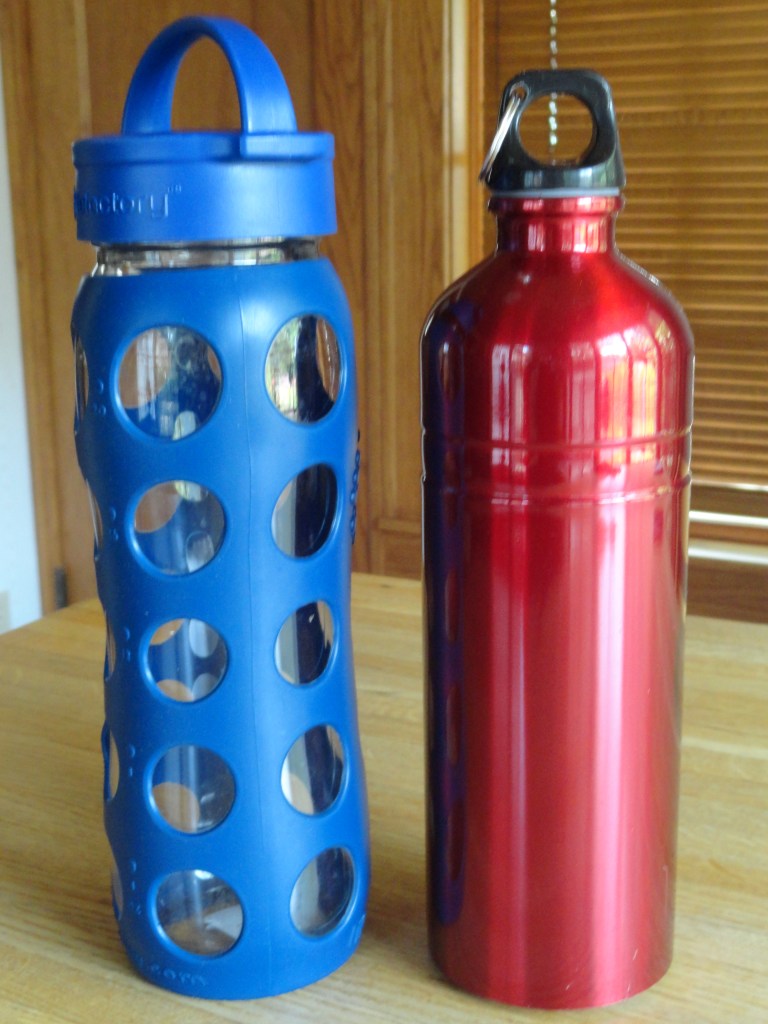
Always carry a reusable glass or metal water bottle, and reusable shopping bags with you.
Learn to refuse single-use plastics, such as plastic water bottles and coffee cups, straws, plastic bags and plastic utensils.
Purchase fruit and produce in the bulk section, and don’t place items in plastic bags.
Always search out products in glass jars instead of plastic containers.
When you must buy plastic products, choose ones that you can recycle rather than ones you must put in the trash.
Bring your own containers and shop the bulk section of your local food coop.
This morning on my walk it was raining. The rain was plopping on my hood and splashing my face, but I was loving every moment as a robin sang. I felt so close to the beauty and renewal of our earth. It was me and the melodic robin, having a conversation, and both happy that it was finally raining.
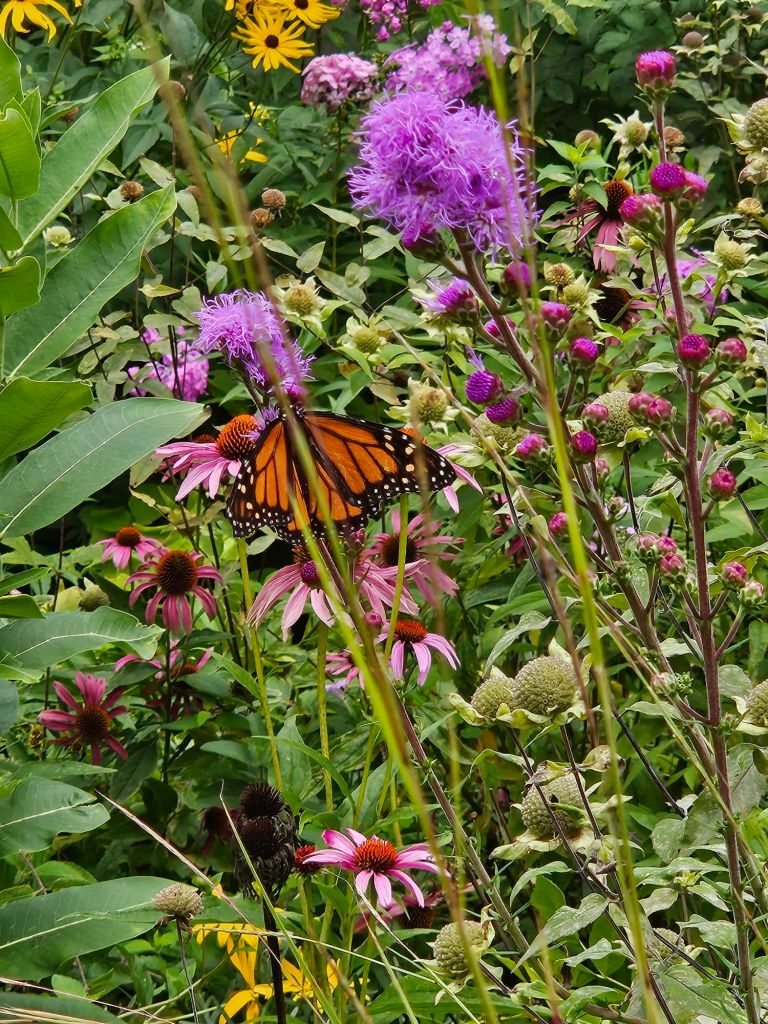
It is Earth month, Earth Day is days away, and April is a fabulous time to get intimate with the earth. Every day the tree buds get bigger, and the great migration begins, birds and butterflies moving to their summer homes. Every day a new flower pops up, and the sun gets higher in the sky.
Whether it’s a wild turkey on your yard, a fox running down the street, a rabbit eating your fresh plants, or the deep groves in the bark of a tree, pay attention and notice something new.
Many dragon flies were out yesterday!
It was cloudy where I live so we missed the eclipse, but there were people outside excited that it was happening behind the thick cloud cover. Celebrate that excitement every day with the intense beauty and April happenings of our
Amazing landscapes!
what a wonderful world!
Enjoy the intense beauty and happenings of our Earth, it’s Earth Day every day!
I saw my first butterfly a few weeks ago. It was a mourning cloak butterfly. since this writing I have seen many more. Get out and look.
Many reasons to use a non-plastic reusable water bottle.
New studies on plastic start to emerge.
In a trailblazing new study, researchers have discovered bottled water sold in stores can contain 10 to 100 times more bits of plastic than previously estimated — nanoparticles so infinitesimally tiny they cannot be seen under a microscope.
At 1,000th the average width of a human hair, nanoplastics are so teeny they can migrate through the tissues of the digestive tract or lungs into the bloodstream, distributing potentially harmful synthetic chemicals throughout the body and into cells, experts say.
Another new report finds that 84 out of 85 supermarket foods and fast foods had plastic chemicals in them — including cereal, yogurt and even baby food.1
We shouldn’t be so nonchalant about harmful chemicals in the food we eat, and especially not in the food we serve to babies.
Among the chemicals found in the food were “plasticizers” like BPA, once found in so many plastic water bottles, and phthalates, a chemical used to make plastic more durable.
Companies have allowed these plasticizers into a dizzying range of food products. But they seem to have forgotten to ask themselves: Should we?
After all, chronic exposure to plasticizers can disrupt the production and regulation of estrogen and other hormones, and potentially increase the risk of birth defects, cancer, diabetes, infertility, neurodevelopmental disorders, obesity and other health problems.2
We can’t keep letting companies get away with this “ask for forgiveness, not permission” approach to harmful substances in our food.
Every action matters! As we start 2024 many of us think of ways to resolve to make things better for our families, our friends and for the world. Below is the Action for Happiness calendar for January. Maybe just choose one action you like and do it over and over. Kindness is like a ripple; it grows and grows. Take deep breaths, smile, listen, and enjoy! Good Luck
The fourth Saturday in October is a day to make a difference.
Today on Make a Difference Day spread kindness and compassion. Take time to smile and be friendly to everyone you have contact with. Kindness creates a ripple that keeps on multiplying! Smile, listen and radiate kindness!
Also, be kind to the Earth. This letter to the editor might give you some ideas:
Thrown away but still there
As a kindred spirit in garbage collection, I both share Ron Currie Jr.’s small sense of accomplishment and often much greater sense of frustration with the vast amounts of garbage we continue to produce and casually discard (“The soothing futility of picking up trash,”StarTribune.com, Oct. 25).
“Out of sight, out of mind” keeps us oblivious to the waste we produce. As someone once encouraged me to question, when I throw something away, where is away? If we all had to dispose of our trash in our yards, might we become more conscientious of our purchasing decisions?



 Read more:
  https://www.plasticpollutioncoalition.org/…/sacred…







 Health4earth