An estimated 20 million people are thought to earn their livelihoods in the global waste industry by collecting, disposing, repairing or repurposing a wide range of materials and products. However, the cost and consequences of handling waste are borne far more heavily in developing nations. In partnership with the Pulitzer Center, Fred de Sam Lazaro reports on the impact of waste from textiles.
“ExxonMobil lied to further its record-breaking profits at the expense of our planet and possibly jeopardizing our health” Attorney General Rob Bonta
Plastic is harmful to our earth and to our bodies. The producers of plastic should be held accountable.
“For decades, ExxonMobil has been deceiving the public to convince us that plastic recycling could solve the plastic waste and pollution crisis when they clearly knew this wasn’t possible. ExxonMobil lied to further its record-breaking profits at the expense of our planet and possibly jeopardizing our health,” Rob Bonta, Attorney General, California
A coalition of environmental groups have joined together to take ExxonMobile to court. Surfrider Foundation, the Sierra Club, Heal the Bay, and San Francisco Baykeeper are taking on the world’s largest producer of single-use plastic polymers for their claims about plastic.
The lawsuit was filed in San Francisco, California and states that ExxonMobile knowingly hid the truth about the harm caused by plastic and misled the public about its recyclability.
Niall McCarthy, partner at the law firm that is representing the coalition, said:
“Some of the greatest progress in American history was caused by civil lawsuits holding the powerful accountable for their actions. This is another such case brought by the most prominent environmental nonprofits in California who are willing, for the public good, to take on a company worth billions. The case will expose the devastation caused by single-use plastics and the deceptive recycling myth pushed by plastic producers such as ExxonMobil. The case, at its core, is about accountability. ExxonMobil’s promises of being a good corporate citizen are divorced from the reality of its conduct. As detailed in the complaint, ExxonMobil’s single use plastics are smothering California’s environment.”
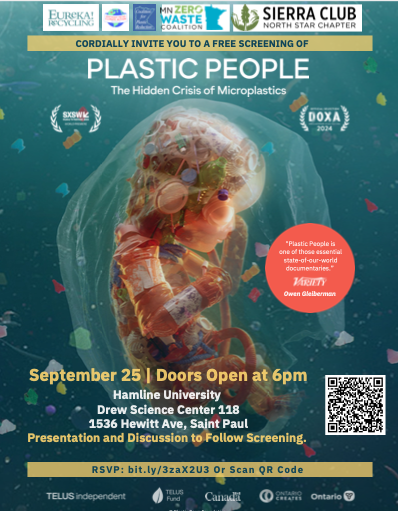
The ground-breaking feature documentary Plastic People investigates our addiction to plastic and the growing threat of microplastics on human health. Almost every bit of plastic ever made breaks down into “microplastics.” It was first shown at SXSW and this is one of the first community showings in the country.
Date: Wednesday, September 25th
The doors open at 6:00 for tabling and the film starts at 6:30.
There will be a short discussion following the screening lead by Lucy Mullany with Eureka Recycling and Mary Kosuth, who is finishing a PhD in microplastics at the University of Minnesota and is a featured scientist in the film.
The film is free.
The location is Hamline University, Drew Science 118, 1536 Hewitt Ave, St Paul, MN 55104.
“The environment is where we all meet; where we all have a mutual interest; it is the one thing all of us share.” — Lady Bird Johnson
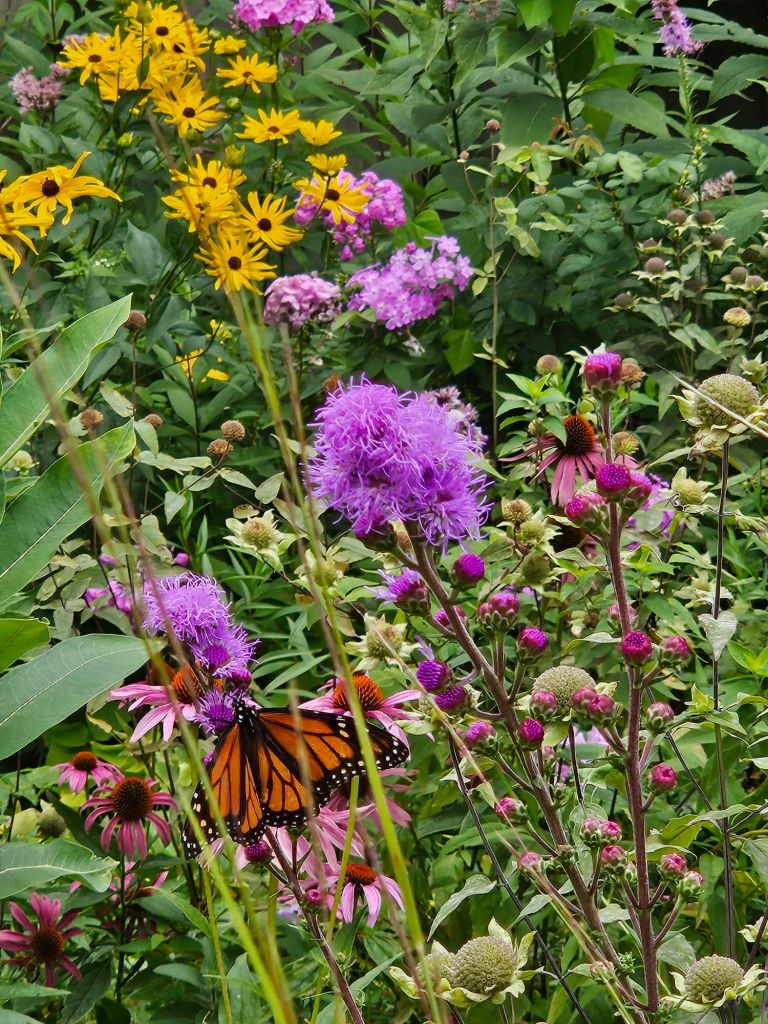
The Monarch butterflies charm me as they play tag, the hummingbirds zip from one flower to the next, and the goldfinch quietly sit on the monarda and eat the seeds. Enormous bees gorge themselves with a bounty of pollinator plants they love. The consistent rains of this summer have created a healthy blooming habitat. All this pollinator activity creates joy!
A Monarch on liatris Hummingbirds love cardinal flowers, and Joe Pye Weed.
Native deep-rooted plants fix many things that are wrong with our world. They do not need fertilizers or chemicals, they don’t need to be watered, and their deep roots absorb water run-off. They help to keep our waterways clean, keep our air clean, and they are beautiful,
Native plants are healthy for wildlife. Birds, bees and butterflies love them and they create vital habitat which has gone missing in recent years.
Today we celebrate International Day of the World’s Indigenous Peoples.
Raoni Metuktire is an Indigenous Brazilian leader and environmentalist. Born in 1932, he has seen a lot of change due to climate change.
In The Carbon Almanac, we feature his quote and it serves as a reminder that we are all connected.
We all breathe this one air, we all drink the same water. We all live on this one planet. We need to protect the Earth. If we don’t, the big winds will come and destroy the forest. Then you will feel the fear that we feel.
WE consume too much stuff, use too much plastic, and create too much garbage. Our consumerism fuels Overshoot Day, but also all our driving around and wasting more fossil fuels than what we need.
Consuming less is good for our air and our water, and over consumption contributes to our climate crisis. We all need to be responsible for the trash we create, but the producers of so much packaging also needs to be held responsible.
Consuming and wasting less is the key!
Today is the day after Earth Overshoot Day. But what does that mean for you?
Earth Overshoot Day is the date when humanity depletes all the natural resources that the Earth can regenerate in the year. So as of today August 2, we are living at a deficit. We are consuming more resources than we can replace.
This metric from the Global Footprint Network is a striking reminder of the importance of taking care of the planet and using resources responsibly. However, it can also serve as inspiration to take action. Individual actions can make a difference to help #MoveTheDate!
What YOU can do to help?
Buy less and reuse instead of purchasing something new.
Reduce your food waste.
Have SMALL families.
Reuse, Reuse, Reuse! A good place to start is by trying to reduce unnecessary purchases, opt for sustainable products, and reuse items whenever possible.
We all need to waste less, and work together to lift up our Earth.
Plastic is everywhere. It is hazardous to our health and our environment. Lets work together every day to end the Age of Plastic
These outstanding ideas are from Eureka Recycling!
Practical Tips for Going Plastic-Free
The most powerful zero waste action we can take is not creating waste in the first place. So how do we go about reducing consumption. Here are some helpful tips:
Start with the Basics: Swap out single-use plastic bags for reusable ones. Keep a stash in your car or by the door so they’re always handy.
Choose Reusables & Say NO to Single-Use Plastic: Carry your own refillable stainless-steel water bottle and use glass containers for food storage. Repurposing glass pasta jars for food storage can be a good option
Shop Mindfully: When grocery shopping, opt for products with minimal or recyclable packaging. Choose loose fruits and vegetables over those wrapped in plastic and items in glass or cardboard containers over plastic whenever possible. When shopping for clothes, try to choose used clothes and clothing made of cotton or hemp, which can help reduce microfiber pollution Many clothing, especially synthetic fibers like polyester, nylon, and acrylic, are made from plastic polymers. When these synthetic fabrics are washed, they release tiny plastic fibers known as microfibers into the wastewater. These microfibers are too small to be caught by wastewater treatment plants and ultimately end up in rivers, lakes, and oceans.
Evaluate Necessity vs. Want: Before making a purchase, ask yourself if the item is something you truly need or if it’s just a want. Delaying non-essential purchases can often lead to realizing you don’t need them at all.
Borrow or Share: Borrow or share items that you only need temporarily or infrequently, such as tools, books, or recreational equipment, rather than buying them outright.
Support Plastic-Free Initiatives: Encourage businesses and local governments to adopt plastic reduction initiatives. When possible, support companies that prioritize sustainable packaging and products.
Make Your Voice Heard: As we work to advance zero waste legislation at the state and federal levels, we know we cannot recycle our way out of the plastic production and pollution crisis. Let’s work together to hold petrochemical companies accountable and change systems to better support reduction and reuse.
While Plastic Free July lasts for just one month, the habits we cultivate and policies we advocate for can have a lasting impact. By reducing our plastic consumption, we conserve valuable resources, minimize pollution, and protect wildlife. Moreover, we contribute to a shift in societal norms towards more sustainable living practices.
Join the movement this Plastic-Free July and let’s make every month an opportunity to support a zero waste future.
And some ways to reduce your exposure to microplastics
Let’s get real about plastic. Plastic is made from fossil fuels and toxic to the environment and human health. We cannot recycle our way out of our plastic problem. Watch the video below:




 Health4earth