Everything Is Connected

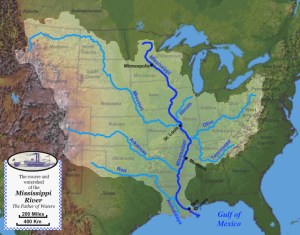
The Mississippi Watershed by Jon Platek This how trash can reach the ocean.

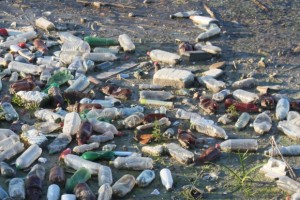
This morning while walking around the lake by my house, I was sad to see plastic bottles bobbing around in the lake. The amazing thing is that those plastic bottles from a lake in land-locked Minnesota could end up in the Gulf of Mexico. 80% of marine litter originates from land. The Minnehaha Creek drains this lake into the Mississippi River, which flows into the Gulf of Mexico. Plastic in a Minneapolis lake, could float the Mississippi River into the Gulf of Mexico, these plastic bottles and bags are a dangerous threat to marine life, and they are unpleasant to water recreation.

I am sure you know most of the ways to avoid plastic, but you might learn something from this list on reducing plastic use. The excellent list below is from the NRDC https://www.nrdc.org/:

“Plastic, of course, is uniquely problematic because it’s nonbiodegradable and therefore sticks around for a lot longer (like up to 1,000 years longer) than other forms of trash. And we’re not just talking about people dumping their garbage overboard. Around 80 percent of marine litter actually originates on land—either swept in from the coastline or carried to rivers from the streets during heavy rain via storm drains and sewer overflows.

So the best thing we can do to protect our waterways is trying to keep as much plastic as possible out of the waste stream in the first place. The good news? There are many small ways you can have a big impact. The NRDC has ten important ways to reduce your plastic footprint:

1. Wean yourself off disposable plastics.

Ninety percent of the plastic items in our daily lives are used once and then chucked: grocery bags, plastic wrap, disposable cutlery, straws, coffee-cup lids. Take note of how often you rely on these products and replace them with reusable versions. It only takes a few times of bringing your own bags to the store, silverware to the office, or travel mug to Starbucks before it becomes habit.

2. Stop buying water.

Each year, close to 20 billion plastic bottles are tossed in the trash. Carry a reusable bottle in your bag, and you’ll never be caught having to resort to a Poland Spring or Evian again. If you’re nervous about the quality of your local tap water, look for a model with a built-in filter.

3. Boycott microbeads.

Those little plastic scrubbers found in so many beauty products—facial scrubs, toothpaste, body washes—might look harmless, but their tiny size allows them to slip through water-treatment plants. Unfortunately, they also look just like food to some marine animals. Opt for products with natural exfoliants, like oatmeal or salt, instead.

4. Cook more.

Not only is it healthier, but making your own meals doesn’t involve takeout containers or doggy bags. For those times when you do order in or eat out, tell the establishment you don’t need any plastic cutlery or, for some serious extra credit, bring your own food-storage containers to restaurants for leftovers.

5. Purchase items secondhand.

New toys and electronic gadgets, especially, come with all kinds of plastic packaging—from those frustrating hard-to-crack shells to twisty ties. Search the shelves of thrift stores, neighborhood garage sales, or online postings for items that are just as good when previously used. You’ll save yourself a few bucks, too.

6. Recycle (duh).

It seems obvious, but we’re not doing a great job of it. For example, less than 14 percent of plastic packaging is recycled. Confused about what can and can’t go in the bin? Check out the number on the bottom of the container. Most beverage and liquid cleaner bottles will be #1 (PET), which is commonly accepted by most curbside recycling companies. Containers marked #2 (HDPE; typically slightly heavier-duty bottles for milk, juice, and laundry detergent) and #5 (PP; plastic cutlery, yogurt and margarine tubs, ketchup bottles) are also recyclable in some areas. For the specifics on your area, check out Earth911.org’s recycling directory.

7. Support a bag tax or ban.

Urge your elected officials to follow the lead of those in San Francisco, Chicago, and close to 150 other cities and counties by introducing or supporting legislation that would make plastic-bag use less desirable.

8. Buy in bulk.

Single-serving yogurts, travel-size toiletries, tiny packages of nuts—consider the product-to-packaging ratio of items you tend to buy often and select the bigger container instead of buying several smaller ones over time.

9. Bring your own garment bag to the dry cleaner.

Invest in a zippered fabric bag and request that your cleaned items be returned in it instead of sheathed in plastic. (And while you’re at it, make sure you’re frequenting a dry cleaner that skips the perc, a toxic chemical found in some cleaning solvents.)

10. Put pressure on manufacturers.

Though we can make a difference through our own habits, corporations obviously have a much bigger footprint. If you believe a company could be smarter about its packaging, make your voice heard. Write a letter, send a tweet, or hit them where it really hurts: Give your money to a more sustainable competitor.” NRDC

I would add one thing to the list. Never use Styrofoam! Some stores package fruits and vegetables on Styrofoam trays! Awful.

Finally, current status of the Mississippi River in the Twin Cities from Friends of the Mississippi.

Learn From The Past

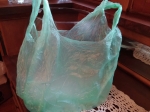
Bring your own reusable bag

I know people get tired of my harping on plastic, but plastic is a serious world problem. According to the Plastic Pollution Coalition the average shopper uses 500 plastic bags a year, and that is just bags, not all the other plastic products.  This is not sustainable!

I love thinking of how my grandparents lived, and how it is different from today. I loved this post from One Green Planet about what we can learn from the past and from our grandparents. Read it here.

Below is a quote from One Green Planet which show how serious this plastic issue is!

“In the past 30 years alone, the amount of plastic produced worldwide has increased by 620 percent! On average, that equates to 300 million tons of plastic a year. Of this 300 million tons, about 8.8 million tons find their way into the world’s oceans where they are left to slowly photodegrade into smaller pieces – and by slowly, we mean over the course of 100 to 1,000 years. When you consider the huge volume that is added to the oceans every year and the fact that plastics never really “go away,” we find our oceans crowded with a massive soupy mixture of harmful plastic products. This sadly has a massive impact on the marine animals who call our oceans home. Around 700 marine species are in danger of extinction due to entanglement, ingestion or general pollution caused by our plastic trash.”

Our grandparents didn’t have the choices and variety we do.  They cooked and ate hearty food on real dishes, but most important they conserved, reused, and didn’t throw everything away like we do today! I would stay with my grand parents for a week and we didn’t need to run to the store to buy buy buy. We used what we had.

What do you remember about how your grandparents did things?

Even remote islands are collecting our plastic trash

http://www.refillrevolution.com/

https://health4earth.com/2017/02/19/the-horrifying-impact-of-plastic-pollution/

Its Good News!

Electric Cars:

**Norway, the world’s happiest country, knocks it out of the park again. Watch PBS at Norway

**India plans to make every car electric by 2030, and Volvo is going to make its first electric cars.

Renewable energy 

**Germany and Scotland break renewable energy records.  Read about it at Scotland   and at Germany  

And, more good news….

** Switzerland says yes to renewables, and to exit from nuclear power.

**California Senate passes legislation to go 100% renewables by 2045


Renewable Energy Generates Jobs for Nearly 10 Million People

Education news:

**Wonderful news, Tennessee–Is going to offer free community college

**Wind Power Gives Oklahoma Schools a Lifeline During Budget Cuts. Read about it at lifeline 

This is my occasional series on good news.


Dear Gov. Dayton

This is a message to Minnesota Governor Dayton asking him to veto the legislation that takes away Minneapolis’s plastic bag ban.

Below is my letter to the Minneapolis http://www.startribune.com/ It was published a few months ago. It is ridiculous the Minnesota legislature is trying to take away Minneapolis’ right to ban plastic bags. Why should the plastic industry have the right to say which rules the city of Minneapolis should enact???
To the editor,
Today as I drove north out of Minneapolis on 35W, I was sad to see waste plastic bags hanging from fences and decorating plants and trees. I thought of the op-ed by the manufacturer of plastic bags telling us how wonderful his bags were. (Facts Don’t Support Columns Call for Ban on Plastic Retail Bags)
We all observe many bags with purchases leaving our stores, but only .06 percent are recycled. Plastic poses a serious threat to our wildlife that eat and become tangled in this trash. Plastic takes many years to decompose and releases toxins into our soil and water during this long process.
The Minnesota Legislature is trying to ban Minneapolis’s hope to reduce plastic bag use which goes into effect later this year. Governor Dayton should veto this silly legislation, and all Minnesotans should take personal responsibility to recycle clean plastic bags at grocery stores, and reduce their use of this harmful litter.

Health4earth

Call Governor Mark Dayton (651-201-3400) and tell him cities should have the right to ban plastic bags. VETO SF 1456!

I Love Parks and Monuments!

Battle of Gettysburg, 1963

Earlier this month I took a road trip from Minnesota to Washington, D.C. We traveled the back roads through Indiana, Ohio, and Pennsylvania. Everyday we would stop and hike in a park we came across. It was an amazing experience. Everyday we saw different trees and plants, different landscapes and birds, and a divergent mix of people. It was a lesson in diversity and beauty.
We stopped at monuments, state parks, county parks and national parks. The day we were at Gettysburg, I sat outside and ate lunch at the entrance to Gettysburg, and watched the people as they entered the park headquarters. I was struck by the diversity of people entering. It was a diverse group, of mixed ethnicity, and a range of militia t-shirts to “War is not the answer” shirts. The diversity was so interesting!

Parks and monuments are places we can all come together. They are places the wildlife can thrive, and where we all should feel welcome! In these politically divided times they are a place where everyone can meet, learn and enjoy. Parks and monuments of all kinds are what really show the strength of America! They take you to a history, gratitude and beauty of what our county truly represents.  You leave feeling intense patriotism in your heart! Please support and love these amazing treasures.

To learn more about the battle of Gettysburg click here.

Monument to President Lincoln

And read the Gettysburg Address

Turn Your Banana Peel into Good!


Backyard Compost Collection

How can you amend your soil and garden without chemicals? This is from the Compost Foundation, and see their video below:

Have you ever looked at a banana peel and thought, “Is that it?” Does life go on? Could this humble peel serve a greater purpose?
We’re telling the new story of compost as the regenerating, probiotic solution for restoring land and balancing the climate.
60 billion pounds of food material go to landfill every year, creating methane gas that is poisoning us and destroying our home. Meanwhile, we’re throwing away the building blocks of life. We’re INSANE! JUST STOP IT!! So what’s the solution?”

See the video on composting:  Composting Story
My tips on composting. Read here

The Arctic and Whales Collecting Our Plastic

Do we want waterways that look like this?

This shouldn’t surprise me, but I am upset to read about the plastic trash in the Arctic Ocean.   Plastic trash is now so ubiquitous that researchers have found hundreds of tons of it floating in the Arctic Ocean.  Read the whole story here.

Why shouldn’t I be surprised by this?  The “local control” advocates, in the Minnesota legislature are trying to derail Minneapolis’ plastic bag ban from happening later this year. I have just returned from a road trip to Washington, D.C. and I found only a few places to recycle along the way, most on college campuses. I could go on and on about what I see throughout the world in regards to plastic trash. A sad story about a whale collecting all this plastic . Our earth has a massive problem!

Plastic breaks into tiny pieces and wildlife eats it!

Where are the companies that manufacture and make a profit on this plastic and Styrofoam when it comes to clean-up?

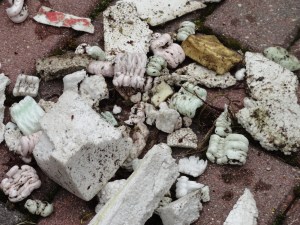
Styrofoam I pulled from Lake Harriet in Minneapolis. It is breaking into small pieces and could last forever!

The oceans belong to all of us.  No one has the right to pollute and trash the ocean or the rivers or lakes.

What can you do? Have plastic-free shopping trips by bringing your own containers, and never purchase products on Styrofoam trays.  2. Encourage your community to put up and maintain recycling containers.  3. Pick up trash on your walks. 4. Recycle everything you can. 5. Always bring your reusable bags shopping.

Last, a remote Pacific island has become a reservoir for the waste of the world as it piles onto this pristine island.

Bring you own bag


Give Your Yard a Dose of Happy

Deep-rooted plants absorb more water than turf grass. Cone flowers, bee balm, and black-eyed Susan

Just making a few adjustments to your yard can make big difference for our climate. If everyone does a little bit, it adds up to a lot! Some amazing statistics on our lawns from “greener lawn” below:

*Grass covers more land in the US than any other crop.

*It’s estimated that there’s up to three times more acres of lawns than corn, according to NASA

Fritillary butterfly on bee balm.

*Homeowners use up to 10 times more chemical pesticides per acre on their yards compared to what farmers use on their crops, according to the U.S. Fish and Wildlife Service.

Some other ideas to slow climate change and help pollinators:

**plant a rain garden

** Add diversity

** Love pollinators

** More on bees an butterflies

Minnesota Public Radio on a “greener” lawn:

Grass isn’t greener

Adding new pollinator plants is not easy if you are a hosta gardener or a new gardener.

I would start small by adding a few of these: purple cone flowers, black-eyed Susan, bee balm, a few asters, and columbine.  I suggest these because many garden stores sell them, they are easy to grow, add diversity, and are loved by pollinators.