Processed Food

I found this so interesting from the New York Times. All this processed food has also led to the explosion of plastic packaging. Plastic and processed food are full of chemicals. Chemicals we don’t want in our bodies or in our environment.

Ultraprocessed nation

Humans have been processing food for millenniums. Hunter-gatherers ground wild wheat to make bread; factory workers canned fruit for soldiers during the Civil War.

But in the late 1800s, food companies began concocting products that were wildly different from anything people could make themselves. Coca-Cola came in 1886, Jell-O in 1897, and Crisco in 1911. Spam, Velveeta, Kraft Mac & Cheese and Oreos arrived in the decades that followed. Foods like these often promised ease and convenience. Some of them filled the bellies of soldiers in World War II.

Vintage advertisements for Jell-O and Coca-Cola.

Eventually, these products overtook grocery shelves and American diets. Now they are among the greatest health threats of our time. How did we get here? Today’s newsletter is a tour through food history.

Wartime innovation

A black-and-white photograph of a soldier wearing a helmet and leaning out of a hole in the ground. There is a small pan in front of him and a box that says “breakfast.”
During World War II, shelf-stable foods were developed to feed soldiers. 

During World War II, companies devised shelf-stable foods for soldiers — powdered cheeses, dehydrated potatoes, canned meats and melt-resistant chocolate bars. They infused new additives like preservatives, flavorings and vitamins. And they packaged the foods in novel ways to withstand wet beach landings and days at the bottom of a rucksack.

Vintage advertisements for Tang and Spam.

After the war, food companies realized that they could adapt this foxhole cuisine into profitable convenience foods for the masses. Advertisements told homemakers that these products offered superior nutrition and could save them time in the kitchen. Wonder Bread commercials from the 1950s, for instance, claimed its vitamins and minerals would help children “grow bigger and stronger.” An ad for Swift’s canned hamburgers boasted that they were “out of the can and onto the bun” in minutes.

An ad that looks like it’s from the 1950s shows a woman pulling a TV dinner out of a freezer.
Getty Images

More women found work outside the home, and by the mid-1970s, they spent much less time cooking. But they were still expected to feed their families. Fish sticks, frozen waffles and TV dinners filled modern freezers, and convenience foods became more popular. These products weren’t all ultraprocessed — some were just whole foods that had been frozen or canned with a simple ingredient, like salt. Still, people got used to the idea that packaged goods could replace cooking from scratch.

An explosion

An illustration of photos of foods including cans of soda and iced tea, bags of chips, waffles, fruit snacks and boxes of Lean Cuisine.

By the 1970s, innovations in fertilizer, pesticide and crop development, along with farm subsidies, led to a glut of grain. Companies turned it into ingredients like high-fructose corn syrup and modified starch to fill sugary cereals, sodas and fast foods.

In the 1980s, investors wanted food manufacturers to show larger profits, so they developed thousands of new drinks and snacks and marketed them aggressively. (Have a look at how the ads changed over the last century.)

A blurry image of an adult and child looking at a cartoon tiger holding a box of Frosted Flakes.

The tobacco companies Philip Morris and R.J. Reynolds diversified into the food industry, dominating it through the early 2000s. They applied the same marketing techniques that they crafted to sell cigarettes — targeting children and certain racial and ethnic groups. Kraft, owned by Philip Morris, created Kool-Aid flavors for the Hispanic market and handed out coupons and samples at cultural events for Black Americans.

Obesity tripled in children and doubled in adults between the mid-1970s and the early 2000s.

A health crisis

A pair of hands holds a hamburger over a tray of school lunch and a bag of Cheetos. The tray holds French fries with ketchup, and a salad.
Getty Images

By the 21st century, you couldn’t walk through a school cafeteria, a supermarket or an airport without being inundated by ultraprocessed foods. Obesity kept rising, and food companies addressed it by making products they marketed as “healthier,” like low-carb breakfast cereals, shakes and bagels; artificially sweetened ice creams and yogurts; and snacks like Oreos and Doritos in smaller, 100-calorie packs.

They were popular, but they did not make us healthier. Scientists soon linked ultraprocessed foods to Type 2 diabetes, cognitive decline and cardiovascular disease. For generations, obesity had been seen as a problem of willpower — caused by eating too much and exercising too little. But in the last decade, research on ultraprocessed foods has challenged that notion, suggesting that these foods may drive us to eat more.

Today, scientists, influencers, advocates and politicians publicly condemn ultraprocessed foods, which represent about 70 percent of the U.S. food supply. Health Secretary Robert F. Kennedy Jr. calls them “poison.”

Are we at a tipping point? Maybe. There are signs that people are eating slightly fewer of these foods. But our reliance on ultraprocessed food was “decades in the making,” one expert told me, and “could take decades to reverse.”

Day of Zero Waste

I make zero waste a game to waste as little as I can.

Our landfills are overflowing, and we just keep purchasing junk and many things we can live without. Consumerism contributes to global warming as do our landfills and burning of trash. We must cut back, maybe not to total zero waste, but creating less waste overall.

Zero waste is not easy, but it is possible. Reducing our waste forces a new look to what we buy. Reducing purchases makes us pay attention to what we buy. Do we really need all the junk we purchase?

March 30 is the UN’s International Day of Zero Waste. This year’s focus is on reducing waste in the fashion industry and helping to advance circular solutions. We have a choice how we spend our dollars, and spending our money on good long lasting products should be a priority. Many items are expensive right now and I bet you can monitor and adjust to be happy with what you already have.

Avoid the fashion fads. Do you really want someone else telling you what to buy and wear. Be your own person create your own look! If your truly want to live on a planet with clean air and clean water we need to cut back! “We still have the ability to stop the worst from happening to our planet. The power to do this is in our hands—we just need to use it.” Katherine Hayhoe

We just need to get in the habit of reusing and fixing what we have. Most of us have closets full of clothes we barely use. Shop your closet and create a new outfit with the clothes you have. Be creative

Many say to me, “But it was so cheap!” No, it’s not cheap with the harm it does to our planet! Manufacturing, shipping, and disposal takes lots of time and energy. Most of it not healthy for anyone.

How can you help to reduce your addiction to fast fashion clothing? Some ideas:

  • Shop your own closet, or the closet of a friend or relative.
  • Purchase secondhand. Some secondhand stores even have personal shoppers for you to use.
  • Buy quality over quantity 
  • Mend clothes rather than throwing them away
  • Intentionally select the brands you purchase from and learn about their sustainability practices
  • Make a decision you didn’t need this item after all

Incentive to purchase and waste less: https://health4earth.com/2024/11/22/ghana-becomes-dumping-ground-for-the-worlds-unwanted-used-clothes-pbs-news/

Plastic in our Food and Water

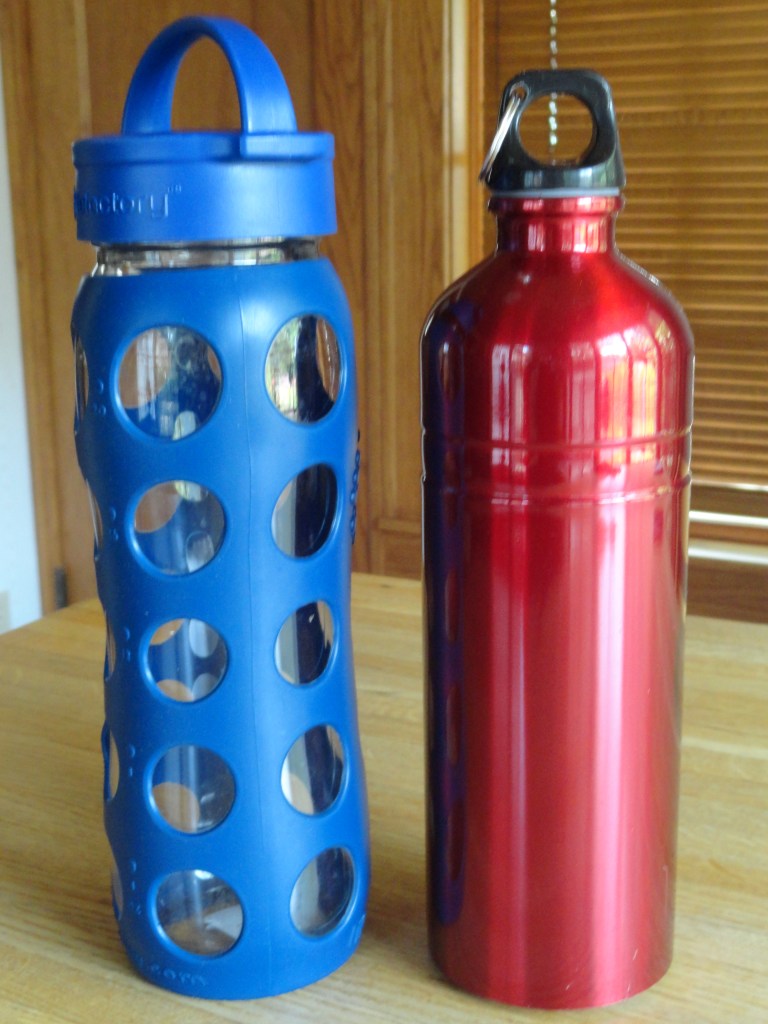
Many reasons to use a non-plastic reusable water bottle.

New studies on plastic start to emerge.

In a trailblazing new study, researchers have discovered bottled water sold in stores can contain 10 to 100 times more bits of plastic than previously estimated — nanoparticles so infinitesimally tiny they cannot be seen under a microscope.

Disposed plastic water bottles blanket a beach in New Taipei, Taiwan in 2022.

The plastic water bottle industry is booming. Here’s why that’s a huge problem

At 1,000th the average width of a human hair, nanoplastics are so teeny they can migrate through the tissues of the digestive tract or lungs into the bloodstream, distributing potentially harmful synthetic chemicals throughout the body and into cells, experts say.

One liter of water — the equivalent of two standard-size bottled waters — contained an average of 240,000 plastic particles from seven types of plastics, of which 90% were identified as nanoplastics and the rest were microplastics, according to the new study. https://www.cnn.com/2024/01/08/health/bottled-water-nanoplastics-study-wellness/index.html?utm_term=17051508781315d4f59f626ee&utm_source=cnn_Weekly+LBB+Automated&utm_medium=email&bt_ee=uul4Fxg9FZKZA30rzJn08%2BUBxjUR1MOAuPwj1fjq3OFfXysulwJVn0gwksla8rm%2B&bt_ts=1705150878134 Source CNN

And from Consumer Reports:

Another new report finds that 84 out of 85 supermarket foods and fast foods had plastic chemicals in them — including cereal, yogurt and even baby food.1

We shouldn’t be so nonchalant about harmful chemicals in the food we eat, and especially not in the food we serve to babies.

Tell the U.S. Food and Drug Administration: Test for, limit and, wherever possible, eliminate plastic chemical contamination in food.

Among the chemicals found in the food were “plasticizers” like BPA, once found in so many plastic water bottles, and phthalates, a chemical used to make plastic more durable.

Companies have allowed these plasticizers into a dizzying range of food products. But they seem to have forgotten to ask themselves: Should we?

After all, chronic exposure to plasticizers can disrupt the production and regulation of estrogen and other hormones, and potentially increase the risk of birth defects, cancer, diabetes, infertility, neurodevelopmental disorders, obesity and other health problems.2

We can’t keep letting companies get away with this “ask for forgiveness, not permission” approach to harmful substances in our food.

Join PIRG in urging the FDA to help get plastic chemicals out of our food. Add your name

1. Jonathan Stempel, “Consumer Reports finds ‘widespread’ presence of plastics in food,” Reuters, January 4, 2024

Happy Winter Solstice


The return of light and hopefully greater understanding, empathy and compassion as the world struggles through 2 wars, and lots of conflict and mistrust. Sending wishes for peace this holiday season.

Slowly the days become longer

The equator divides the Earth into the Northern Hemisphere and the Southern Hemisphere. When the Northern Hemisphere has summer the Southern Hemisphere has winter.  On December 21, in the Northern Hemisphere the Earth’s tilt starts to slowly tilt back towards the sun. This slow nod to the sun causes our seasons and longer days.

Many cultures celebrate the return of the sun:

The best about the solstice in the north is that the days start to get longer. We begin to move from so much darkness to brighter longer days. Daily change is slow, but by mid January you can notice the days are becoming longer! Many cultures and people celebrate this return to light. https://www.express.co.uk/life-style/life/1539015/stonehenge-winter-solstice-celebrations-traditions-evg  

Many Native American communities have long held solstice ceremonies, explained University of Illinois Urbana-Champaign scholar Rosalyn LaPieran Indigenous writer, ethnobotanist and environmental historian.

Remembering The Holocaust

Be kind

Below is from the Planet

ALEXANDER VERBEEK

Follow: https://theplanet.substack.com/

It is the responsibility of each and every one of us to ensure that history does not repeat itself.

Seventy-eight years ago, on January 27, 1945, soldiers of the Red Army opened the gates of Auschwitz Concentration Camp. At first, everything seemed abandoned, but then they realized there were still thousands of people. About 7,000 prisoners awaited liberation in the Main Camp, Birkenau, and Monowitz. 

Georgii Elisavetskii, one of the first Red Army soldiers to step into Auschwitz, a complex of over 40 concentration and extermination camps, described what happened then: “They rushed toward us shouting, fell on their knees, kissed the flaps of our overcoats, and threw their arms around our legs,” 

Over a million people deported to Auschwitz perished there, and it is estimated that six million Jews were exterminated in the death camps.

Each year on the anniversary of the camp’s liberation, we remember and pay our respects to the victims; we should not forget them on all other days, and we should continue to do so for years to come. But there is another aspect to these commemorations; they increase our awareness of atrocities such as genocide and war. It is a first step for each of us to gain insight into what ideologies and actions can lead to such terrible acts, as well as into strategies that can be implemented to prevent them from occurring.

It makes commemoration not only somber but also inspirational because it links the past to the future. The dangerous mix of ingredients that led to hate, discrimination, and, ultimately, the unprecedented crime of the Holocaust may haunt humanity again in the future. Understanding what happened is the first step to avoiding repetition. And unfortunately, parallels between current events and the rise of fascism in the 1930s are easier to recognize in several of today’s societies than just a decade ago.

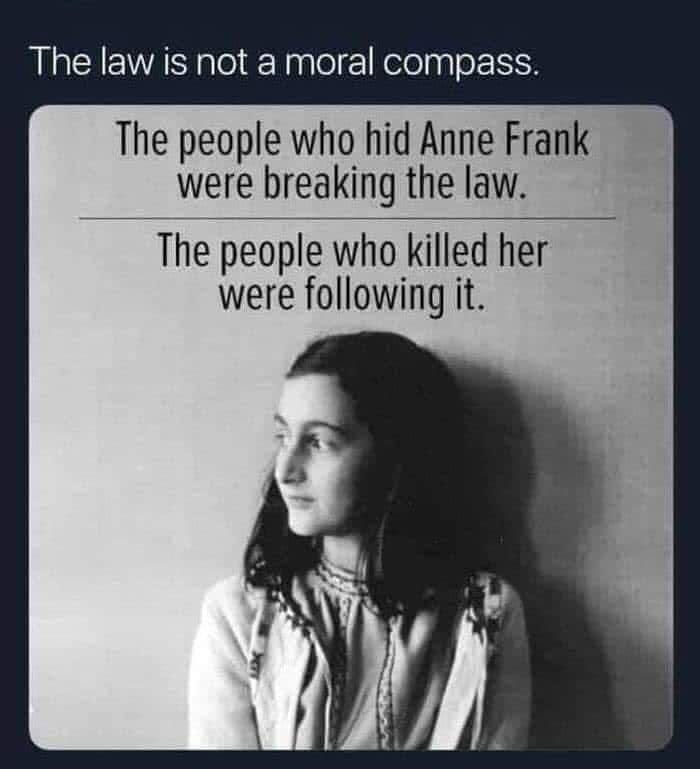
This brings me to this image I saw months ago circulating on social media. 

It’s a warning for all of us that the law should never be confused with a moral compass. Always think critically, question the actions of our leaders, and never blindly follow the directions they put in place. 

Our hearts should be filled with humanity, compassion, and kindness. While reading about the Auschwitz liberation, I was struck by the love and tenderness of one man who wrote to his wife and daughter while living in the hell of the extermination camp and realizing he would not survive.

Life in Auschwitz-Birkenau was filled with fear and uncertainty, especially for those chosen to work in the Sonderkommando. They were forced to carry out tasks in and around the gas chambers and were well aware that the Nazis would not let them live to ensure they would never disclose to the world what had happened there.

One of them, Hersz Strasfogel, wrote a letter in November 1944 and it is one of the only five buried accounts by former Auschwitz Sonderkommando that have been unearthed. It was discovered buried near the gas chamber ruins after World War II. The letter was written to his wife and daughter, who were living in France then. It became known as the Chaïm Herman letter but has, after extensive historical research, in 2019 been attributed to Hersz Strasfogel. Both of them did not survive Auschwitz. 

When I write today with great risk and danger, I do it in order to tell you that this is my last letter, our days are numbered and if one day you receive this missive, you will have to include me among the millions of our brothers and sisters who had vanished from this world. I am taking this opportunity of assuring you that I am leaving calmly and perhaps heroically (this will depend on circumstances), with one sorrow only that I cannot see you once more, not even for one moment…I ask your forgiveness, my dear wife, if there had been, at various times, trifling misunderstandings in our life, now I see how one was unable to value the passing time; I constantly thought here that, should I by some miracle get out of here, I would begin a new life… but alas, this is impossible, nobody gets out of here, all is over…I am sending you my last farewell for ever, these are my last greetings, I embrace you most heartily for the last time and I beg you once more, do believe me that I am going away calmly, knowing that you are alive and our enemy is broken…Farewell my dear wife and my dear Simone, accept my wishes and live in Peace, may God keep you in His care.Thousands of kisses from your father and husband.

Let me end with a quote from one of the other four letters that have been found, written by Zalman Gradowski, and found buried at an Auschwitz crematorium site:

Dear finder of these notes, I have one request of you, which is, in fact, the practical objective for my writing … that my days of hell, that my hopeless tomorrow will find a purpose in the future. 

He wrote so that his execution would find a purpose. He wrote so that we know, will never forget, and will prevent that we confuse the law with our moral compass.

If you are a parent or a teacher, please ensure the next generation learns these lessons from history. Teach kids and students to think for themselves and have their own values and beliefs.

Especially in today’s world, where populism is rising, it is crucial to think critically and question our leaders’ actions rather than blindly following the laws they put in place.

It is the responsibility of each and every one of us to ensure that history does not repeat itself.

Vote for Democracy and Truth

There are so many things wrong with this election it is hard to know where to start. Too many lies, too much money, voter restrictions, election deniers, conspiracies, and awful candidates.

Vote! The most important thing you will do in November!

What is good? This is our voice, our participation in democracy. A voice that can be taken away if we vote for the wrong candidates.

Be open minded and vote for the future.

Voting is not easy, and no one wants to be a gullible voter. Never base your vote on campaign ads. Good voters guides are easily available. Newspaper endorsements are good sources for how candidates stand on the issues, even if you don’t agree, they often give both sides of the issues. Websites of candidates work also. Be open minded and look for the issues you care about.

Look for the positive. Who has a vision for the future instead of just attacking their opponents. Never vote for bullies or those who call for violence.

This is your vote for a better society. Make a plan and get yourself to the polls. Thank you.

An excellent interview with Liz Cheney: https://www.pbs.org/newshour/show/rep-liz-cheney-on-political-violence-jan-6-committee-and-future-of-gop

Reasons to be Plastic-free

The plastic industry and manufacturers have made it impossible to be plastic-free. As consumers we need to hold them accountable. I call or email companies that use #7 plastic for packaging to complain about the packaging they use. #7 plastic is a composite of different plastics making it hard to recycle. Somehow #7 packaging companies, like Bob’s Red Mill, have managed to stay under the radar screen of scrutiny. Don’t purchase products in plastic that is not recyclable. My husband and I have found recyclable plastic to replace #7, but look for, and wish for alternatives for all plastic. We refill our reusable containers with bulk items at a food coop, but as you know many things are not available in bulk.

The thought of ingesting plastic and all its chemicals is upsetting, and we must stay after manufacturers to break the plastic habit. Our grandparents did just fine without so much plastic, and I think we all can too. See what John Oliver has to say below.

“Plastic really is ubiquitous,” but “for almost as long as plastics have been around, there’s been the question of what to do with them after they’re used,” John Oliver said. ” This is an urgent, growing question, too. “Half of all plastics ever made have been produced since 2005,” he said, and “a lot less plastic winds up getting recycled than you might think” — less than 9 percent in the U.S.

“The fact is, a huge amount of the plastic surrounding us isn’t recycled because it’s not really recyclable, and that means that it ends up in landfills, or burned, or in the ocean, where it breaks down into microplastics, gets eaten by fish, and can end up inside us,” Oliver said. “A recent study even estimated that an average person globally could be ingesting about a credit card’s worth of plastic into their system every week. Which kind of explains Capital One’s new slogan: ‘What’s in your stomach?'” John Oliver

Reading watching list:

Plastics recycling is 90 percent garbage, John Oliver says, but that’s not your fault and there is a fix (yahoo.com) 

Watch Story of the Bottle! – Greenpeace

Virginia Governor Takes Action on Single-Use Plastics – EcoWatch

Break Free From Plastic Pollution Act Receives National Support – Center for Biological Diversity 

 U.S. lawmakers target plastic pollution, producers in new legislation | Reuters

Celebrating Women

International Women's Day
All women and girls need a chance for education

Today is #InternationalWomensDay and we recognize that women are still far from equal to men in today’s societies. We still have a very long way to go.
Those who will suffer the most from the climate- and environmental crisis are the ones who are already the most vulnerable, socially and financially. And that tends to be women living in the global south… We can not have climate justice without gender equality.
And remember; what we women want today – and every day- is fundamental equal rights, not congratulations or celebrations.”  Greta Thunberg

It seems an irony to be celebrating International Women’s Day after the primary elections in the United States turned away Elizabeth Warren, an outstanding candidate, from running for president. I would like to know where the women of this country are?  Why would they vote for old white men when they have a better female choice? It is a mystery.

On this day we are celebrate all the women we know and all they do to make the world a better place and make the lives around them better everyday!

Women and girls need education and family planning so they can take control of their own lives. 

Time Magazine’s issue this week is about women leaders of the last 100 years. Just imagine a 100 years from now! 100 women

Besides Greta, there are other women working on climate issues, women environmental leaders.


Reduce the waste you generate!

recycle
Purchasing recycled products saves raw materials and adds valuable jobs

“I only feel angry when I see waste, when I see people throwing away things we could use.” Mother Teresa        Only 9% of recyclables are recycled in the United States compared with Germany and Norway that recycle in the 60% range. Plastic manufacturers continue to create more plastic and push recycling. Unfortunately,  recycling is not a sustainable option. I hope you will work hard to recycle your bottles, containers and paper waste because making things from recycled material is awesome and saves lots of energy and natural resources, but as consumers we need to also purchase items made from recycled materials.

A new paradigm is needed, we all need to reduce the waste and recycling we generate. Wasteful packaging needs to stop! Make it a priority in your life to reduce the waste you generate. Here are some simple ideas to get you started:

First, cook at home instead of take-out. Yes, it is some work, but organizing to have a few meals made ahead or in crock pots can reduce lots of waste and be fun at the same time.

Always carry your reusable water bottle and reusable bags.

Be a smart shopper, always think how you can purchase less waste, especially plastic waste. Don’t purchase plastic or Styrofoam trayed produce. Many stores have cloth bags you can purchase for produce.

reuse
Use cotton or paper bags

Shop in bulk and refill any bottles your grocery store makes possible. Food coops have lots of refill options.

Choose products out of recycled material if you can find them.

Never put plastic bags in your recycling cart, recycle them at your local stores.

Please recycle plastic bags at grocery stores!


Target, Stop Single-use Plastic!

Recycling is important, but it just isn’t enough to solve our plastic problem. What is the solution?  Last week I had this letter (below) published in the http://www.startribune.com/  in response to Target rolling out their new “green” products:

Earth-friendly line is insufficient; stop stocking single-use plastic

Reuse and refill your own bottles

Plastic bottles, plastic bottles — Target must have missed the memo on how harmful single-use plastic is to our Earth (“Target rolls out earth-friendly household goods,” April 23). To be truly green, Target needs to offer consumers the ability to refill their own bottles with these new “green” products. Customers who care about all the plastic in our environment can now reuse and refill their bottles at Minnesota’s excellent food co-ops, or the new zero-waste Tare Market in Minneapolis where consumers can save money and help our environment at the same time. Many of these bulk products are even Minnesota-sourced. Let’s move to the paradigm of reusing instead of adding more single-use plastic to our landfills, and I’m encouraging Target to become the business leader in this reuse/refill movement.  health4earth

Why isn’t recycling enough?

  1. We should all be demanding a zero waste economy with fees and bans on plastic, but of course, the plastics industry is in control
  2. See what happens to some of the material we recycle  here