The Challenge of Plastic

Do the best you can until you know better, then do better” Maya Angelou


Covid-19 has been a plastic disaster. As we climb out of this abyss we must take single-use plastic seriously. We also need to hold companies accountable for bad packaging.

Why as taxpayers and citizens are we paying the price of this environmental disaster of plastic while the creators of this packaging have no responsibility? The landfills in the county where I live are full, and plastic trash can last for hundreds of years, maybe forever!  What are the manufacturers of this plastic thinking other than profit? As consumers we are also at fault. If we keep buying this plastic packaging they will keep making it!

July is plastic-free month
Work to reduce your plastic footprint

How can we all reduce our landfill trash? Surveying my garbage I find I have way too much plastic that cannot be recycled, and most of it is # 7 plastic that cannot be recycled.   Why would companies use plastic that can’t be recycled? I decided to ask them. I sent an emails or telephoned Wyman’s Blueberries, Bob’s Red Mill, Morning Star and Gardein.  A few companies admitted they wished their  packaging was better, but it was a freshness and a cost issue to stay competitive. What about the costs to the environment and our health? 

#7 plastic is a mixture of different plastics and it is designed to make it hard to know what it contains. It can contain harmful chemicals like BPA. Don’t purchase it, and don’t purchase any plastic that can’t be recycled!

Model a new way forward: “When we use disposable items, we send a message: this is what we want, keep it up, make more of this. When we refuse, and choose reusable, we model another way forward. Our choices can make a difference. Let’s make them count!” PlasticfreeTuesday 

Also choose reusable masks and gloves!

Bob’s Red Mill was the most disappointing of the companies I contacted. They sell lots of products, many that are hard to find, and have a monopoly on some products. Bob’s has a trusted reputation of being  healthy and sustainable. I am sad they use awful  # 7 packaging, and at our house we won’t purchase their products or any #7 plastic until their packaging improves.

Please recycle plastic bags at grocery stores!

The good news is that by being a smarter shopper it is possible to find items that are packaged in recyclable #4 plastic. These #4 bags need to be dropped off at grocery stores for store recycling. They should not be placed with your normal plastic recycling because they disable the sorting machines.

health4earth
Bring your own reusable bags.

Lets hold plastic producers accountable and avoid harmful plastic. It is always best to reuse bags and containers when possible, but sadly that often is not an option. However, with new awareness we can do better, one plastic item at a time.

Reading list:

Tips & tricks for grocery shopping with less waste (plasticfreetuesday.com)

Solving Packaging

Virginia moves closer to ban plastic foam containers | Environment | rappnews.com 

Action item: Can you join me and take action demanding President Biden act on plastics? Click here: https://actionnetwork.org/petitions/president-biden-be-a-plasticfreepresident?source=email&


Resolve to be a Better Consumer

Consumption is a big challenge for us as humans–we need, we want lots of things…The vast majority of products end up in landfills, and over 60 % of fabric fibers are synthetics derived from fossils fuels so they don’t decay.” Designer  Christian Siriano

SO, How can we become better consumers?  We have incredible power with our consumer dollars.  How can we use that power wisely? Why would you reinforce corporate greed with your purchases? Everyone wants to save money, but you are not saving money when you purchase lots of cheap things that will end up in the land fill next year!  

Lots of environmental repair is needed, and I hope you will join me to help in 2021 and resolve to be a better consumer. Look at your habits and just make one change. See reading list below.

One of the most important forms of power we have is our ability to decide where and how we spend our money. When you pump LESS gas, and purchase less meat you’re saying something. When you contact businesses about their extreme plastic packaging, you’re doing something. When you shop local, support local farms and climate-smart brands, you’re making a difference by revealing a growing market for whom business as usual will not cut it. At our house we only make purchases at places that pay a minimum wage. If we can use our dollars to shop for quality, support local, green, and homegrown businesses. We can keep dollars in our own communities and make a statement. Buying less makes a statement too.

The thought of having plastic microfibers in the food I consume stirs me to reduce my plastic consumption and motivates me to become aware of my plastic and other unsustainable purchases.

glass
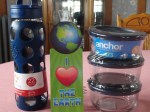
Reuse containers
Where can you start? First work to stop purchasing single-use plastic. Shop with your reusable bags, use a reusable water bottle, refuse straws/plastic utensils, and find an alternative to baggies. Maybe stop using sauce packets. Become aware of all the  packaging that can’t be recycled.

Start working on one thing and go from there. You will not be perfect, but you can make a difference! Maybe you can start with an alternative to dryer sheets and hand wipes. I just discovered somethings I purchased during the pandemic are in #7 plastic(not recyclable). I’m contacting these companies, and ending my #7 plastic purchases! Education and awareness make such a difference. I hope the reading list below will heighten your awareness also!

Reading list:

Say no to fast fashion and purchase items that will last a long time

Toxic chemicals in single-use plastics are harming human health | U.S. PIRG   

Do You Want to Buy Less Stuff? Three People Tell Us How – The New York Times (nytimes.com)

https://bigthink.com/personal-growth/buy-less-stuff

Beginner’s Guide to Minimalism – Going Zero Waste

Six Eco-Friendly Pledges for 2021​ – EcoWatch 

New Year’s Resolutions for the Planet – The New York Times (nytimes.com)

9 New Years’ Climate Resolutions To Keep For 2021, According To Experts (forbes.com)

In Focus: We know the real cost of fast fashion, so why do we buy it? | Metro News

Lake Michigan plastic pollution poses ecological and social threats (https_dailynorthwestern.com)  

Substitutes For Dryer Sheets | Cleancult

My ten tips for Health4earth holiday shopping: 


Purchase clothing made from natural fibers – synthetic fibers like polyester are made from plastic. Opt for alternatives to dryer sheets for your laundry.

What have we learned?

After all the loss of life, sadness, loneliness, lies and chaos of 2020 lets hope we have learned some thing from the disfunction and poor leadership we have faced. I thought this letter to the editor had a lot to say:

Can we understand that if we can apply these lessons to the climate crisis, we’ve taken the most pro-life action possible?


As the pandemic year of 2020 comes to a close, we need to ask if we’ve learned from it, or whether we are doomed to repeat what we did not learn. Did we learn that there are serious personal and global consequences from destroying nature and the web of life that we’re part of? Did we learn that truth matters, not only as an ethical imperative, but as a requisite for a successful democracy? Did we learn that science matters and that disregard for the lessons of science robs humanity of tools that sustain life? Did we learn how countries that were united by common purpose and mutual trust were more successful in combating the pandemic than countries without unity and trust? That there is a critical role for leadership and democratic governance? That in this interdependent, globalized world, our health and future are bound together across national boundaries? That our future depends on putting cooperation above national interest?


Can we imagine how these lessons apply to the climate crisis? Can we understand that if we don’t apply these lessons to the climate crisis, the systems that support all life on our planet cannot be sustained, and COVID-19 will seem like child’s play by comparison? And finally, can we understand that if we can apply these lessons to the climate crisis, we’ve taken the most pro-life action possible?  Lyndon Torstenson,   Startribune.com 

3 things to do this week!


If everyone does a little, it adds up to a lot!

I have three things I think everyone should do this week. Happy holidays!

1.Wrapping gifts (Ideas from MPR)

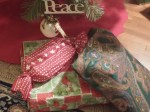
My husband’s wrapping

Despite its name, you actually can’t recycle most wrapping paper.  It contains too much foil and glitter.

The only types of wrapping paper that are recyclable are the ones that are one hundred percent made out of paper. This will most likely be the plain brown paper you’ve seen packages wrapped in. You can get creative and decorate the paper with drawings to spruce up the present.

Gifts in reusable cloth bags

You can get even more creative by using materials that you already have to wrap your presents. You could use old newspapers and compost them or cloth bags and ribbon and reuse them next year. 

Gifts

You can give gifts to your friends, family and the environment all at once. You could give to a cause the person is passionate about, or plan a clothing swap all while creating zero waste.  

You also may want to consider supporting small businesses this year by shopping locally rather than getting things delivered. 

2. Don’t Waste food. 

Food waste picture
Wasting food wastes water, energy and labor!

Wasted food is a huge contributor to global warming and climate change. It is a waste of energy, labor, and water, often contributing to air and water pollution. Rotting food in landfills contributes more air and water pollution.  In the United States we waste 40% of our food, and we can all do better. Read about it at Save The Food 

Cook only what you need and have a plan for using leftovers.

3. Take an AWE walk

Find beauty in your neighborhood!

Take a healthy mindful walk and pay attention! Leave your phone and headphones at home. Look at the beauty of the trees, the sunshine and landscape. Listen for the wind and birds.  Find something you love and something that surprises you. Unwind and enjoy!

One Week of Records

Earth image
Climate Change is real!

Amazing numbers, we are all in this together!

By the numbers:
-30 million migrating birds flew over my house this weekend  (Audubon)
-12 black women are playing in the US Open Tennis Tournament. Hopefully it will continue to increase.
-Phoenix has had a record run of 50 days of 110 degree temps in a row.
-Portland has had a record of over 100 days of protesting.
-A record 2.2 million acres have been burned in California with the two worst months to go.                                                                                                                  -A record high temp of 121 degrees was recorded in Los Angeles County
-Denver recorded 100 degrees, then 24 hours later, 30 degrees and snow.
-The United States has the most Corona Virus cases in the world, just ahead of India.                                                                                                                                           -There have been a record number of hurricanes so far for this time of year.                                                                                                                                                  -Warnings from the UN that the Earth is hitting it’s temperature limit


Superior Views, Summer 2020

Extra fresh? Extra wet? Extra extra? Extra beautiful? Extra Great? Extra gitchy? Extra deep? Extra wide? Extra voluminous? Extra fishy? Extra rocky? Extra clean? Extra cold? Extra Superior?” @Lake Superior (twitter)

monarch butterfly
Monarch on goldenrod

Yes, extra Superior! A world pandemic is still raging, elected leaders incite violence, forest fires and hurricanes are constant, but no drama on Lake Superior. By  August the lake has warmed and the contrast between the cold lake and warm air isn’t so extreme causing less drama. This lack of drama makes the big lake more peaceful as the gentle waves ripple to shore.

The loons call, and the eagles screech from their tree towering over the lake.  The hummingbirds like little fairies hover and suck nectar from the last of the plants as they prepare for  their long journey south.

Frittilary butterfly in July
August garden on Lake Superior.

Plants are turning brown, and yellow golden rod dominates. Blooming plants were early this year so they lose energy and turn brown sooner. Only a few butterflies remain, they have been replaced by grasshoppers, and like the birds the chipmunks are already busy preparing for winter.

July was a perfect time to indulge in watching butterflies and monarch caterpillars. Every new caterpillar was a celebration. Unfortunately, something else found them to be joyful food, and they disappeared.  We suspect the chipmunks. Their numbers were too many this year, and they seemed to be watching my treasured caterpillars as much as I was!  Every new butterfly I see I hope they were one of my precious fat caterpillars.

hummingbid sits at feeder
Female ruby-throat hummingbird

Surprisingly,  in July the lake had a harder time keeping us cool from the hot humid summer south of us, but August brought 70 degrees days while a hundred miles south it was a hot humid 90 degrees.

On to September and more change, turning leaves and intense beauty! Extra beautiful!


Zero Waste Wednesday

end food waste
Help the environment by reducing food waste

Food waste is a waste of water, a waste of energy and transportation, and a waste of time and labor. Making an effort to reduce food waste is an important thing we can all do for the economy and the Earth. In America 40 percent of the food produced is wasted!

We waste too much food, and there is a food crisis with this pandemic. Many are unemployed, and lines are long at food shelves, which are experiencing a massive demand. A  big disconnect, many are starving, and at the same time we waste lots of food! Today, no recipe required, instead of throwing food away use your creativity to create a meal with left overs and produce you have in your house. Can you make an omelet, soup, wrap, or stir fry with what you have? Have fun, be creative!

“Even before COVID-19, Americans, on average, were tossing away more than a pound of uneaten food per person each day, amounting to some 400 pounds of food thrown out annually. That’s far more than any other wealthy country — about 50% more food waste per capita than France and nearly double that of the U.K. According to U.S. government estimates, the cost of U.S. food waste comes out to $161 billion annually. The environmental costs are abysmal.” Read the article by Amanda Little  here.

These are important facts we should be aware of, from the IPCC, Intergovernmental Panel on Climate Change: Food production causes 30 % of greenhouse emissions, 80% of global deforestation, and uses 70% of the world’s fresh water!

Too much food is waste!
How can you use those leftovers?


Great suggestions for reducing your food waste.

Make your Wednesday zero waste!

See a Tree

Trees on bodies of water help to keep water clean.

May is Arbor Month. Do you have a favorite tree? When I was a child I had a young  basswood tree growing in my back yard. It was a little tree, but it had enormous leaves. I loved watching that tree grow and change! 

Jane Goodall

The tree I had in the garden as a child, my beech tree, I used to climb up there and spend hours. I took my homework up there, my books, I went up there if I was sad, and it just felt very good to be up there among the green leaves and the birds and the sky” Jane Goodall

Before being logged pine trees originally covered northern Minnesota and Wisconsin.

Find a tree on your walk, in your yard, or neighborhood to enjoy. Observe it everyday. Watch how it changes, notice the shade it gives, the texture of its bark and leaves What kind of seeds does it have? Watch for new growth. How does it help wildlife? What attracted you to it? What beauty and diversity does it add to your environment? Give it a name.

I have a cedar in my backyard full of mysterious activity. All the birds that fly in and out of its secretive branches intrigues me. Cardinals have built a nest hidden in its branches, but it is too busy an environment to raise a family. It does feels like a friendly place, and all the birds love its shelter. I would love to hide in its branches to find out all that goes on within this cedar tree. Unfortunately, the cats in my neighborhood also sit and watch this tree full of bird activity. Please keep your cats inside!

May is a perfect month to plant trees, but always plant something native to your area, and please plant trees friendly to wildlife. Here is the National Wildlife Federation’s list of best trees for wildlife. Oaks are especially good for wildlife.

Trees are beautiful and add so much to make our environment special, but “Foremost might be trees’ role in purifying the atmosphere by absorbing carbon dioxide and releasing oxygen. Of course, they also play a vital role in creating habitats for wild animals, providing food, water and shelter.” Jim Gilbert 

How do trees help keep water clean? Trees improve water quality by slowing rain as it falls to the Earth, and helping it soak into the soil. They also prevent soil from eroding into our waterways, reduce storm water runoff, and lessen flood damage.

Earth Day Wonder

On this 50th anniversary of Earth Day let’s celebrate our Earth.  We ate all in this together, and it’s a wonder how interconnected we all are. Who would think the entire planet could work in solidarity for one thing, healing! Our forced isolation has begun to heal the Earth. The air is clearing, the waterways resting, and wildlife is happy to have quiet and some of their habitat back.

Our Earth is an amazing place, and on this Earth Day think about the wonders of our beautiful planet.

what a Wonderful World
Wonders of our Earth

There’s wonder everywhere, if only you look for it. Look for it. It might be in a tree outside your window, in the patch of sky you can see if you crane your neck, in the herbs you’re growing, in the nest the swans are building on that open stretch of marsh across the street.” Sam Sifton NYT

All these wonders are connected. We can make the world a better place when we work together in solidarity. Can something good come of this awful crisis? May science, justice and kindness transform our world into a new beginning. Take 3 breaths for peace, and celebrate wonder on this Earth Day!

11 actions for the planet during a pandemic