In my meetings some are wondering what big thing they can do to stop climate change. I think many people doing lots of little things to help our planet amount to a lot! We can all make a difference by buying less and wasting less. Thank you!
From Thanksgiving to New Year’s Day, household waste increases by more than 25%. Added food waste, shopping bags, packaging, wrapping paper, bows and ribbons all adds up to an additional 1 million tons a week to our landfills. (Source: EPA)
Enjoy your leftovers!
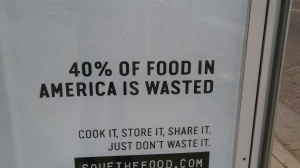
Make a plan for your holiday left over food. What do you generally do with left over food? 40% of the food in the United States is not eaten, and ends up in our landfills causing an enormous waste of our precious resources. Wasting food is an enormous waste of water, money, time, labor, energy and transportation. The Natural Resources Defense Council (NRDC) has an incredible education campaign to inform the public how much we are wasting. For example the production of one egg takes 55 gallons of water! Their website is savethefood.com
Not only does wasting food, waste valuable resources and lots of water, but also food in our landfills decomposes creating and giving off methane gas which is a harmful air pollutant contributing to global warming
So let’s get creative and “Save the Food.” One of my favorite cooking activities is to reinvent leftovers into a new lunch or dinner stir fry, soup, tacos, enchiladas, salads, fried rice, quinoa bowls and many other things lend themselves to create special meals of leftover food.
Have a fun holiday, and make a creative difference by reusing, planning, seriously cutting waste, and saving food from the garbage!
The world climate summit is taking place in Glascow, Scotland. The world has known for a long time it needs to do something about our warming earth. There has been such a lack of leadership to get something done, and now we have reached a point where it has become hard to ignore. During the first week some important promises to protect forests, reduce methane and reduce coal. Will it be enough? No, but the conversation has begun. Russia and China didn’t attend so continued efforts are needed to keep them moving forward and integrate them into the discussion
In the United States the powerful lobbyists and oil industry have been able to control and stop action, and it is still happening with Joe Manchin as he hauls in the cash to resist a move away from fossil fuels.
Strong leadership and a desire to work together needs to come out of this important conference. Together everyone is the solution to our climate, We must all set this as a priority over greed, lies and waste.
Everyday we make an impact, make it positive!
Speak out for change! Work for a healthy future!
During the pandemic 2020 carbon emissions were reduced and we can do it again. Everyday with just a little effort, we can make an impact, and move to a new future of sustainability Let’s start now by buying less junk, reduce our plastic use**, stop idling our engines, and a couple days a week eat meatless. Try walking and riding public transportation, you might like it!
There are some hopeful things happening in the world:
Amazing: Cars powered by combustion engines now make up less than 10% of sales in Norway, and forecasts suggest the country’s last sale of a new petrol or diesel car will come in April 2022, three years ahead of what was already the world’s most ambitious target. Drive
Russia has committed to carbon neutrality by 2060, Turkey has finally ratified the Paris Agreement, and the UAE has become the first petro-state to commit to net zero by 2050. Critics say these pledges aren’t enough, but they’re missing the point. They’re not promises. They’re ratchets – once announced, they only increase in ambition.
China has begun construction on the largest and most ambitious clean energy project of all time, 100GW of wind and solar in its western desert. That’s more than the entire existing wind and solar capacity of India, and will be able to generate four times as much power as the Three Gorges Dam. Bloomberg
More than 100 countries have joined the Global Methane Pledge with $300 million in funding to cut dangerous methane emissions.
Wealthy nations and billionaires promise billions to support green tech, end deforestation, end coal use, and more but much more is needed.
The important question is what happens after the summit? Countries should be meeting yearly to report their progress and set new goals. Also, continued work needs to be done getting all countries involved.
**Why we need to reduce our use of plastic: Plastics are on track to contribute more climate-change-causing emissions (to the tune of at least 232 million tons of greenhouse gases annually) than coal plants by 2030, according to a new report out of Bennington College. The reason? As fossil fuel companies seek to recoup falling profits, they’re increasing plastics production. REPORT: The New Coal: Plastics & Climate Change — Beyond Plastics – Working To End Single-Use Plastic Pollution
“Being kind and warm-hearted is the secret to a happier life and a better world for everyone.” Dalai Lama
Last night as I was purchasing groceries, the young clerk said to me, “I have had such a good day, all the customers have been so nice!”
August is here, and this month subscribes to a kindness challenge.
The Actions for Happiness group has a calendar for Altruistic August with lots of ideas. See their ideas below.
If you still haven’t Your first action a kindness is to get vaccinated from Covid The collective health of all our communities is important. Get vaccinated!
Then…Our Earth needs kindness too. During August I challenge you to drive less, recycle more, buy less, and reuse more.
Make your August into double challenge days! If everyone does a little, it adds up to a lot. Thank you.
Here’s my list of things to do:
Meatless Monday, Plastic-free Tuesday, Walking Wednesday, Transit Thursday, Zero food-waste Friday, litter pick-up Saturday, and finally, Smiling Sunday.
Have a Fun and thoughtful August, Actions for Happiness calendar follows:
I have three things I think everyone should do this week. Happy holidays!
1.Wrapping gifts (Ideas from MPR)
My husband’s wrapping
Despite its name, you actually can’t recycle most wrapping paper. It contains too much foil and glitter.
The only types of wrapping paper that are recyclable are the ones that are one hundred percent made out of paper. This will most likely be the plain brown paper you’ve seen packages wrapped in. You can get creative and decorate the paper with drawings to spruce up the present.
Gifts in reusable cloth bags
You can get even more creative by using materials that you already have to wrap your presents. You could use old newspapers and compost them or cloth bags and ribbon and reuse them next year.
Gifts
You can give gifts to your friends, family and the environment all at once. You could give to a cause the person is passionate about, or plan a clothing swap all while creating zero waste.
You also may want to consider supporting small businesses this year by shopping locally rather than getting things delivered.
2. Don’t Waste food.
Wasting food wastes water, energy and labor!
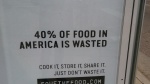
Wasted food is a huge contributor to global warming and climate change. It is a waste of energy, labor, and water, often contributing to air and water pollution. Rotting food in landfills contributes more air and water pollution. In the United States we waste 40% of our food, and we can all do better. Read about it at Save The Food
Cook only what you need and have a plan for using leftovers.
3. Take an AWE walk
Find beauty in your neighborhood!
Take a healthy mindful walk and pay attention! Leave your phone and headphones at home. Look at the beauty of the trees, the sunshine and landscape. Listen for the wind and birds. Find something you love and something that surprises you. Unwind and enjoy!
Food waste is a waste of water, a waste of energy and transportation, and a waste of time and labor. Making an effort to reduce food waste is an important thing we can all do for the economy and the Earth. In America 40 percent of the food produced is wasted!
We waste too much food, and there is a food crisis with this pandemic. Many are unemployed, and lines are long at food shelves, which are experiencing a massive demand. A big disconnect, many are starving, and at the same time we waste lots of food! Today, no recipe required, instead of throwing food away use your creativity to create a meal with left overs and produce you have in your house. Can you make an omelet, soup, wrap, or stir fry with what you have? Have fun, be creative!
“Even before COVID-19, Americans, on average, were tossing away more than a pound of uneaten food per person each day, amounting to some 400 pounds of food thrown out annually. That’s far more than any other wealthy country — about 50% more food waste per capita than France and nearly double that of the U.K. According to U.S. government estimates, the cost of U.S. food waste comes out to $161 billion annually. The environmental costs are abysmal.” Read the article by Amanda Little here.
These are important facts we should be aware of, from the IPCC, Intergovernmental Panel on Climate Change: Food production causes 30 % of greenhouse emissions, 80% of global deforestation, and uses 70% of the world’s fresh water!
Sadly all the shopping restrictions have made plastic-free shopping more difficult. Even my food coop won’t allow me to fill my own containers, but as we shop we can still work to purchase items with a minimum of packaging and strive for less waste. Hopefully, in a few months things can safely start to get back to normal.
Always use real dishes, utensils, and glasses.
Spending the day at home makes it easy to be plastic-free. Always use real dishes, utensils and glasses/cups. Read about my plastic-free day here.
How can you use those leftovers?
Make Tuesday the day to use up food left-overs from the week. Create wraps, soups or a stew from your left overs. Before the Coronavirus 40% of food was wasted in the United States. With so many hanging out at home I suspect that number is now lower. Let’s save water, labor and energy, and continue to reduce our food waste.
Wasting food wastes water, energy and labor!
“Learn strategies to reduce food waste at Save the Food, (www.savethefood.com) and commit to taking action. Some ideas: improve your meal planning and stick to your grocery list, store food to make it last, reorganize and inventory your refrigerator or pantry, and keep track of perishable items and use them up before they spoil.” Hennepin County
Nature is not cancelled, pollinators are not cancelled, blooming trees and plants are not cancelled. There is a whole world of beauty outside our homes and from our windows. On this fiftieth anniversary of Earth Day, April 22, celebrations are going virtual, but as individuals I hope we can each think about what our wonderful world means to us. We are all connected and our collective action against Coronavirus is working. Let the healing of our Earth and our people begin, and lets put our collective action together to make a better world. Because we are all connected let’s come out of this crisis stronger as a people and stronger as a society. Our resilience will get us through this. I have a daily activity for everyday as we celebrate and count down to Earth Day. I hope you will join me. Please have fun, connect to nature, experience the hope of spring, be kind, and be part of a healing world!
Meatless Monday
Quinoa Vegetable Stew
Collective action to reduce our meat consumption*** can make a big difference. Monday is a good day to try a new vegetarian dish. Find a recipe for Lentil Cacciatore here. It has been amazing how popular beans have been in this crisis. The grocery store shelves for beans are still empty, and I hope we are cooking and making healthy food choices. Enjoy a meatless day!
Plastic-free/Zero waste Tuesday
Help the environment by reducing food waste
Spending the day at home makes it easy to be plastic-free. Always use real dishes, utensils and glasses/cups. Make Tuesday the day to use up food left-overs from the week. Create wraps, soups or a stew from your left overs. Before the Coronavirus 40% of food was wasted in the United States. With so many hanging out at home I suspect that number is now lower. Let’s save water, labor and energy and continue to reduce food waste.
Water Wednesday
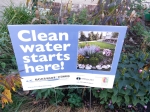
What can we do to keep our water clean?
Clean water and water use have become crucial topics. Flooding and droughts are happening everyday, and we all have a right to clean drinking water. Become aware of your water usage and how lucky you are to have inexpensive clean drinking water. Water Wednesday is to concentrate on our water usage. It is a day to pick up litter, sweep our sidewalks, and clean debris from our storm drains. Redirect your drainspouts onto your lawn, and figure where you could plant a raingarden?Is there a place in your yard or porch/balcony you could add some native plants the bees and butterflies love? Collective positive energy works!
Thoughtful Thursday Everyday should be kind and thoughtful, but make a special effort today. Our collective actions for kindness can make a difference. Put water in your bird baths, fill your bird feeders, check-in with someone you haven’t seen or heard from in awhile. Be kind and smile.
Friday Fun
Common Wood-nymph
Become totally engaged in your surroundings. Create a scavenger hunt: look for sidewalk art, a butterfly, a beautiful tree. Look for blooming flowers, a bird building a nest, something that surprises you or a special cloud. Everyone that finds something new wins!
Singing Saturday What sounds of nature catch your attention? I have birds singing outside my window. Ducks are flying overhead, frogs and crickets will sing soon. Maybe the wind or a rushing creek give you peace. Listen for an enjoyable sound, or maybe listen for complete quiet. Find peace in nature.
Spiritual Sunday
Collective action can create a healthier and happier world.
What ever your spiritual practice, nature can heal us. Today find beauty and love whether through the gospel, through a poem or picture, time outside or a meditation. Dare to dream. Spend the day focusing on what you love and finding beauty in your day. If the weather permits go for a long walk. What do you love, how can you have more of what you love in your life? Find quiet beauty from your walk or from your window. Wishing you peace.
***”Now is the time to try out any plant-based recipes you’ve saved. Fruits and vegetables are rich in antioxidants that keep your immune system strong, and they have a lower carbon footprint, too. For example, beef is about 34 times more climate pollution–intensive than beans and lentils, pound for pound. If you’re finding it hard to keep your produce fresh given your newly limited shopping habits, get creative. Whir brown bananas into smoothies, or simmer soft tomatoes into sauce. There are plenty of ways to salvage fruits and veggies slightly past their prime. So boost your repertoire. Share recipes with friends. And come out on the other side of this crisis a climate-friendly chef.” NRDC
How can you use those leftovers? Foods waste is responsible for 8% of yearly global emissions
We have a serious problem. 40% of the food in the United States is wasted, and 30% of food worldwide is wasted. What a ridiculous waste of energy, money and water. Read more here.
At the same time over 800 million people don’t have enough to eat, and more land is being cleared everyday for more agriculture. Rotting food waste in landfills creates methane gas that causes pollution. Each one of us needs to reduce our food waste. I have said many times this is one of the hardest things for me to deal with in trying to help our climate crisis. Reducing food waste takes constant vigilance. This week I came home from the farmers market with rotten apples and cucumbers. Being a more thoughtful shopper and buying just what I needed could have helped.
These are important facts we should be aware of, from the IPCC, Intergovernmental Panel on Climate Change: Food production causes 30 % of greenhouse emissions, 80% of global deforestation, and uses 70% of the world’s fresh water!
My advice for managing food waste and working for zero waste in my home:
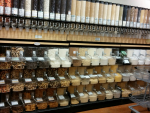
Buying in bulk is a good way to manage food waste and packaging waste. Bring your own container!
1. First, be mindful of your perishables, use your freezer, buy in bulk to get just what you need, and become aware that gluttony is a form of food waste
2. I save celery tops, onions and raw produce waste to put in a stir fry or soup. One of my favorite things about cooking is how I can use leftovers creatively. I love making wraps, rice or quinoa bowls with food leftovers.
3. Expiration dates are not something I obsess over. Most of the time food is good long past the date.
Can we meet the challenge? Our planet is burning up, and where I live we are experiencing continual record rain events. Our world lacks sensible elected leaders, therefore, we all must act. If everyone does a little it adds up to a lot!
First, get out and march. The Global Climate Strike is Friday, September 20, create your own event or find an event near you here.
Next, be mindful as to how you can buy less and waste less. Pay attention to your trash. What can you reuse, recycle, donate, or avoid completely? How can reuse your food scraps? All of our actions matter!
Because of the extreme weather 7 million people have been displaced. This is huge and wars are being fought over displaced people. Climate justice will be an enormous topic of the future.
Thankfully, the media is starting to pay attention to our building crisis. Time Magazine, Reveal and PBS have done some outstanding segments.
Plastic-free shopping by filling your own containers
Reducing single-use plastic consumption is an important way we can make a positive change for our earth. We can make a big difference, and change the way we live our lives. Let’s start with One Plastic-Free Day, June 6. It’s not easy reducing your plastic foot-print, but it is possible. Becoming aware of all the plastic we purchase helps to start making change.
This cup is made of commercially compostable material.
It is my hope that if we don’t purchase plastic items corporations will realize they need to make bottles and containers out of something that decomposes and can be composted. The plastic and oil industry will do everything they can to stop progress. That is why the consumer needs to speak!
Plastics are found in the air we breathe, the water we drink, and the fish we eat. I think this raises the bar that we need to make changes to our plastic life-style and fast.
My plastic-free journey has taken several years, it has been challenging, but fun at the same time. Filling bottles and containers with bulk item has just become habit. Food co-ops make it easy. It just takes a little organization to make a grocery list and figure which containers are needed for filling. I reuse the bottles and containers I have accumulated from earlier purchases. Also, we never eat at places that don’t use real dishes and utensils, but are still trying to remember to say, “No straw!” We never leave home without reusable water bottles and washable reusable bags. This past year we have begun making cookies, yogurt and humus with items from bulk shopping. Something I never wanted to take on, but now I make it fun, and zero waste cooking is healthy, rewarding and satisfying.
What are some items that are impossible to purchase in bulk and need to come in plastic?
Protein powder and vinegar need to be available in bulk
Here are a few quick easy zero waste ideas from my local county: “There are many ways to avoid single-use items. Want a quick list? Pack your lunch in reusable containers. Forgo the straw in your drink. Bring your own mug to the coffee shop. Bring reusable bags, produce bags and containers to the grocery store. Support businesses that serve food on reusable dishes.” Hennepin County