
August Anxiety
Or September Scaries on Lake Superior
I love summer and the long rich days, and the summer days get even longer as you go north! Holding onto summer daylight and comfortable temperatures fades as the calendar turns to fall. Already the nesting birds have migrated south, and I miss their joy. I also miss the magnificent butterflies, and there was a summer shortage this year that concerns and scares me.
.
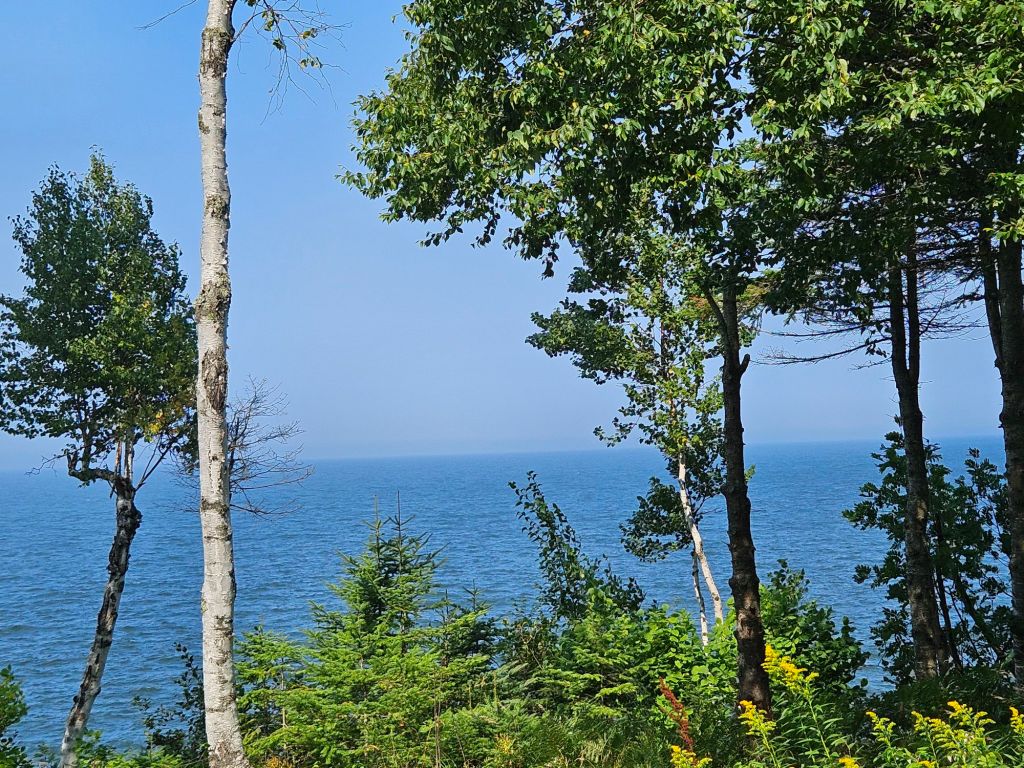
Summer brings joy, and the nature of that joy diminishes with the fading daylight. Below are some of the last plants standing:


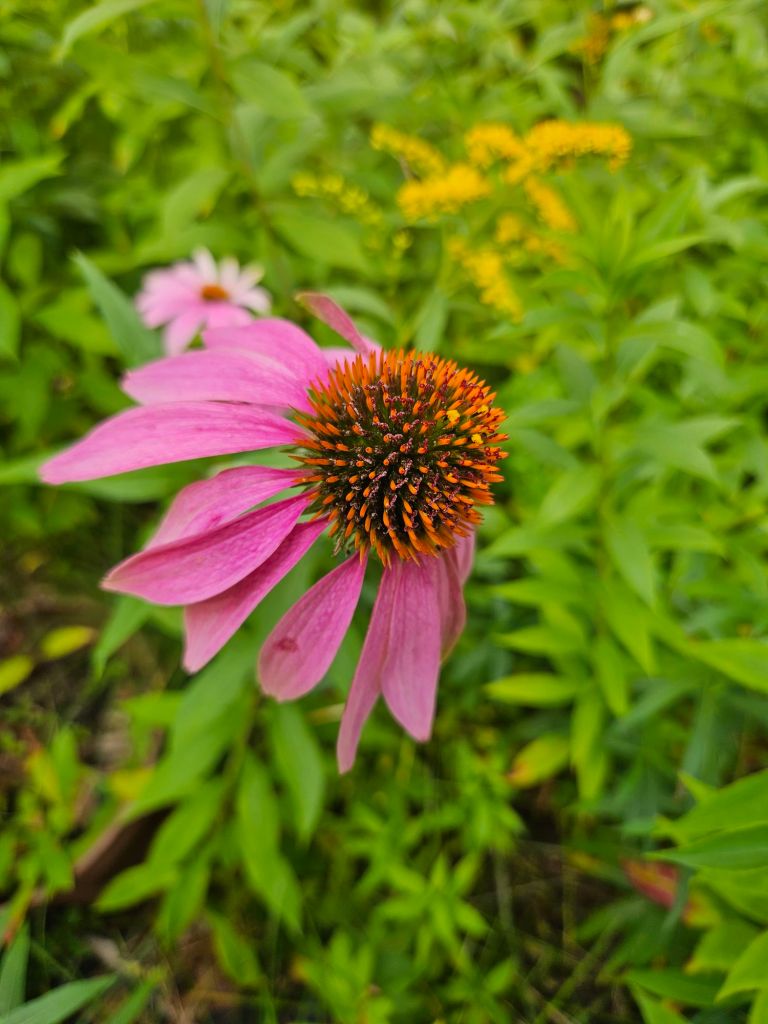
Summer could be defined by comfortable days, and Lake Superior wind pattern dominance which shifts from hot and humid to breezy and cool. This [ast summer was weird how much moisture was in the air. Many mornings it was hazy looking across the big lake. Warmer air holds more moisture, and it was a humid summer. We have just lived through the most humid summer on record. Read about it here.
Change your Shopping Habits
My life changed when I discovered bulk shopping. I love to choose my own amount, and I feel good about not having to purchase items in plastic. Instead of using plastic bags, bring your own reusable containers,
Shopping bulk helps to manage two big issues that contribute to our climate crisis. A shopper can reduce tons of plastic packaging, and choose as much as you need. This reduces food waste. Bring reusable containers, both big and small. Use whatever you have. I reuse glass mustard jars, pasta jars, pickle jars or cloth bags
The article below from Hennepin County tells you how to shop in bulk. the customers and the store personnel are all willing to help you through this journey. I hope you like this new independence as much as I do!!
Deciding where to shop
 Different stores and markets offer varying options for how you purchase food, so your ability to buy just the right amount of food may depend on where you shop.Get familiar with what your grocery store offers for produce and bulk goods. There may be more options than you noticed. Different stores and markets offer varying options for how you purchase food, so your ability to buy just the right amount of food may depend on where you shop.Get familiar with what your grocery store offers for produce and bulk goods. There may be more options than you noticed. |
 Opt for unpackaged produce when possible. If your store sells packaged items, try nearby stores offering loose produce. By purchasing only what’s necessary for your meal plan (especially fresh produce), you could significant cut the amount of food you waste. Opt for unpackaged produce when possible. If your store sells packaged items, try nearby stores offering loose produce. By purchasing only what’s necessary for your meal plan (especially fresh produce), you could significant cut the amount of food you waste. |
Buying from the bulk section

No, we don’t mean buying in large quantities like at Costco. The bulk section of a grocery store has self-serve food containers where you can take as much or as little as you need. Using the bulk section for things such as grains, beans, or spices can help you purchase just the amount you need and avoid waste.
Here’s how to buy things in bulk:
- Choose the item you want to purchase.
- Grab the provided bag or, if your store allows it, your own clean container. If you can use your own container, record the weight of the container when empty, before you fill it up.
- Fill your container or bag with the food.
- Write the product number, listed as PLU, for the item on the bag or on a sticker or twist tie label.
August Joy
“The environment is where we all meet; where we all have a mutual interest; it is the one thing all of us share.”
— Lady Bird Johnson
The Monarch butterflies charm me as they play tag, the hummingbirds zip from one flower to the next, and the goldfinch quietly sit on the monarda and eat the seeds. Enormous bees gorge themselves with a bounty of pollinator plants they love. The consistent rains of this summer have created a healthy blooming habitat. All this pollinator activity creates joy!
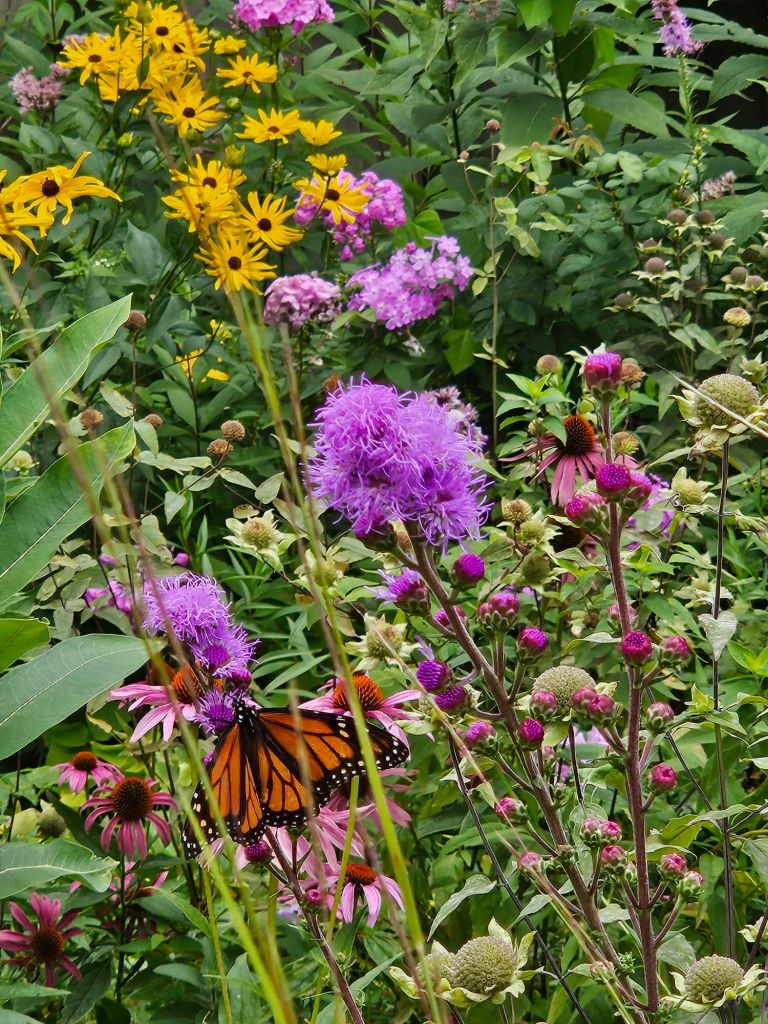


A Monarch on liatris Hummingbirds love cardinal flowers, and Joe Pye Weed.
Native deep-rooted plants fix many things that are wrong with our world. They do not need fertilizers or chemicals, they don’t need to be watered, and their deep roots absorb water run-off. They help to keep our waterways clean, keep our air clean, and they are beautiful,
Native plants are healthy for wildlife. Birds, bees and butterflies love them and they create vital habitat which has gone missing in recent years.
World’s Indigenous People

We are all connected!
This is from the Carbon Almanac!
Today we celebrate International Day of the World’s Indigenous Peoples.
Raoni Metuktire is an Indigenous Brazilian leader and environmentalist. Born in 1932, he has seen a lot of change due to climate change.
In The Carbon Almanac, we feature his quote and it serves as a reminder that we are all connected.
We all breathe this one air, we all drink the same water. We all live on this one planet. We need to protect the Earth. If we don’t, the big winds will come and destroy the forest. Then you will feel the fear that we feel.
Overshoot Day
WE consume too much stuff, use too much plastic, and create too much garbage. Our consumerism fuels Overshoot Day, but also all our driving around and wasting more fossil fuels than what we need.
Consuming less is good for our air and our water, and over consumption contributes to our climate crisis. We all need to be responsible for the trash we create, but the producers of so much packaging also needs to be held responsible.

Consuming and wasting less is the key!
Today is the day after Earth Overshoot Day. But what does that mean for you?
Earth Overshoot Day is the date when humanity depletes all the natural resources that the Earth can regenerate in the year. So as of today August 2, we are living at a deficit. We are consuming more resources than we can replace.
This metric from the Global Footprint Network is a striking reminder of the importance of taking care of the planet and using resources responsibly. However, it can also serve as inspiration to take action. Individual actions can make a difference to help #MoveTheDate!
What YOU can do to help?
Buy less and reuse instead of purchasing something new.
Reduce your food waste.
Have SMALL families.
Reuse, Reuse, Reuse! A good place to start is by trying to reduce unnecessary purchases, opt for sustainable products, and reuse items whenever possible.

We all need to waste less, and work together to lift up our Earth.
Reading List:
A Plastic-Free Future
Plastic is everywhere. It is hazardous to our health and our environment. Lets work together every day to end the Age of Plastic
These outstanding ideas are from Eureka Recycling!
Practical Tips for Going Plastic-Free
The most powerful zero waste action we can take is not creating waste in the first place. So how do we go about reducing consumption. Here are some helpful tips:
- Start with the Basics: Swap out single-use plastic bags for reusable ones. Keep a stash in your car or by the door so they’re always handy.
- Choose Reusables & Say NO to Single-Use Plastic: Carry your own refillable stainless-steel water bottle and use glass containers for food storage. Repurposing glass pasta jars for food storage can be a good option
- Shop Mindfully: When grocery shopping, opt for products with minimal or recyclable packaging. Choose loose fruits and vegetables over those wrapped in plastic and items in glass or cardboard containers over plastic whenever possible. When shopping for clothes, try to choose used clothes and clothing made of cotton or hemp, which can help reduce microfiber pollution Many clothing, especially synthetic fibers like polyester, nylon, and acrylic, are made from plastic polymers. When these synthetic fabrics are washed, they release tiny plastic fibers known as microfibers into the wastewater. These microfibers are too small to be caught by wastewater treatment plants and ultimately end up in rivers, lakes, and oceans.
- Evaluate Necessity vs. Want: Before making a purchase, ask yourself if the item is something you truly need or if it’s just a want. Delaying non-essential purchases can often lead to realizing you don’t need them at all.
- Borrow or Share: Borrow or share items that you only need temporarily or infrequently, such as tools, books, or recreational equipment, rather than buying them outright.
- Support Plastic-Free Initiatives: Encourage businesses and local governments to adopt plastic reduction initiatives. When possible, support companies that prioritize sustainable packaging and products.
- Make Your Voice Heard: As we work to advance zero waste legislation at the state and federal levels, we know we cannot recycle our way out of the plastic production and pollution crisis. Let’s work together to hold petrochemical companies accountable and change systems to better support reduction and reuse.
While Plastic Free July lasts for just one month, the habits we cultivate and policies we advocate for can have a lasting impact. By reducing our plastic consumption, we conserve valuable resources, minimize pollution, and protect wildlife. Moreover, we contribute to a shift in societal norms towards more sustainable living practices.
Join the movement this Plastic-Free July and let’s make every month an opportunity to support a zero waste future.
And some ways to reduce your exposure to microplastics
Let’s get real about Plastic
Let’s get real about plastic. Plastic is made from fossil fuels and toxic to the environment and human health. We cannot recycle our way out of our plastic problem. Watch the video below:
Dear President Biden
On the Fourth of July it is my duty to speak out!
Thank you, President Biden for your leadership and for all the years you have been in congress, vice president and president. You have a fabulous legacy of accomplishments, and I thank you many times over.
The Democrats all want to stay on the same page and be team players, but this is such a serious time they need to speak up. I need to express what my friends, family and the American voter is feeling.
We are in a frightening presidential election. The damage Donald Trump will do for the world and the environment is beyond our ability to imagine, and you know that! Also, the new Supreme Court decisions make it even more imperative that we win this election.
We all deal with age issues. Our backs go out, our knees and shoulders fall apart, and we forget things we don’t want to forget! Unless we are in pain we can deny aging to some extent. We deny that our energy level isn’t what it used to be, and we pretend we haven’t changed. Unfortunately, age issues don’t get younger. Instead, we need to move to the gratitude stage where we are thankful for all that has been and that we still have the chance to move forward.
We have gratitude, but we also have wisdom. Wisdom is our strength as we age! With all that is going on in the world we need individuals with more energy and new vision at the helm. Our wisdom tells us it is time to step aside for new positive leadership.
Thank you for your service. Now decide governing is more important than running for election. Pass the torch to the future and continue your amazing legacy and try to end these awful wars and continue to protect our precious environment. With gratitude.
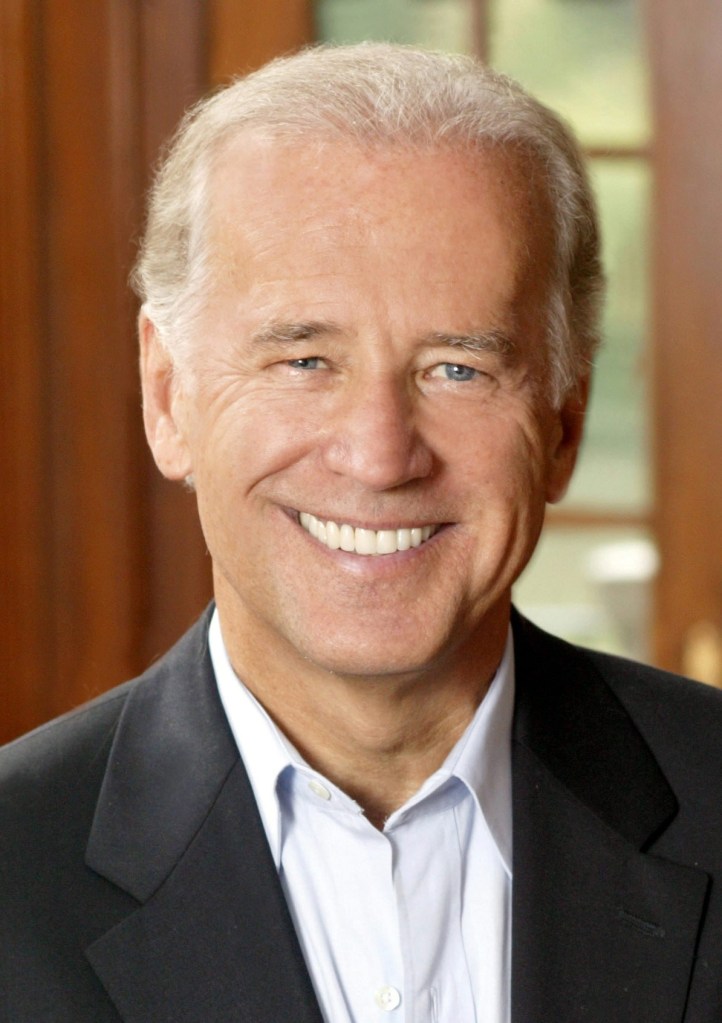
The presidency is a very hard job. Thank you, President Biden.

Fight for our democracy!
Say NO to Plastic!


Remember your reusable bags!
 Health4earth