Yahoo, jump into July! We are half-way through 2018, so enjoy July and find extra time to enjoy the outdoors. Action For Happiness has a new July calendar. Always add a daily outdoor activity for your happiness. Load the Action for Happiness July calendar here.
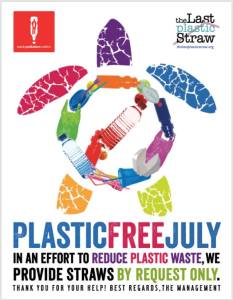
It’s July and, yes, many places on Earth are hot, but I hope you still can get outside for walks, bike rides, or just sitting and listening. Appreciate the Earth’s amazing diversity and beauty this July. Will our hot temperatures create more climatarians, thinking about how our actions affect the earth as we consume, eat, drive around, travel and waste? A climatarian is aware of their complete footprint on Earth. Maybe in July, strive for #PlasticFreeJuly #ChemicalFreeJuly or #nofoodwasteJuly.
July happiness is being kind to yourself and others, being kind to our earth, and spending time in nature.
A song/poem for July
Sunshine on my shoulders makes me happy Sunshine in my eyes can make me cry Sunshine on the water looks so lovely Sunshine almost always makes me high
If I had a day that I could give you I’d give to you the day just like today If I had a song that I could sing for you I’d sing a song to make you feel this way
Sunshine on my shoulders makes me happy Sunshine in my eyes can make me cry Sunshine on the water looks so lovely Sunshine almost always makes me high
If I had a tale that I could tell you I’d tell a tale sure to make you smile If I…
If I had a tale that I could tell you I’d tell a tale sure to make you smile If I had a wish that I could wish for you I’d make a wish for sunshine for all the while
Sunshine on my shoulders makes me smile.John Denver
The interviews and stories make for an interesting read.
The Great Lakes are the largest body of fresh water in the world. This is a review of the award-winning book, Death and Life of the Great Lakes, by Dan Egan.
The pristine Great Lakes had always been isolated from other bodies of water, but all this changed with the building of canals in the 1800s. Then in 1959 the Saint Lawrence Seaway opened. This is a riveting account of what has happened to the Great Lakes and other lakes in the United States and Canada since the Great Lakes became an avenue of world commerce and transportation.
Death and Life is a must read for individuals that care about the quality of our water, fishermen and women, and every environmental decision maker. I was thrilled my local book club picked it to read, and excited when the New York Times/PBS Book Club chose it as well.
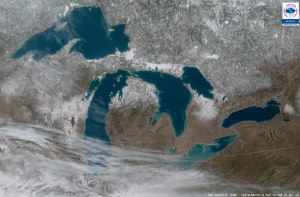
Lake Superior, Lake Michigan, Lake Huron, Lake Erie, and Lake Ontario make up the Great Lakes on the border of the United States and Canada. Photo: National Weather Service, Buffalo
The author, Dan Eagan, a reporter for the Milwaukee Journal Sentinel, has thoroughly researched and interviewed many of the decision makers and citizens involved. Why did they make the decisions they did? I was surprised how many of them were still living to tell their stories and defend their decisions. He has put their stories together to tell an interesting narrative.
Why would species from the Black Sea and Caspian Sea thrive in Lake Michigan? We have learned so much during the past thirty to fifty years about invasive species. I remember how surprised I was when I first learned about invasives. A new world opened! The learning curve has been steep for us, and even if you don’t read this book I encourage you to read about invasive species to learn the harm they do. Eagan delves into the sea lamprey, alewives, zebra mussels, coho salmon, Asian carp, and others that have thrived in this new environment, the Great Lakes, without any predators to control their numbers. Then there are the native lake trout that are native to the lakes, but they are too boring??
Fascinating was the Great Black Swamp that filtered run-off and helped keep Lake Erie clean. Like so many of the wetlands and swamps of the past, our ignorance couldn’t understand their purpose, so drainage began and we have new fertile farmland. Today the farm run-off creates the perfect conditions for toxic algae blooms threatening the drinking water taken from Lake Erie. Interesting stories continue as Egan interviews farmers, and those working to mitigate the effects of farm run-off.
The summer of 2017, a very rainy summer on Lake Superior, I was surprised by reports that for the first time Lake Michigan had better water quality than Lake Superior. The high water level of Lake Superior and the run off from the streams had caused a rusty-brown lake. You will have to read Dan Eagan’s book to discover why Lake Michigan now has cleaner water, and if this is a good thing?
Dan Egan leaves me hopeful. I think he believes, as do I, the earth is capable of healing itself to some extent if left alone to find its ecological balance. It is hopeful that Lake Huron has begun to heal, and that the white fish are adapting to eat zebra mussels. I hope a 10 year sequel is on the writing-table soon.
And finally a quote from the book, “A thing is right when it tends to promote the integrity, beauty and stability of the biotic community.” Aldo Leopold
A link to Dan Egan’s appearance on the PBS NewsHour:
Usually on April 15, I would be excited about new plants popping up, migrating birds, bike riding, cleaning my yard, and picking up litter.
This year there is a raging snowstorm hitting Minnesota and Wisconsin. We have done four rounds of shoveling, with at least one more to go. What is going on?
Did the female cardinal sitting in this tree think she missed mating season?
I wrote earlier this week about the warming Arctic and Alaska hijacking the jet stream. More on a “loopy jet stream” in this opinion by Bonnie Blodgett.
The weather becomes weirder with everyday, right before our eyes. The extremes are becoming the normal. In the past 10 years we have experienced historic floods/rain, historic droughts, historic snowand historic warming. Denying climate change is not an option, nor is the affect humans are having on our earth. The weather is a combination of many things. The winds, location of the sun, the warming oceans, the chemicals we spew into the air/land, too much dark green in the Arctic and many other factors. How much do humans on earth have to do with all of this?
Somehow we need to put things into balance. When we make purchases, put gas in our tanks, eat beef, waste food, and use chemicals, we should ask ourselves, “Is there a better way to do this?”
The wind is constantly moving the slushy ice around the lake.
Who would ever think you would wake up to 9 degree temperatures on April 9? It has been a cold two weeks of 20 to 30 degrees below normal! Meteorologist Paul Douglas calls it “Weather Weird!” One theory is that the warm weather in the Arctic and Alaska could be hijacking jet streams causing polar air to move south. I recollect some of this happened during the famous Polar Vortex.
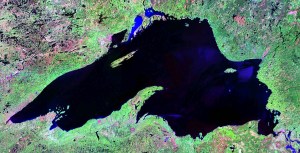
NASA picture of Lake Superior
Yes, it is cold but the days on Lake Superior are sunny and beautiful. Deer are feeding wherever they find open snow-free ground, the eagles are protecting their new babies, and the migrating seagulls and Canadian geese are back. Mourning cloak butterflies are finding sunny muddy patches, and ore boats are again crossing the big lake. All are signals that spring is finally on its way!
April can be the cruelest month, but April can also be one of the best months to be outside. I hope you get outside to experience the changes and new beginnings. Make a daily walk part of your routine. Enjoy!
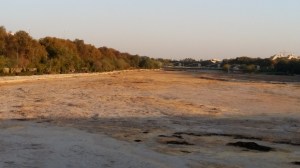
A dry river bed in the heart of Tehran. Water is more valuable in Iran than oil.
How much water do you use? We expect clean water when we turn on the faucet and forget that not everyone has lots of water. Not only Cape Town but three American cities could face severe water shortages soon.
Water is a valuable resource and the purpose of this post is for us to become aware of the amount of water we use. We are unaware where our water comes from and the chemicals with which we pollute it. Every time we turn on the tap we should think about the amount of water we use, and be thankful for clean drinkable water.
I am on a road trip through the southern part of the United States. Arkansas and Louisiana are dripping with water puddles overflowing streams, trees standing in water, wetness and mud everywhere. Oklahoma and Kansas are overcome with drought and wild fires. I realize some of this is normal for these areas, but not these extremes.
Budget cuts keep a running faucet from being fixed. Is there a volunteer to help?
Whether we live where it is wet or dry we should heighten our awareness of the amount of water we use. It is ridiculous to stay in a hotel where the water drips all night, and when informed they will usually write-up an order to try to get it fixed.
I was at Louisiana State University, and it was impossible to turn off the faucet in the restroom. When I reported the faucet to officials they said it had been like that for a while, “Budget cuts keep it from being fixed!” they told me. Could a volunteer near Alexandria, Louisiana fix that faucet? Constant running and wasting of water makes no sense!
With climate change many believe the wars of the future will be about water. Think about it, everyone making small changes and reducing the water they use can make a big difference! Earth911 has good ideas to reduce water use, but should also add, fix those leaky faucets and toilets. Read here ways to reduce water use. https://earth911.com/home-garden/conserving-water-at-home/
Everyone making small changes, can make a big difference!
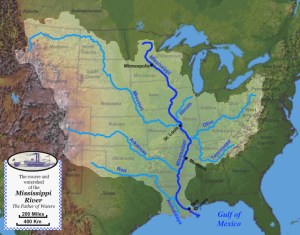
Minnehaha Creek drains into the Mississippi River which runs to the Gulf of Mexico
I’ve pledged to reduce single-use plastic in my life, Refuse plastic straws & cutlery, use refillable water bottles, coffee cups, & bring my own bag to the store. Together we can do this! Join me & take the challenge Mick Jagger
Why would you ever purchase bottled water? It contains plastic fibers. Read here
Two thirds of our earth is covered by ocean, and our oceans are paying a price for our behavior on land.
The Mississippi River water shed drains much of the United States.
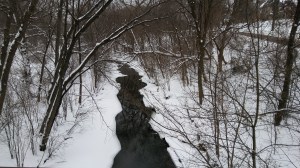
This afternoon I walked over the Minnehaha Creek, and saw plastic bags stuck in the ice. I live 1,500 miles from an ocean, but this creek, a few blocks from my house, drains into the Mississippi River which runs into the Gulf of Mexico over a thousand miles away. When the ice melts, this plastic will probably take a long journey down the Mississippi River and end up in our oceans.What we do to the land, we do to our water. Most ocean pollution starts out on land and is carried by wind and rain to the sea. Plastic from the land ends up in the ocean and plastic is so durable that the EPA reports “every bit of plastic ever made still exists.”Even the pristine Arctic Ocean is being inundated with plastic. Read at Arctic.
The second threat to oceans is our warming planet. Oceans in 2017 were warmer than they have ever been. Most of the heat from our warming planet is absorbed by the oceans. More than 90 percent of the Earth’s heat related to global warming is absorbed by the ocean. Read at ocean heat.
What are the consequences of warming oceans? Warmer oceans could bring storms, rain droughts and winds like we have never seen. The hurricanes in Houston and Puerto Rico are just examples of what could come. The warming ocean melts the glaciers faster causing sea rise. Cities and countries will be under water if this trend continues, and many people will become refugees having to move inland causing refugee crisis to get worse and worse. Unfortunately, this is only going to continue with extreme drought in some places and too much water in others!
I need a boost of positive energy, and these stories are full of hope and energy. I hope these positive stories get your week started with gratitude and full of positive energy. Enjoy!
** McDonald’s has announced a new commitment to sustainability. The fast-food chain will launch recycling in all of its restaurants and by 2025, 100% of its packaging will be sustainable. I am assuming this means compostable or recyclable? Also Boston will ban plastic bags, and Iceland and Denmark are doing research to create biodegradable plastic bottles.
It’s 2 minutes to midnight, half a minute closer than last year! Careless uninformed leaders are moving the clock closer to disaster.
From the Bulletin of the Atomic Scientists:
“In 2017, world leaders failed to respond effectively to the looming threats of nuclear war and climate change, making the world security situation more dangerous than it was a year ago—and as dangerous as it has been since World War II.”
“Leaders react when citizens insist they do so…They
What causes the clock to get closer to midnight?
can insist on facts, and discount nonsense. They can demand action to reduce the existential threat of nuclear war and unchecked climate change. They can seize the opportunity to make a safer and saner world. “They can #rewindtheDoomsdayClock.”
Read the entire statement from the bulletin of the Atomic Scientists here.
In November I was fortunate to become one of the few Americans to travel to Iran this past year. We were there for 8 days. After hearing what an awful country Iran is for the past 40 years, I was thrilled to find a vibrant, friendly people. Their friendliness was amazing It was difficult to go for a walk or get anywhere because they stopped us to give us candy, find out where we were from, and they would ask: “Where are you from?” “How do you like the food” How do you like our country?” I think some of it was they are so isolated and we were a window to the world, but they are genuinely a friendly people. One couple came up to me at the historic site Persepolis and told me they loved me because I was so kind. We heard over and over,”We both have bad governments, but we the people, we are friends!”
These soldiers wanted me to take their picture.
An interesting article from the Washington Post, five myths people believe about Iran. myths of Iran
A dry river bed in the heart of Tehran
This article blames the recent protests on water issues, and they do have a serious drought problem. Read about climate change and a lack of water in Iran at Climate
Drive less: Walk, bike, ride share, Carpool, combine errands, and take public transport.
Protect butterflies and bees: Add more pollinator friendly plants to your yard or balcony, and eliminate your use of pesticides, and all chemicals in your home. Your family, your pets, birds and butterflies will be much healthier.
Reduce or eliminate beef from your diet. Producing beef uses lots of energy! Go meatless and fishless several days a week!
Reduce all plastic use, and recycle, recycle and recycle everything you can. Always work for zero waste.
Become a climatarian: Always consider the earth when you make decisions
Walk: Everyday get outside to enjoy nature.
Finally, work to elect leaders that believe in climate change, clean air and clean water, and support clean renewable energy solutions
Ways to be a better environmental steward from Ecowatch
From Earth911 ways to be more sustainable. Read at Earth911

 Yahoo, jump into July! We are half-way through 2018, so enjoy July and find extra time to enjoy the outdoors. Action For Happiness has a new July calendar. Always add a daily outdoor activity for your happiness. Load the Action for Happiness July calendar here.
 and beauty this July. Will our hot temperatures create more climatarians, thinking about how our actions affect the earth as we consume, eat, drive around, travel and waste? A climatarian is aware of their complete footprint on Earth. Maybe in July, strive for #PlasticFreeJuly
  #ChemicalFreeJuly or #nofoodwasteJuly.