March for Ukraine

Buy less, waste less and use less energy!

Two bad things are happening in the world. Europe is at war in Ukraine, and a new UN report says climate change is going to cause many future problems. UN climate report: ‘Atlas of human suffering’ worse, bigger – StarTribune.com 

Support for the Ukrainian People

We know the drill to help ward off climate problems, drive less, use less plastic, eat less meat, and reduce food waste. Buy less, waste less, and use less energy!

Every day I take three breaths for peace to help Ukraine. Here is a list of organizations to support and help Ukraine: See below and Donate to the fund of the National Bank of Ukraine – Official website of Ukraine 

I was in Ukraine in 2013. The people were very kind, helping us get around, take public transportation, and order food. My husband and I loved the beautiful country and kind people!

Yes, we are under stress worrying about Ukraine and climate change. Below is the mindful calendar for March to help maintain our mental health.

Medical supplies from the United States and Europe because Ukrainian suppliers ran out of gear and medical supplies. For more information go to razomforukraine.org.

United Help Ukraine is providing lifesaving first-aid kits to the front lines. The organization also helps the families of those wounded or killed in war and gives support to displaced people from Crimea and eastern Ukraine. For more information go to unitedhelpukraine.org.

Sunflower of Peace is raising funds for first-aid medical backpacks for paramedics and doctors on the front lines. Each backpack has the ability to save up to 10 lives, according to the organization. For more information go to facebook.com/sunflowerofpeace.

Ukrainian Red Cross Society: Volunteers and staff provide first aid in areas where medical access is limited. Funds will be used to support those in need, blood collection, mobilization of volunteers and resources and emergency activities. For more information go to redcross.org.ua/en.

Help for children: UNICEF is ensuring Ukrainian children have access to safe water, nutrition, health care, education and protection during the invasion. For more information go to www.unicef.org/ukraine/en.

Voices of Children provides psychological and psychosocial support for children caught in the middle of the armed conflict. For more information go to voices.org.ua/en/.

Journalism: The Kyiv Independent, a Ukrainian-English news site, provides up-to-date information of Russia’s invasion. Its fundraising site can be found on GoFundMe.

Tips To Use Less Plastic

There is always something you can do to use less Plastic!

Hennepin County is challenging people to use less plastic. These ideas are from them:

Why should we reduce plastic?

Plastic has many functions and benefits, and it has been very helpful to society. However, the growth of plastic use and plastic waste is unsustainable for our health and for the environment. Today we are using twenty times more plastic than we did in the 1960s. Plastic is hard to collect for recycling, is usually made from petroleum, and causes substantial litter that contaminates soil, water, food, and our bodies. We need our systems to change, but we can also be more careful about how and when we choose to use plastic in our daily lives.

Choose Glass!

Tips to use less plastic

Because plastic is everywhere, it feels hard to use less. Start with products that are easier for you to avoid, and slowly reduce plastic in other areas of your life. Replace the durable plastic items you own only when they are used up or broken, unless they are hazardous to your health. Here are more tips to get started:

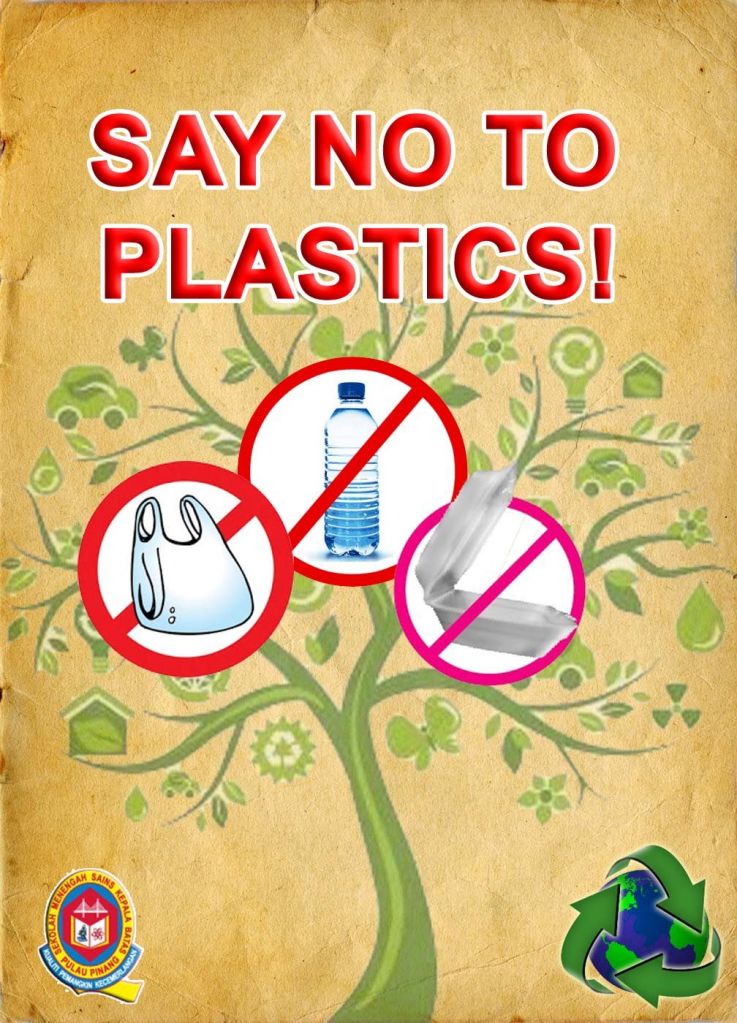
  • Learn to refuse single-use plastics you don’t need, such as plastic water bottles and cups, straws, plastic bags and plastic utensils.
  • When you must buy plastic products, choose ones that you can recycle rather than ones you must put in the trash.
  • Instead of single-use plastic items, choose ones you replace less frequently or not at all, such as steel shaving razors, permanent soap dispensers or refillable beauty or personal product packaging.
  • Buy foods in family sizes or in bulk, then repackage them into smaller portions instead of purchasing individually wrapped items.
  • Try to DIY a few things like condiments, cleaners, and meals made from scratch. Or learn a food preservation method that doesn’t require plastic.
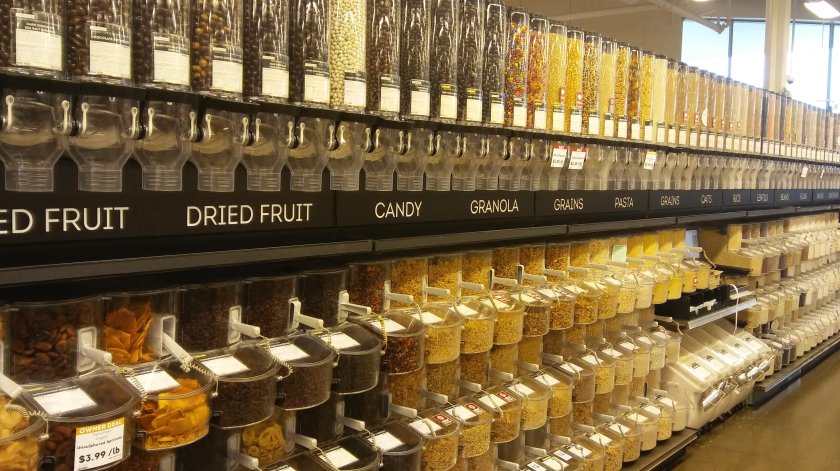
  • Shop bulk items

Shop bulk and fill your own containers

bulk produce
Avoid plastic, purchase produce in bulk without plastic

Easy tips to use less plastic and create less waste

We can make choices with our wallets and our lifestyles that create less demand for new plastic, even if we can’t avoid plastic every day. Be thoughtful about where you shop and how to reduce your plastic footprint.

  • Buy secondhand reusable items to replace single-use plastics, from water bottles and utensils to reusable bags.
  • Look for whatever it is you need secondhand; it reduces the need for new plastics, and it reduces the amount of plastic used for product packaging.
  • Look for reusable, non-plastic items in secondhand stores, such as dishware, wood furniture or home décor.
  • Rent things such as tools or specialty clothing instead of buying them, since most tools have at least some plastic components and clothes are often plastic fiber blends.
  • Take care of the things you own so they need to be replaced less often, from mending clothing to repairing electronics and keeping your cell phone longer between upgrades.

No matter how much time or money you may think you need to spend on avoiding plastic, there is always something you can do to use less.

Honor Our Earth

Honor the Earth through the food we love!

Within a few weeks scientists will be out with new data on our warming planet and how this warming is affecting all of us. By news accounts, it will not be good news. The study is out: climate study

There is no planet B!

 Many have of us have experienced the storms, floods and fires of the past few years. These will only get worst if we don’t stop the warming of our planet and find an equilibrium of Earth stability. Everybody has a part to play, and if everyone does just a little, it adds up to a lot!

There is no planet B and we all need to do better so our future generations can have a livable planet.

This week I attended a virtual workshop honoring the Earth through food.  Two big changes we can make to our lives to honor the earth and help reduce climate warming are to eat meatless one or more days a week, and really get serious about reducing food waste. 

We all know ways we can eat healthier. Reducing beef and pork in your diet is a win- win for the planet and can also makes enormous changes to better your health. Changing your diet could add up to 13 years to your life, study says | CNN

Eating for Health® : Bauman College | Berkeley, California

Shopping in bulk will reduce plastic in your diet!

I think a good way to eat healthier and eat less meat is to reduce your plastic packaging! Microplastics Could Harm Humans by Acting as Toxin ‘Magnet,’ Study Finds – EcoWatch  

Wasting food is a waste of our time, water and lots of energy.  It is something we all need to work on harder. In the United States 30-40% of our food is wasted. We can do better.

These were excellent suggestions from my workshop to reduce food waste:

1. Prepare meals with waste in mind. Work new meals around leftovers like into wraps, soups or rice bowls. 2. Plan meals ahead  3. Be mindful of the food you waste. How can you do better? 4. Optimize storage and maximize shelf -life. Check out storage options at savethefood.org  5. Shop more often and with a list  6. Be mindful of the food we eat and love.

Save The Food

 https://www.ecowatch.com/how-to-store-produce.html

‘Love Letter to Food’ Video Shows How Much Food We Waste (nationswell.com)

Love Food Hate Waste – Dianne – Bing video 

Plastic In Our Food and Air

Do we have too much plastic in our world?

Do we really want to ingest plastic microbeads every time we eat and drink?

Currently I am participating in a community plastic challenge working to reduce the plastic we send to landfills. I’m challenging myself to think of new ways I can reduce plastic in my home and for my family. It is impossible to eliminate all plastic, but we can be healthier by reducing plastic’s impact in our homes and lives.

These are the things I am working on to reduce plastic in my home:

1. Purchase fresh unpackaged produce. Always travel with reusable bags and reusable bottles and containers.

2. Store leftovers in glass containers and jars.

3. Never purchase take-out unless their containers are reusable or compostable.

4. Only cook in glass or metal pans

5. Purchase glass containers over plastic containers. Good examples are mustard, honey, and vinegar.

6. Make a conscious effort to purchase clothes, towels and sheets made of organic cotton and wool, and keeping our surroundings dusted and vacuumed will eliminate some of the microplastics we breathe.

What are the facts we know about plastic?

-Plastic production pollutes our water and air

-Plastic microfibers have been found in the food we eat.

-Micro fibers of plastic are in the clothes we wear and therefore in the air we breathe.

­-Plastic is the most common litter found in the oceans.

-Studies are just beginning on how harmful plastic is to our health.

Using glass containers gives me confidence we are reducing our plastic contamination

Reading list:

Plastics in our Food? – FOOD, FACTS and FADS (foodfactsandfads.com)

8 Everyday Foods That Contain Plastic and Safe Alternatives (nestandglow.com)

Toxic Nanoplastics Found at North and South Poles – EcoWatch 

Industrial plastics found in some fast food, researchers say | TheHill

UN to Create Global Treaty on Plastic Pollution – EcoWatch  

We Have Breached the Planetary Boundary for Plastics and Other Chemical Pollutants, Scientists Say – EcoWatch

U.S. Is World’s Biggest Producer of Plastic Waste, Report Finds – EcoWatch

California Just Passed 5 Mega Laws to Fight the Plastic Crisis – EcoWatch 

What is Zero-Waste?

Refuse, Reuse, Recycle

I use the term zero waste often. It is a daily goal in my household, a goal we work for every day.  Everything we purchase has an impact on our environment from our use of materials and natural resources to the emissions created for manufacturing. Then there is the end of life of a product. Will it sit in a landfill for 500 years polluting the ground and air surrounding it, can it be reused many times, or can it be turned into a new product?

Manufacturing, landfills, garbage burning, and hazardous waste contribute enormously to our warming planet. We need to take all our trash and waste seriously. Remember food waste is waste too!

Unfortunately, we have a long way to go to reach a zero-waste future.  Walking through a grocery or drugstore highlights how far we still have to go. Almost everything is packaged in plastic. Plastic that can’t be recycled!  As consumers we can try to purchase products with a minimum of packaging or refuse to purchase them completely. I often call manufacturers like Field Roast, Morningstar and Bob’s Redmill to request they start to use recyclable packaging.  Currently, in the United States only 9 to 10% of our plastic is recycled. We have a long way to go and need to begin to hold producers of plastic responsible so they produce packaging that can be recycled or reused.

“Reduce, Reuse, Recycle” is how we need to live. Every product we purchase affects our environment; So, before you buy, ask yourself if you really need it? If you do, consider buying gently used instead of new, and look for minimal packaging and shipping.

My county, Hennepin, is creating plans for a zero-waste future:

Hennepin County’s zero-waste vision is a waste management system where all materials are designed to become resources for others to use to systematically avoid and eliminate the volume and toxicity of waste and materials, conserve and recover all resources, and not burn or bury them. The key performance measure is diverting 90% or more of all discarded materials from landfills and incinerators.” Hennepin County

Zero waste is a set of principles focused on waste prevention that encourages the redesign of resource life cycles so that all products are reused. The goal is for no trash to be sent to landfills, incinerators or the ocean. Currently, only 9% of plastic is actually recycled. In a zero waste system, material will be reused until the optimum level of consumption.” The definition adopted by the Zero Waste International Alliance (ZWIA)

Watch The Story of Stuff and learn more about the zero waste movement.

In the United States 30% of our food is wasted. A huge waste of energy, labor and resources. https://www.usda.gov/foodlossandwaste

This is excellent! https://www.ecowatch.com/how-to-store-produce.html

3 Sustainable Choices

A new year, new habits!

“Small acts when multiplied by millions of people, can transform the world!” Greenpeace

The new year has arrived, and we all have the best intentions to have a fresh beginning. With all the uncertainty and discord around us, focusing on something bigger than ourselves helps to rise above all the confusion. Choose to do things that are fun and make you feel better about your place in society.

New goals and new ideas help stimulate new interests and are good for our mental health.  First of all, don’t worry about being perfect, just do something different. No one is perfect, but if everyone does something it adds up to big things for us and our community.

Millions of people around the world have been harmed by storms and our warming world during the past year. With all the harm humans have done to our planet the last hundreds of years, our warming Earth is struggling to find some equilibrium, and we can all lessen our negative impact. By reducing our consumption of the Earth’s resources, we can help our corner of the world and make a big difference. My ideas are to help you think of ways you can make a positive difference and hopefully have fun!

Every day my household works on three big things to reduce our consumption of the Earth’s resources:

Reduce meat consumption

1. Cutting meat consumption and always celebrating meatless Mondays. There are so many meatless options in the frozen food section of grocery stores it can be easy and fun. The hard part is finding meatless options without increasing plastic pollution. Here are some ideas to get you started. Vegan Recipes To Help You Eat Less Meat : Life Kit : NPR  

Quick & Easy Vegetarian Recipes | EatingWell

Vegan Recipes To Help You Eat Less Meat : Life Kit : NPR 

How is plastic in our food affecting our health?

2. Reducing plastic is paramount.  Plastic creates waste and litter, it contributes to climate change, pollutes our water and is harmful to wildlife.  It is concerning how plastic affects our health and what it’s impacts might be for us. We have a lot to learn about how plastic is harming our health. Please reduce your consumption of plastic. Start by using reusable bags, cups and bottles, and then you will slowly learn new ways to reduce plastic in your environment. So much plastic can’t be recycled, but if you must purchase items in plastic, make sure it can be recycled.

Irritable bowel syndrome linked to more microplastics in gut (nypost.com)

end food waste

30 to 40% of food in the USA is wasted!

3. Reduce Food waste.  Food waste is a total waste of water, labor, time and energy. First start with your shopping, don’t buy more than you can use. Buying in bulk is a good way to regulate how much you purchase (bulk can reduce plastic waste also). Second, staying on top of what items are in your refrigerator/freezer is extremely important. Maybe have an “eat first shelf.” I keep a container in my refrigerator to accumulate celery tops and other vegetable scraps for weekly soup making or stir fry.  Finally, turning leftovers into a new meal is one of the best things about cooking. Make it fun and challenging! Wraps and rice bowls are winners!

How to Reduce Food Waste | Sierra Club

Below are many ways you can help our planet and also your soul:

Opinion | 10 New Year’s Resolutions That Are Good for the Soul – The New York Times (nytimes.com)

7 Ways to Make 2022 More Sustainable – Plastic Free Home – Environmental and Zero Waste Blog (theplasticfreehome.com)  

13 sustainable choices for your green life | Minnesota Pollution Control Agency (state.mn.us)  

3 eye-opening, science-based New Year’s resolutions that could help everyone | PBS NewsHour

12 Ways to Live More Sustainably (biologicaldiversity.org)

Happy Thanksgiving!

Plan For Leftovers

In my meetings some are wondering what big thing they can do to stop climate change. I think many people doing lots of little things to help our planet amount to a lot! We can all make a difference by buying less and wasting less. Thank you!

From Thanksgiving to New Year’s Day, household waste increases by more than 25%. Added food waste, shopping bags, packaging, wrapping paper, bows and ribbons all adds up to an additional 1 million tons a week to our landfills. (Source: EPA)

end food waste

Enjoy your leftovers!

Make a plan for your holiday left over food. What do you generally do  with left over food? 40% of the food  in the United States is not eaten, and ends up in our landfills causing an enormous waste of our precious resources. Wasting food is an enormous waste of water, money, time, labor, energy and transportation.  The Natural Resources Defense Council (NRDC) has an incredible education campaign to inform the public how much we are wasting.  For example the production of one egg takes 55 gallons of water! Their website is savethefood.com

Not only does wasting food, waste valuable resources and lots of water, but also food in our landfills decomposes creating and giving off methane gas which is a harmful air pollutant contributing to global warming

So let’s get creative and “Save the Food.” One of my favorite cooking activities is to reinvent leftovers into a new lunch or dinner stir fry, soup, tacos, enchiladas, salads, fried rice, quinoa bowls and many other things lend themselves to create special meals of leftover food.

Have a fun holiday, and make a creative difference by reusing, planning, seriously cutting waste, and saving food from the garbage!

The story of a strawberry here: https://www.youtube.com/watch?v=WREXBUZBrS8

I am thankful for all the medical workers and teachers who have worked so hard during this pandemic! Thank you

Plastic Recycling is Deceptive.

Not only is plastic almost imp0ssible to recycle, it becomes more toxic if it is recycled. https://www.ecowatch.com/recycled-plastics-toxic-chemicals-health-risks.html

.

Plastic recycling is very challenging. There is very little regulation of plastic in the United States. Plastic producers claim recycling is the answer to their products, but they don’t want any responsibility to pay for recycling or disposal of their products. They often they say their plastic is recyclable, when in fact it might be just one per cent recyclable or not at all.

Why is plastic recycling so hard? First there are those recycle 1-7 numbers. For something to be recycled it first needs to be collected, and then sorted into those  numbers. Next, it needs a market, or someone to buy it. All this makes plastic recycling expensive for communities (tax payers) and it is labor intensive.

 I am fortunate to live in a county (Hennepin) that makes this a priority, and I can’t express my gratitude to them enough!

Both Maine and Oregon have passed legislation to hold producers responsible for recycling and disposing of their products. This is a beginning and it is hopeful that more regulation of plastic could happen. As consumers we also have responsibility, when we purchase plastic we reinforce the idea that this is OK, and more of it is produced. The plastic chemical companies are gearing up to produce more plastic for the future, lets work to hold them accountable! Talk to your elected officials about how plastic producers should be held responsible for what happens to long lived plastics after disposal. Manufacturers also need more integrity in labeling what is in their plastic products.

On America Recycles Day recycle more of your paper/cardboard, glass and tin cans, and recycle plastic bottles and containers, but also begin to REDUCE your PLASTIC consumption.  Always bring your reusable cups/bottles, and bags for a start.

Big new goals on America Recycles Day https://thehill.com/policy/energy-environment/581578-epa-issues-national-recyling-plan-with-goal-of-50-percent-recycling

Make it a plastic-free day!

buy in bulk

Buying in bulk and refilling your bottles is the next step in reducing plastic.

Reading and watching list:

Maine Will Make Companies Pay for Recycling. Here’s How It Works. – The New York Times (nytimes.com) 

John Oliver Takes on the Plastics Industry – EcoWatch

California Just Passed 5 Mega Laws to Fight the Plastic Crisis – EcoWatch 

Plastics recycling is 90 percent garbage, John Oliver says, but that’s not your fault and there is a fix (yahoo.com) 

Watch Story of the Bottle! – Greenpeace

Virginia Governor Takes Action on Single-Use Plastics – EcoWatchBreak Free From Plastic Pollution Act Receives National Support – Center for Biological Diversity

World Kindness 2021

World Kindness Day is a global day that promotes the importance of being kind to each other, to yourself, and to the world. The purpose of this day, celebrated on November 13 of each year, is to help everyone understand that compassion for others is what binds us all together. This understanding has the power to bridge the gap between nations.

Make a special effort to be kind.

We all want to live in kind healthy communities. We want to live where we are respected and can thrive. Each of us can work for kinder environments by limiting the noise we create, picking up litter and after our dogs, sweeping our sidewalks, and listening and smiling more. How hard is that? We can create environments that are pleasant places to live. Kindness doesn’t cost any money! Kindness creates a ripple, it radiates out, and together we create happier and healthier places to live.

Action Needed! Blah, Blah!

Much Much more is needed!

Love the Earth and Protect it!

The world climate summit is taking place in Glascow, Scotland. The world has known for a long time it needs to do something about our warming earth. There has been such a lack of leadership to get something done, and now we have reached a point where it has become hard to ignore. During the first week some important promises to protect forests, reduce methane and reduce coal. Will it be enough? No, but the conversation has begun. Russia and China didn’t attend so continued efforts are needed to keep them moving forward and integrate them into the discussion

In the United States the powerful lobbyists and oil industry have been able to control and stop action, and it is still happening with Joe Manchin as he hauls in the cash to resist a move away from fossil fuels.

Strong leadership and a desire to work together needs to come out of this important conference. Together everyone is the solution to our climate, We must all set this as a priority over greed, lies and waste.

Everyday we make an impact, make it positive!

Speak out for change! Work for a healthy future!

During the pandemic 2020 carbon emissions were reduced and we can do it again. Everyday with just a little effort, we can make an impact, and move to a new future of sustainability  Let’s start now by buying less junk, reduce our plastic use**, stop idling our engines, and a couple days a week eat meatless. Try walking and riding public transportation, you might like it!

There are some hopeful things happening in the world:

From Future Crunch:    Future Crunch Good – Bing News

 Amazing: Cars powered by combustion engines now make up less than 10% of sales in Norway, and forecasts suggest the country’s last sale of a new petrol or diesel car will come in April 2022, three years ahead of what was already the world’s most ambitious target.  Drive

 Russia has committed to carbon neutrality by 2060, Turkey has finally ratified the Paris Agreement, and the UAE has become the first petro-state to commit to net zero by 2050. Critics say these pledges aren’t enough, but they’re missing the point. They’re not promises. They’re ratchets – once announced, they only increase in ambition.

China has begun construction on the largest and most ambitious clean energy project of all time, 100GW of wind and solar in its western desert. That’s more than the entire existing wind and solar capacity of India, and will be able to generate four times as much power as the Three Gorges Dam. Bloomberg

The important question is what happens after the summit? Countries should be meeting yearly to report their progress and set new goals. Also, continued work needs to be done getting all countries involved.

Reading/listening list:

Report warns of climate change’s ‘code red’ impact on health – CNNReport warns of climate change’s ‘code red’ impact on health – CNN  

Jane Goodall: Every day you live, you impact the planet | TED Talk  

Could climate change lead to war? It’s a growing geopolitical threat | Star Tribune     

Plastics Could Release More Emissions Than Coal by 2030, Study Finds – EcoWatch 

‘Last, best hope:’ Leaders launch crucial UN climate summit – ABC News (go.com) 

Climate summit sees new pledges on cutting methane, saving forests (yahoo.com)

Financial Industry, With $130 Trillion, to Pursue Climate Goals – The New York Times (nytimes.com)   http://www.tucsonsentinel.com/nationworld/report/110521_cop_26_action/cop-26-doesnt-look-so-hopeful-countries-living-climate-emergency/

**Why we need to reduce our use of plastic:  Plastics are on track to contribute more climate-change-causing emissions (to the tune of at least 232 million tons of greenhouse gases annually) than coal plants by 2030, according to a new report out of Bennington College. The reason? As fossil fuel companies seek to recoup falling profits, they’re increasing plastics production.    REPORT: The New Coal: Plastics & Climate Change — Beyond Plastics – Working To End Single-Use Plastic Pollution